

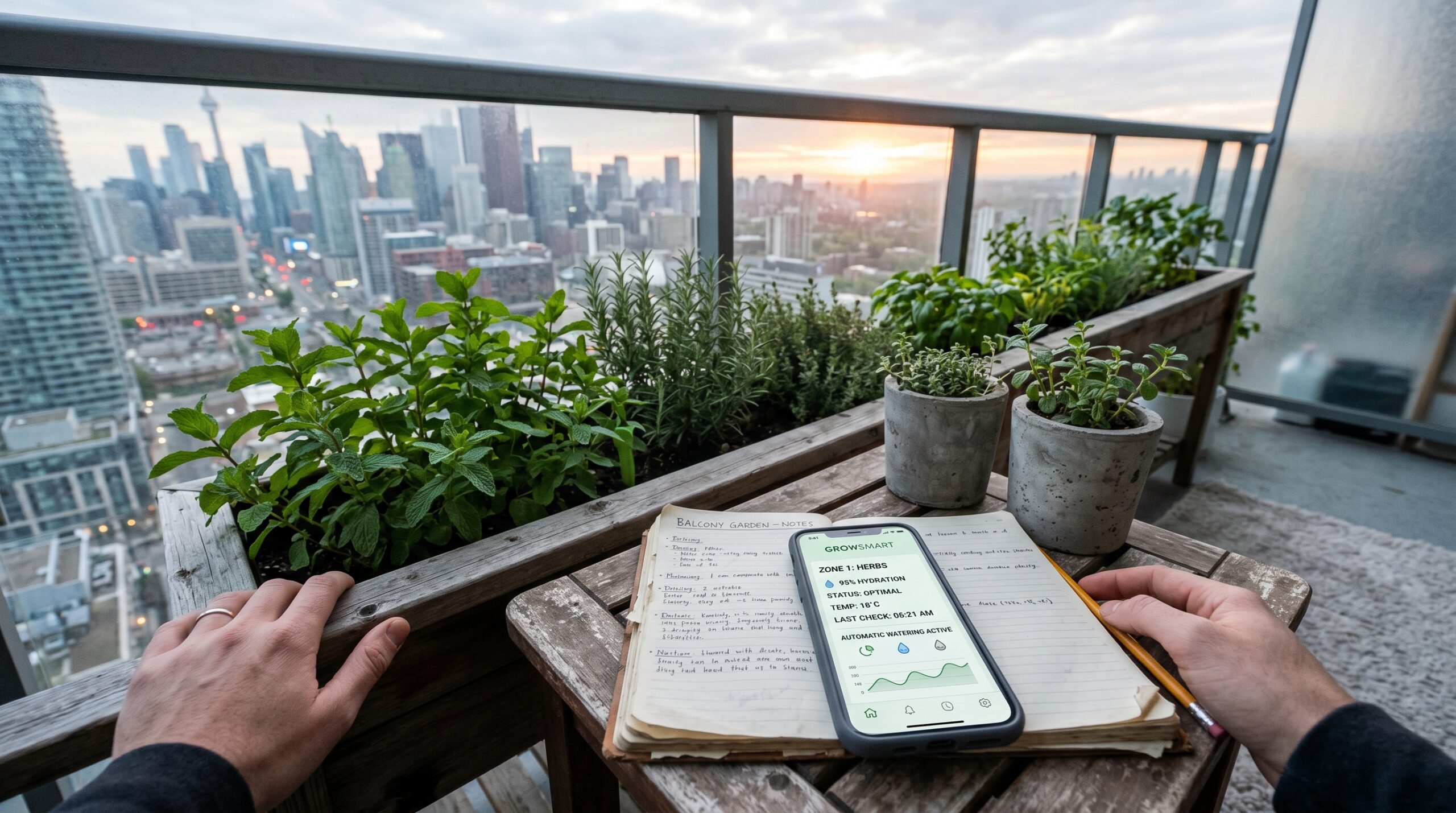
You’ve felt it: the guilt of forgetting to water your balcony herbs during a heatwave, or the frustration of overwatering indoor plants because “the app said so.” Water scarcity isn’t a distant threat—it’s a daily reality for urban gardeners facing rising utility bills, drought restrictions, and unpredictable weather.
The solution isn’t just “water less.” It’s water smarter.
Smart irrigation systems powered by AI and real-time sensors are transforming how we care for container gardens, small backyards, and apartment balconies. This guide cuts through the tech hype to show you exactly which tools deliver measurable water savings, how to set them up in space-constrained environments, and how to avoid common pitfalls that waste both water and money. You’ll learn to build a responsive, efficient watering system that adapts to your microclimate—without becoming a part-time IT specialist.
Why AI-Powered Irrigation Matters for Urban Gardens
Traditional timer-based systems water on a fixed schedule, regardless of actual plant needs. But a potted tomato on a windy 8th-floor balcony loses moisture 3× faster than the same plant in a shaded courtyard. The University of California Agriculture and Natural Resources (UC ANR) reports that smart irrigation can reduce outdoor water use by 20–50% by responding to real-time soil conditions, weather forecasts, and plant-specific requirements.
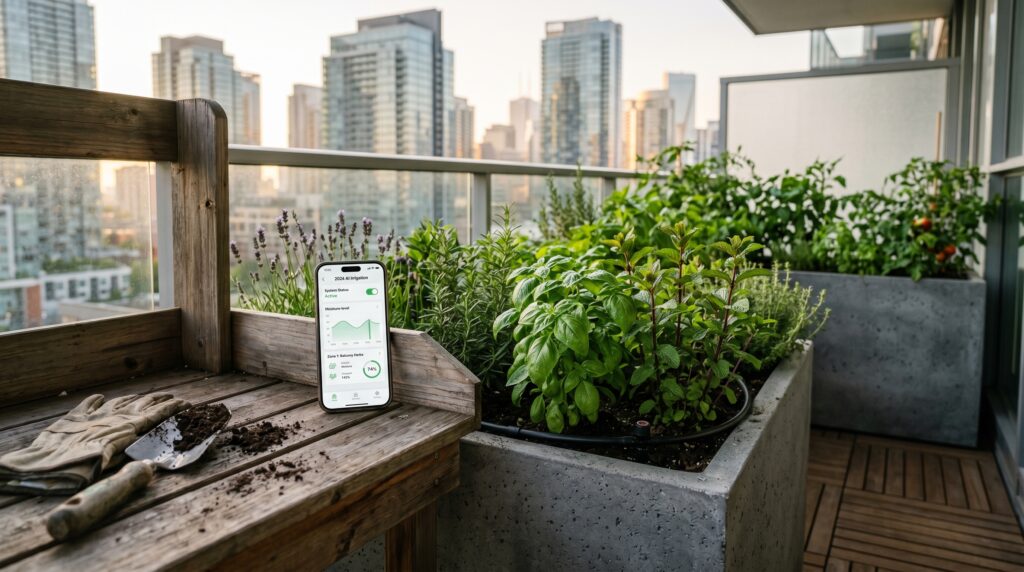
AI enhances this by learning your garden’s unique patterns. Over 2–4 weeks, machine learning algorithms analyze:
- Local evapotranspiration (ET) rates
- Historical weather data
- Soil moisture depletion curves
- Plant growth stages
The system then adjusts watering duration and frequency automatically. For urban growers managing limited containers or indoor-outdoor rotations, this precision prevents the two most common failures: root rot from overwatering and stress-induced yield loss from underwatering.
Core Components of a Smart Garden Watering System
You don’t need to buy an entire ecosystem at once. Start with the layer that solves your biggest pain point.
- Soil Moisture Sensors: The Foundation
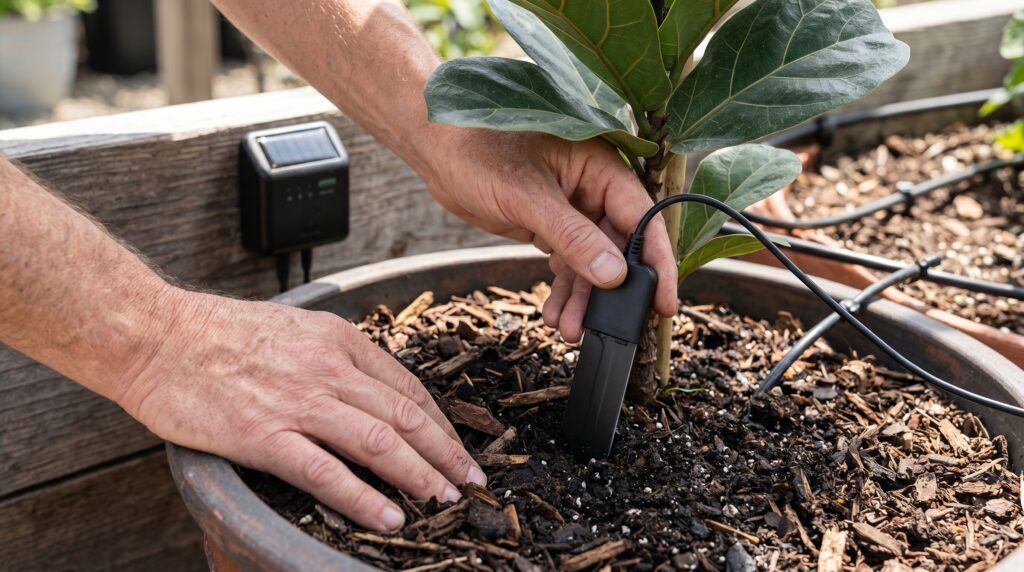
Capacitive sensors measure volumetric water content in the root zone. For containers, place probes at ⅓ and ⅔ soil depth to capture moisture gradients. Avoid cheap resistive sensors—they corrode quickly and give erratic readings.
Best for: Container gardens, raised beds, indoor plant collections. Pro Tip: Calibrate sensors for your specific potting mix. Peat-based blends hold water differently than coir or mineral soils.
- Weather-Integrated Controllers
These devices pull hyperlocal forecast data (via Wi-Fi) to skip watering before rain or increase duration ahead of heatwaves. Look for systems that use NOAA or regional agricultural weather APIs for accuracy.
Best for: Balcony gardens, small yards, community plots. Pro Tip: Enable “rain delay” and “freeze protection” features to prevent watering during unsuitable conditions.
- Flow Meters & Leak Detection
Small but critical for trust. Flow meters track actual water usage per zone, alerting you to leaks, clogged emitters, or broken lines via app notifications.
Best for: Multi-zone setups, renters monitoring utility usage, drought-restricted areas. Pro Tip: Set usage thresholds. If a zone exceeds expected consumption by 15%, receive an instant alert.
- AI Plant Care Apps
Apps like Plantix, Blossom, or proprietary brand platforms use image recognition + environmental data to recommend watering adjustments. They’re most effective when paired with physical sensors—not used alone.
Best for: Beginners learning plant signals, travelers managing gardens remotely. Pro Tip: Cross-reference app advice with manual soil checks for the first month to build confidence in the system.
Step-by-Step: Setting Up Smart Irrigation in Small Spaces
Follow this sequence to avoid compatibility issues and maximize water savings.
Step 1: Audit Your Space & Water Source
- Map container locations, sun exposure, and wind patterns.
- Identify your water source: outdoor spigot, indoor sink, or rainwater barrel.
- Measure water pressure (ideal: 30–50 PSI for drip systems).
Step 2: Choose Compatible Hardware for balconies or apartments:
- Start with a Wi-Fi smart hose timer (e.g., Rachio, Orbit B-hyve) + 2–3 soil sensors.
- Use ¼” drip tubing with adjustable emitters for precise delivery.
- Add a pressure regulator if source pressure exceeds 60 PSI.
For indoor collections:
- Select Bluetooth-enabled sensors with long battery life (6+ months).
- Pair with a compact pump system for self-watering reservoirs.
- Ensure app works offline for basic scheduling during internet outages.
Step 3: Install Sensors Strategically
- Place one sensor in a “representative” pot (average sun/wind exposure).
- Install a second in your most vulnerable plant (e.g., shallow-rooted herbs).
- Bury probes to the depth of the primary root zone—never at the surface.
Step 4: Configure AI Settings
- Input plant types, container sizes, and soil mix into the app.
- Enable local weather integration and set drought-restriction rules.
- Start with conservative watering thresholds; adjust after 7–10 days of data.
Step 5: Test & Calibrate
- Run a manual cycle to check emitter flow and coverage.
- Compare app recommendations with manual finger-test moisture checks.
- Refine thresholds based on observed plant response (leaf turgor, growth rate).
Common Mistakes That Waste Water (and Money)
- Ignoring Microclimates: A single sensor can’t represent a balcony with full-sun and shaded zones. Use multiple sensors or group plants by exposure.
- Over-Automating Too Soon: Let the system learn for 2–3 weeks before enabling full AI autonomy. Manual oversight prevents early errors.
- Skipping Maintenance: Sensors drift, emitters clog, and batteries die. Schedule quarterly checks: clean probes, flush lines, update firmware.
- Mismatching Tech to Plant Needs: Succulents and ferns have vastly different moisture requirements. Create separate watering zones by plant type.
- Forgetting Manual Override: Internet outages happen. Ensure your system allows easy manual watering via app or physical controls.
Expert Tips:
- Wind Exposure Hack: On my 10th-floor balcony, wind accelerated evaporation so much that soil sensors triggered watering 3× daily. I solved it by adding a lightweight mesh windbreak and grouping pots to create a humidity buffer. Water use dropped 40% without stressing plants.
- Indoor/Low-Light Adjustment: AI apps often overestimate water needs for low-light indoor plants. I reduced recommended frequency by 30% and monitored leaf health. Most tropical foliage thrived with less frequent, deeper watering.
- Data-Driven Travel Prep: Before a 2-week trip, I reviewed my system’s historical usage data to set a “vacation mode” that watered at 60% of normal frequency. Plants returned healthier than with traditional “soak and leave” methods.
- Local Climate Verification: Cross-reference AI recommendations with USDA Plant Hardiness Zones and Royal Horticultural Society container gardening guides. An algorithm trained on Midwest data may misjudge coastal humidity or desert aridity.
Smart Wealth Habits: Resource Efficiency as Financial Strategy
Water conservation isn’t just ecological—it’s economic. In regions with tiered utility pricing, reducing outdoor use can lower your entire household’s water rate bracket. Treat smart irrigation as a capital investment with measurable ROI.
Apply wealth-building principles:
- Preventative Maintenance = Asset Protection: Quarterly sensor cleaning and line flushing prevent costly plant replacement and water waste—similar to servicing a vehicle to avoid major repairs.
- Data-Driven Decisions: Track monthly water usage via your app. A 25% reduction might save $15–$40/month depending on location. Reinvest savings into system upgrades or additional growing space.
- Scalable Infrastructure: Start with one zone. As confidence grows, expand to rainwater harvesting integration or solar-powered pumps. Modular growth prevents upfront overspending.
- Resilience Building: During drought restrictions, smart systems automatically comply, avoiding fines. This regulatory adaptability mirrors diversified investment strategies that weather market volatility.
Quick Comparison: Smart Irrigation Systems for Urban Spaces
|
System Type |
Best For |
Setup Difficulty |
Est. Water Savings |
Key Feature |
|
Wi-Fi Smart Hose Timer + Sensors |
Balconies, small yards |
Easy |
25–40% |
Weather integration, app control |
|
Bluetooth Soil Sensors + App |
Indoor collections, renters |
Very Easy |
15–30% |
Offline scheduling, portable |
|
AI-Integrated Drip Kit |
Multi-zone container gardens |
Moderate |
30–50% |
Machine learning adaptation |
|
Solar-Powered Micro-Drip |
Off-grid patios, eco-purists |
Advanced |
40–60% |
Zero grid dependency |
|
Rainwater Harvesting + Smart Valve |
Drought-prone regions |
Advanced |
50–75% |
Municipal water displacement |
Note: Savings estimates assume proper installation and seasonal calibration. Actual results vary by climate, plant selection, and usage patterns.
Frequently Asked Questions (Featured Snippet Optimized)
How much water can smart irrigation actually save? Properly configured systems reduce outdoor water use by 20–50% by watering only when plants need it. UC ANR studies show container gardens see the highest savings due to precise root-zone targeting.
Do smart sensors work in small pots? Yes, but use miniaturized probes designed for containers (4–6 inch length). Place sensors away from pot edges to avoid false dry readings from rapid edge evaporation.
Can I use smart irrigation indoors without Wi-Fi? Many Bluetooth-enabled systems offer offline scheduling. For full AI features like weather adaptation, Wi-Fi is required—but basic automation works without constant connectivity.
How do I calibrate sensors for different potting mixes? Run a “dry-down test”: water thoroughly, then record sensor readings daily until the plant shows mild stress. Note the reading at the “water again” point. Set your threshold 10–15% above this value for safety margin.
What if my balcony has limited sun and high wind? Group containers to create a microclimate buffer, use windbreaks, and place sensors in the most exposed pot. AI systems will learn the accelerated drying pattern and adjust frequency automatically.
Are smart irrigation systems worth the cost for apartment gardeners? For renters with 5–10 containers, a $50–$100 starter kit typically pays for itself in 1–2 growing seasons through reduced plant replacement and water savings. Prioritize portable, non-permanent installations.
Conclusion
Smart irrigation isn’t about replacing gardening intuition—it’s about augmenting it with data. In an era of water scarcity and urban density, AI-powered tools help us grow more with less, turning constraints into opportunities for innovation. Start small: one sensor, one smart timer, one learning cycle. Track your results, refine your approach, and scale thoughtfully. The goal isn’t perfect automation—it’s resilient, responsive stewardship that honors both your plants and your planet.
Key Takeaways
- Smart irrigation reduces water use by 20–50% by responding to real-time soil, weather, and plant data—not fixed schedules.
- Start with compatible, modular hardware: soil sensors + smart timer + weather integration form a powerful foundation.
- Calibrate systems to your specific microclimate, potting mix, and plant types for accurate automation.
- Maintain quarterly: clean sensors, flush lines, update firmware to ensure long-term reliability.
- Treat water efficiency as a financial asset: track savings, reinvest wisely, and build drought-resilient gardening habits.
