
Interviewer: Today we’re sitting down with a veteran of the “Concrete Jungle” gardening scene. Living in a high-density high-rise, they’ve managed to maintain a high-yielding, 15th-floor balcony vegetable and herb garden for years without touching a single synthetic fertilizer or chemical pesticide. Welcome. Let’s start with the big question: Why go 100% natural when space is so tight?
The Grower: Thanks for having me. Honestly, It was a matter of survival—not just for the plants, but for the entire micro-ecosystem I was trying to build. When you’re gardening in a small container on a balcony, you are fighting against extreme conditions: high winds, intense heat radiation from concrete, and limited soil volume.
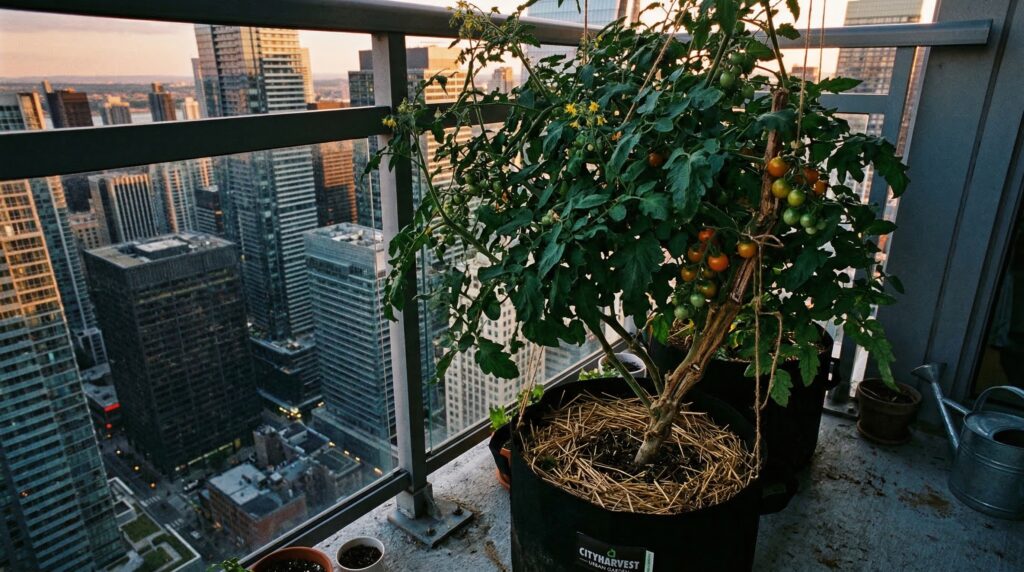
A few years ago, my “perfect” balcony tomatoes just stopped growing. I had been dumping synthetic liquid fertilizers on them every week, following the bottle’s instructions to the letter. But the soil turned crusty, covered in white salt deposits, and effectively died. The more chemicals I added to fix the yellowing leaves, the faster the plants burned out. I realized I was gardening against nature, not with it. I had to find a better way through trial and error, and that meant looking at the biology beneath the soil.
- The “Chemical Trap”: My First Big Lesson
Interviewer: Most urban beginners reach for that famous blue liquid fertilizer because it promises instant results. Was that your first hurdle?
The Grower: Oh, it was a trap. I used to think of plants like machines—input nitrogen, output tomatoes. But synthetic fertilizers are essentially concentrated salts. In a backyard, those salts can flush away into the earth. In a 5-gallon fabric pot, they have nowhere to go. They build up and kill the beneficial fungi and bacteria that naturally feed your plants.
My Lesson Learnt: I tried flushing the pots with gallons of water, but the soil structure had already collapsed. It was compact, anaerobic, and lifeless. I learned that synthetics bypass the natural nutrient exchange between plant roots and the soil food web.
The Solution: I stopped treating my pots like chemistry experiments and started treating them like living ecosystems. I threw out the peat-heavy, pre-fertilized store dirt and learned how to build a “living soil” from scratch.
- The “Living Soil” Toolkit: Coir, Castings, and Fungi
Interviewer: What are the “Must-Haves” in your organic soil cabinet? How do you build an ecosystem on a balcony?
The Grower: I keep it incredibly focused now. The University of California Master Gardener program recently highlighted that container soils need beneficial microorganisms and high porosity to thrive. If you have these three elements, your plants will do the heavy lifting for you:
Worm Castings (Vermicompost): This is the biological engine. It is packed with microbes and natural growth hormones. I use it at a 20% ratio in my base soil mix.
Mycorrhizal Fungi Inoculant: This is the “secret sauce.” It’s a natural powder you sprinkle directly onto the plant’s roots when transplanting. The fungi form a symbiotic relationship with the roots, essentially acting as an extension of the root system to mine water and nutrients from the tiny confines of a container.
Coconut Coir & Perlite: Peat moss becomes hydrophobic (repels water) when it dries out, which happens daily on a windy balcony. I use a mix of 50% coco coir and 30% perlite to ensure the roots can breathe. Soil microbes need oxygen just as much as they need water.
Never pack your soil down when planting in a container. Urban gardeners often try to cram as much dirt into a pot as possible to maximize space. If you compress the soil, you crush the oxygen pockets. Without oxygen, the beneficial bacteria die, and anaerobic (bad) bacteria take over, leading to root rot.
- Why I Rely on Biological Inputs
Interviewer: You’ve mentioned that sometimes kitchen compost isn’t enough for heavy-feeding plants like peppers or tomatoes. Where do you go when they need a boost?
The Grower: When plants enter their fruiting stage, they drain the small volume of soil very quickly. But instead of reaching for a chemical NPK spike, I use organic, slow-release inputs that feed the microbes, which then feed the plant.
The Organic Edge:
- Targeted Slow-Release: I use OMRI-listed (certified organic) Alfalfa Meal for root development and Kelp Meal for micronutrients. They break down slowly, meaning it’s impossible to “burn” your plants with them.
- Liquid Compost Tea: This is my absolute favorite urban hack. I steep worm castings and a tablespoon of organic molasses in a gallon of water with an aquarium bubbler for 24 hours. The molasses feeds the bacteria, multiplying them by the billions. I pour this biological “booster shot” into my containers once a month.
- The Industry Shift: It’s not just a hobbyist trend anymore. The Organic Trade Association just reported in March 2026 that U.S. organic food sales reached over $70 billion, growing three times faster than the conventional market. Agricultural science proves that biological gardening creates more resilient, nutrient-dense crops. We can replicate that exact science on a 15th-floor balcony.
- Managing Urban Pests Naturally
Interviewer: Wait, if you aren’t using chemical pesticides, how do you handle the inevitable aphid or spider mite outbreak? Don’t city apartments get swarmed?
The Grower: Yes, concrete jungles are strangely prone to pests because there are no natural predators! No birds, no ladybugs, no praying mantises up here. But I refuse to spray poisons where I eat and live.
My Success Story: My first year going organic, I had a massive aphid infestation on my kale. Instead of spraying, I utilized companion planting. I planted heavily scented basil and marigolds in the same containers as my vegetables. The aromatic oils naturally confuse and deter pests.
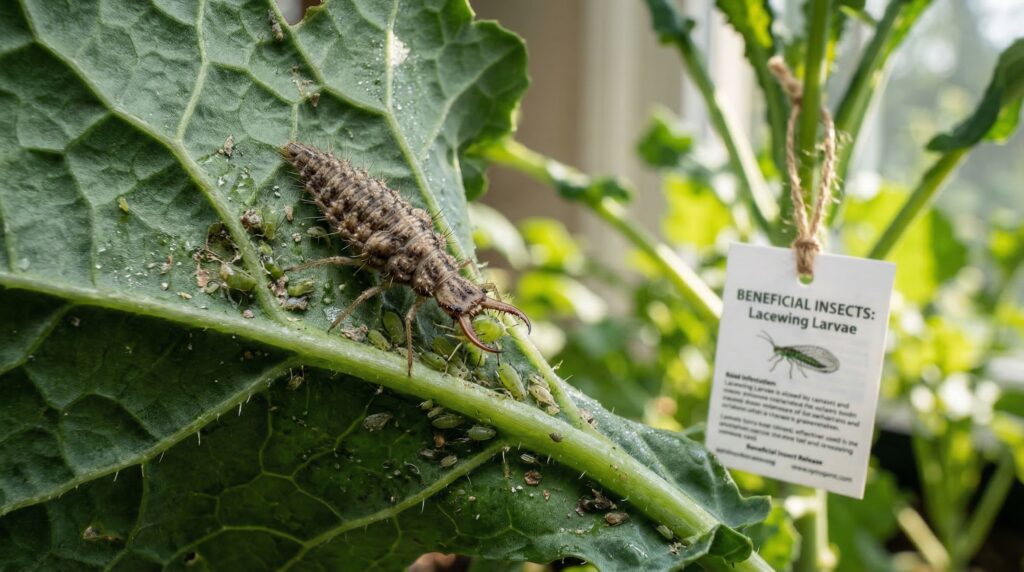
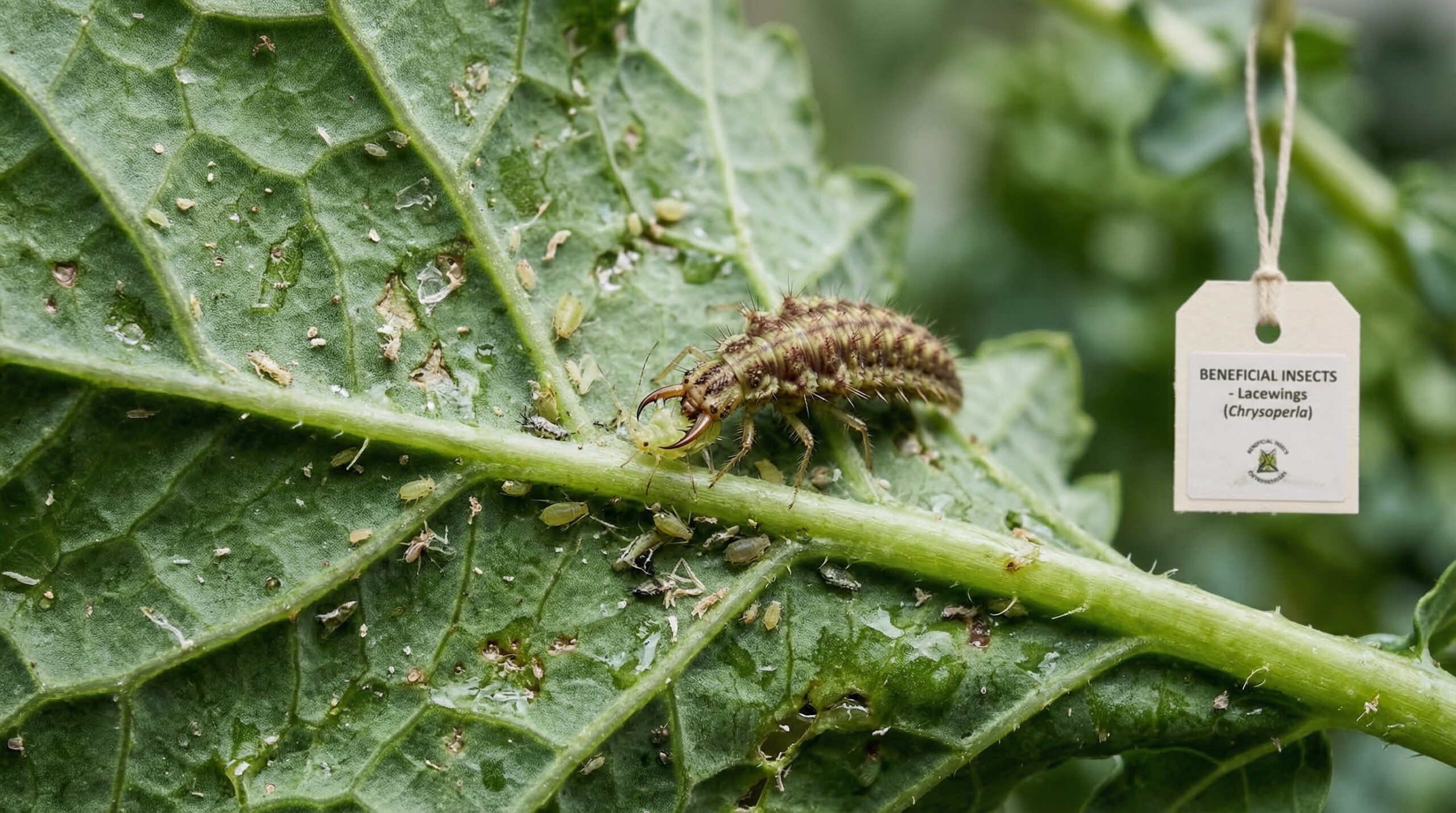
When things get out of hand, I literally order beneficial insects. I will hang a tiny sachet of predatory mites (like Phytoseiulus persimilis) on a tomato plant. They are microscopic, they hunt down the bad mites, and when the food source is gone, they naturally die off. It’s the cleanest, most beneficial way to garden. Nature does the policing for you.
- Key Takeaways for the Natural Urbanite
- The “Finished” Compost Rule: Never put raw kitchen scraps directly into a small balcony pot. In an enclosed container, rotting food attracts fungus gnats and creates mold. Process it in a worm bin first, or buy finished compost.
- Wind is a Desiccator: On high-rise balconies, wind dehydrates the biological life in your soil fast. I use a layer of organic rice straw mulch on top of my pots to act as a protective blanket. It keeps the microbes shaded and moist.
- Filter the Drain: Organic matter breaks down over time and can turn to sludge at the bottom of a pot, clogging drainage holes. I always place a breathable layer of landscape fabric at the base of my grow bags to keep the soil in and let the water out.
SmartWealth Tip: The “Compound Interest” Strategy
Think of your soil like a financial asset.
The Value: Synthetic chemicals are like taking a high-interest payday loan—they give your plants a quick, unnatural spike, but they destroy your long-term soil equity, forcing you to buy more chemicals every month.
The Return: Biological gardening is like compound interest. By investing in a high-quality living soil mix, composting your own kitchen waste, and brewing DIY compost tea, you stop spending $100+ per season on specialty bottled fertilizers. Your soil actually gets richer, more fertile, and more valuable with every single season you reuse it.
Synthetic vs. Biological Containers
|
Feature |
Synthetic Gardening |
Biological (Organic) Gardening |
|
Nutrient Delivery |
Instant, but depletes soil structure |
Slow, sustained release via microbes |
|
Soil Health |
Deteriorates and compacts over time |
Improves and aerates with age |
|
Seasonal Cost |
Recurring, high cost (buying liquids) |
Low (using DIY compost and teas) |
|
Pest Resistance |
Low (stressed, force-fed plants) |
High (naturally robust immunity) |
|
Environmental Impact |
High (toxic runoff from balconies) |
Zero (regenerative closed-loop) |
FAQ: Organic Container Gardening
- How do I handle fungus gnats in an apartment without chemical sprays?
Fungus gnats are a sign of overwatering and wet, decaying topsoil. Let the top 2 inches of soil dry out completely. To break the larval cycle, soak “Mosquito Bits” (a natural bacteria called BTI) in your watering can. It specifically targets the larvae without harming your soil biology. - Can I brew compost tea if I live in a small NYC studio?
Absolutely. You only need a 1-gallon bucket and a small aquarium bubbler. If you use high-quality worm castings and keep the water heavily aerated, it smells like a fresh spring forest, not garbage. - What is the best container for organic balcony gardening?
Fabric grow bags. Traditional plastic pots trap heat and moisture, which can suffocate microbes. Fabric bags allow the soil to breathe and cause plant roots to “air prune,” creating a denser, healthier root mass. - Do I need full sun for organic gardening to work?
Not necessarily. While tomatoes need 8+ hours of sun, leafy greens like kale, spinach, and herbs thrive in partial urban shade. Focus your biology-building on these lower-light crops if your balcony is shadowed by other buildings. - How do I know if my container soil is actually “alive”?
Healthy, organic soil should smell deeply earthy and sweet. When you dig an inch down, you might even see tiny white threads wrapping around the perlite—that’s the beneficial mycorrhizal fungi visibly working for you. - Can I reuse my organic container soil next year?
Yes! The University of California Master Gardeners recommend refreshing container soil rather than throwing it away. Simply remove the old root ball, loosen the soil, and mix in 20% fresh compost and dry organic amendments. The microbial life will bounce right back. - Does companion planting actually work in small spaces?
Yes. Even in a 10-gallon pot, planting basil at the base of a tomato plant maximizes vertical space, shades the soil to retain moisture, and masks the scent of the tomato plant from predatory insects.
Final Thought: Working with Nature, Not Against It
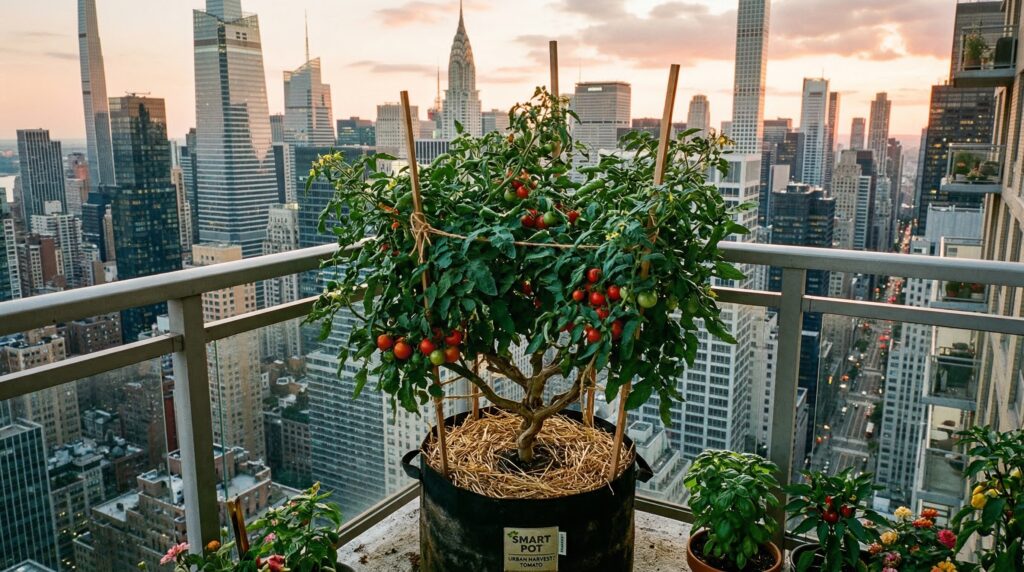
Gardening in a city is about creating a balance in an unnatural environment. You are the architect of that little ecosystem. When you swap chemicals for biology, you aren’t just growing food; you’re learning how to read your plants. A failing plant is usually a sign of a “System Failure”—too much water, too little oxygen, or poor soil life. Fix the system, feed the microbes, and your concrete high-rise will thrive like a natural forest floor.
