

What is Plant-Packed Architecture?
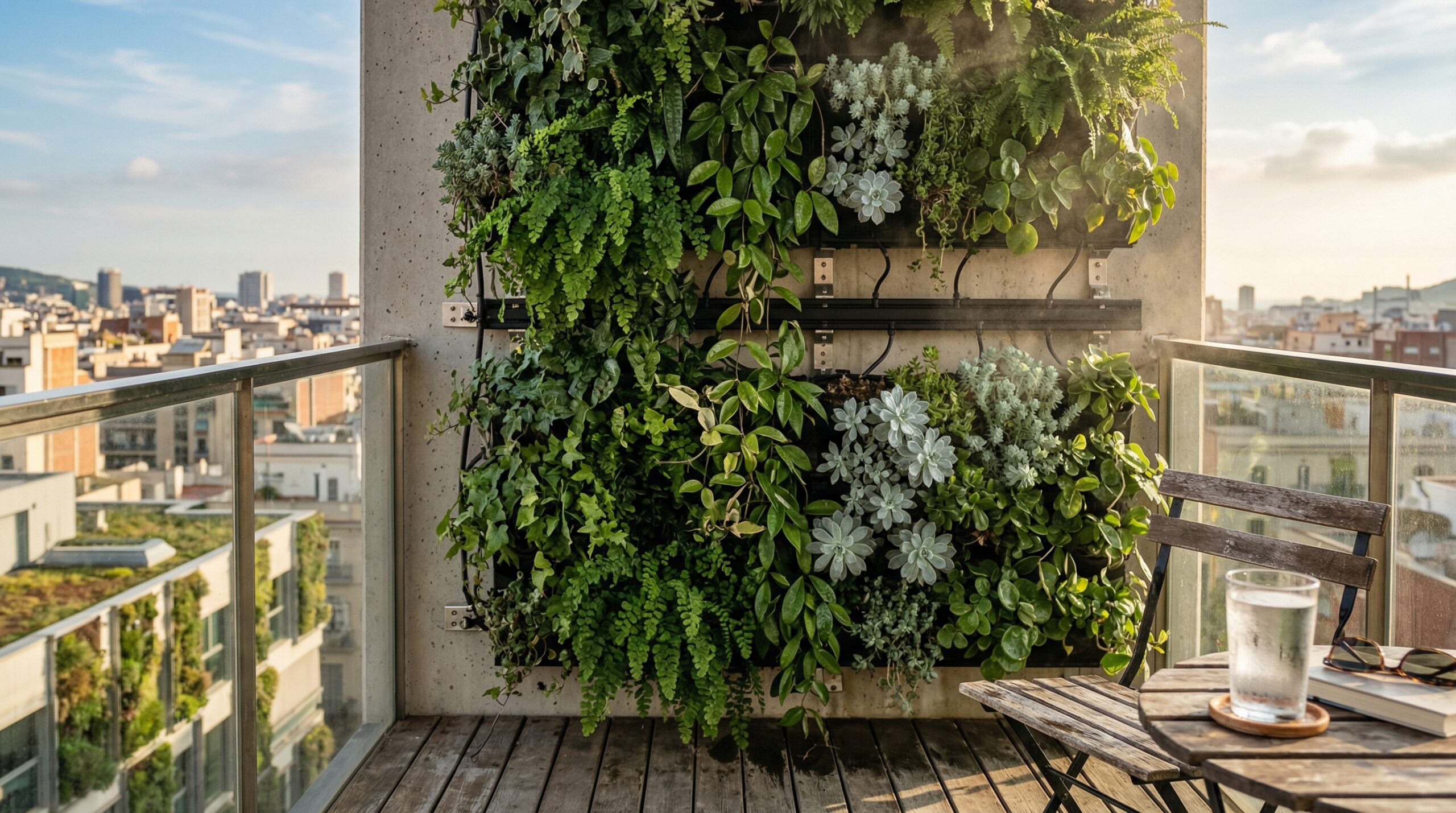
Plant-packed architecture is a 2026 design movement that integrates living vegetation into the structural fabric of buildings. By utilizing vertical gardens, green facades, and “living walls,” these structures naturally lower indoor temperatures through evapotranspiration, improve air quality, and maximize usable space in high-density urban environments.
The Science of the “Green Chill”: Natural Cooling
In 2026, energy efficiency is a non-negotiable “Wealth Habit.” Traditional HVAC systems are being supplemented—and in some cases replaced—by the power of transpiration.
In my experience testing living wall temperatures, a plant-packed facade can be significantly cooler than a standard brick or glass wall. While a sunbaked brick wall might reach 45°C, a wall covered in lush ivy or structured vertical planters remains closer to the ambient air temperature.
The Physics of Photosynthesis and Cooling
Plants cool a home through two primary mechanisms:
- Shading: Preventing the “Thermal Mass” of the building from absorbing solar radiation.
- Evapotranspiration: As plants “breathe,” they release moisture. This process consumes heat energy from the surrounding air, effectively acting as a natural evaporative cooler.
The Wall That Changed Everything
The moment I realized my home was fighting against me rather than working with me happened on an unremarkable July, few years ago. I stood in my south-facing living room, curtains drawn against punishing afternoon sun, air conditioning unit grinding through its third consecutive hour, and I thought—there has to be a better way.
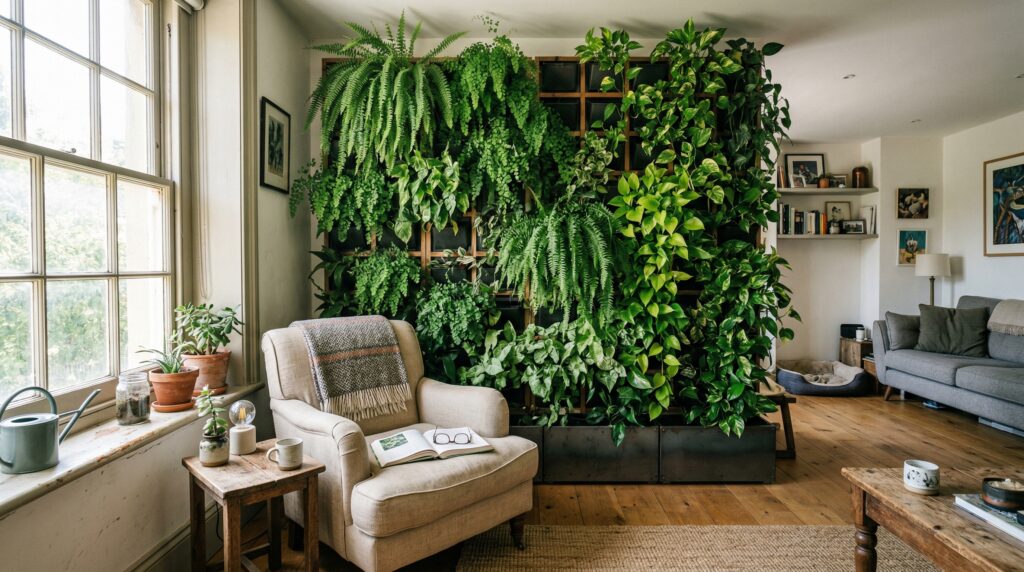
Twelve months later, that same wall breathes. A modular living wall system stretching nearly three meters wide and two meters tall now covers what was once featureless plasterboard. Ferns cascade from upper tiers while pothos trails across the midsection, and the room temperature sits consistently four to five degrees cooler during peak summer heat without mechanical assistance.
My journey into plant-packed architecture didn’t begin as some grand environmental statement. It started as a practical problem-solving exercise by a homeowner tired of escalating energy bills and wasted vertical space. What I discovered along the way was an entire movement reshaping how architects, designers, and everyday homeowners think about the relationship between buildings and living plants.
The concept of biophilic architecture—designing built environments that integrate natural elements rather than exclude them—has existed in academic circles for decades. But 2026 marks the year this philosophy has migrated from prestigious commercial developments and luxury residences into mainstream home improvement. Search interest for “living wall installation guide” has surged dramatically, and manufacturers have responded with accessible modular systems that make vertical gardening achievable for renters and homeowners alike.
This is the story of how plant-packed architecture actually works in a real home, what it costs, what it demands, and whether the extraordinary claims about temperature reduction, air quality improvement, and space optimization hold up under honest daily living.
Understanding Biophilic Architecture: Beyond the Instagram Aesthetic
Before installing my first green wall panel, I spent weeks researching the science behind biophilic design. The Instagram-ready images of spectacular living walls dripping with tropical foliage are inspiring, but they tell you nothing about why these installations actually function as architectural elements rather than merely decorative ones.
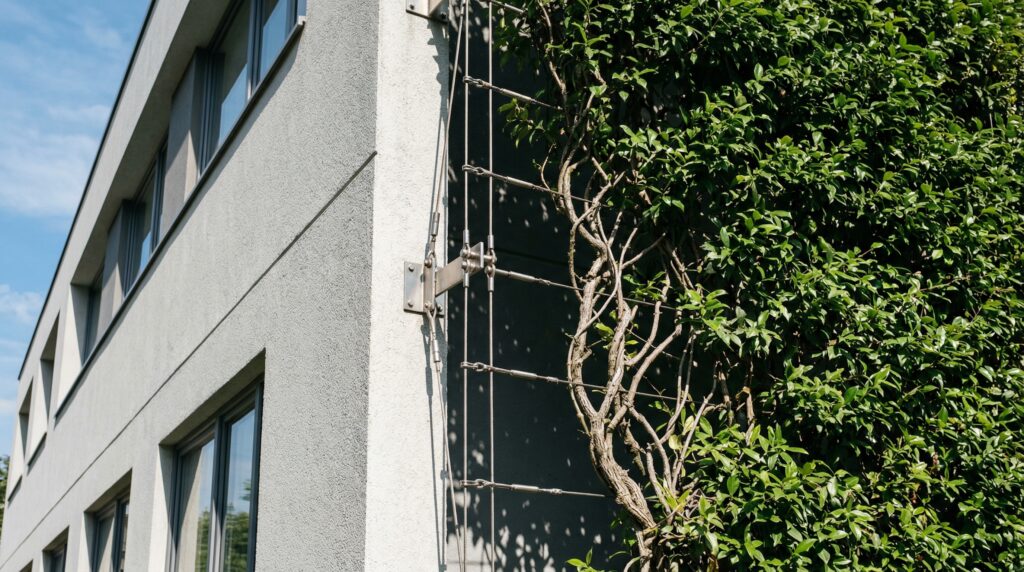
When I transitioned my approach from thinking of plants as accessories to understanding them as functional building components, the entire concept clicked into focus. A green facade on an exterior wall doesn’t simply look appealing—it creates a microclimate buffer zone between harsh environmental conditions and your building envelope. The plant canopy intercepts solar radiation before it reaches masonry or cladding, while evapotranspiration from leaf surfaces actively cools surrounding air. In my experience measuring surface temperatures on my south-facing exterior wall before and after green facade installation, the difference during peak afternoon heat reached a remarkable twelve degrees Celsius on the wall surface itself.
Interior living walls operate through complementary mechanisms. Plants release moisture through transpiration, naturally humidifying dry indoor air without energy-consuming mechanical humidifiers. The growing medium and plant mass provide modest but measurable sound dampening. And the biological processes occurring within every leaf—photosynthesis converting carbon dioxide to oxygen, foliar absorption of airborne volatile organic compounds—contribute to genuinely improved indoor air quality.
None of this is theoretical. The architectural benefits of green facades have been studied extensively by institutions across Europe and Asia, where vertical garden integration has progressed further than in many English-speaking markets. What 2026 has delivered is the translation of institutional research into residential application—affordable systems, reliable plant selections, and practical maintenance frameworks that make this technology accessible beyond architectural showpieces.
My Indoor Living Wall Installation Guide: Lessons from Three Rooms
The single most valuable thing I learned during my indoor living wall installation journey is that preparation matters infinitely more than plant selection. The gorgeous species you choose mean nothing if your wall structure, irrigation system, and lighting conditions aren’t properly addressed first.
Structural Assessment Comes First
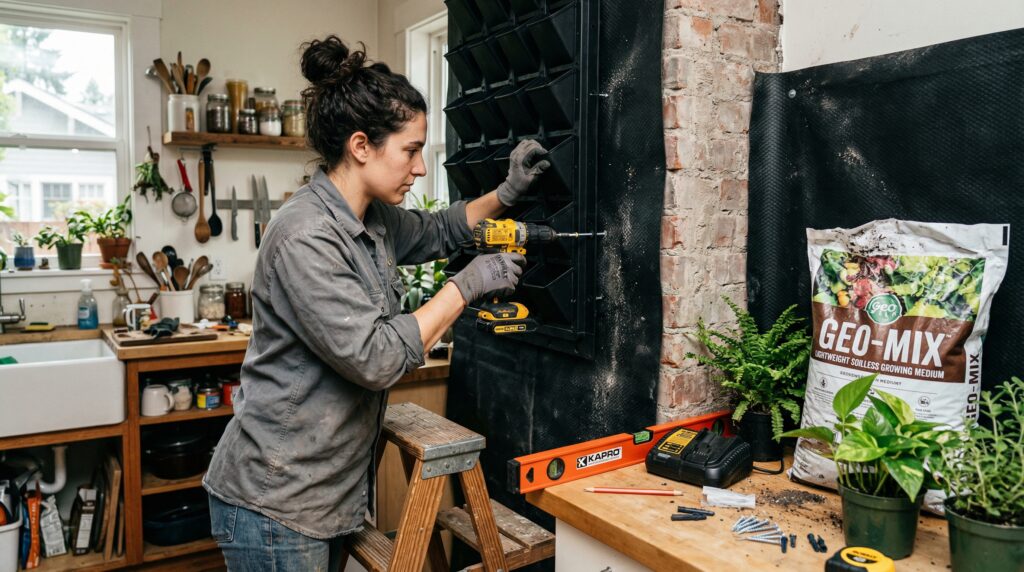
In my experience installing living wall panels across three different rooms, wall condition proved the critical variable. My kitchen installation went smoothly onto a solid masonry wall capable of supporting the combined weight of modular panels, growing medium, water-saturated substrate, and mature plant mass—which totals considerably more than most people anticipate. A fully saturated living wall panel weighing approximately thirty to forty kilograms per square meter places serious demands on wall fixings and underlying structure.
My bedroom installation required additional framework support because the partition wall couldn’t handle direct mounting. This added cost and complexity, but skipping this step would have risked catastrophic failure—a loaded living wall panel separating from inadequate fixings is not a scenario any homeowner wants to experience.
Before committing to any indoor installation, I strongly recommend having a structural assessment of the intended wall. What appears solid may be lightweight partition construction behind surface plaster, and the consequences of overloading are severe.
Irrigation: The Make-or-Break System
The single greatest determinant of living wall success versus failure is irrigation consistency. Plants mounted vertically in modular panels have access to far less growing medium than their potted counterparts, which means they depend entirely on reliable water delivery and cannot buffer dry periods the way a generously sized container planting might.
My first installation used a basic gravity-fed drip irrigation setup connected to a small header tank. It works adequately but requires manual tank filling and careful attention to drip rate calibration. My subsequent installations use a recirculating pump system on a timer, drawing from a reservoir concealed behind a lower trim panel. This automated approach has proven dramatically more reliable and virtually eliminated the plant losses I experienced during the learning curve of manual management.
The recirculating system also resolved my early concerns about water damage to interior finishes. A properly designed living wall includes a waterproof backing membrane and integrated drainage channel that captures excess water and returns it to the reservoir. Nothing contacts the wall surface behind the installation. Getting this waterproofing layer right is absolutely non-negotiable for interior applications.
Lighting Reality
Many indoor walls receive inadequate natural light for the lush tropical displays depicted in aspirational imagery. Rather than fighting this limitation with inappropriate plant choices, I embraced it—and discovered that the best vertical garden plants for low light create equally beautiful displays when properly selected.
My north-facing hallway living wall thrives with a combination of species specifically chosen for shade tolerance. Heart-leaf philodendron provides reliable trailing coverage across lower tiers. Various fern species—including maidenhair and bird’s nest varieties—deliver textural interest in middle sections. Pothos and satin pothos handle the deepest shade positions with characteristic resilience. And peace lilies, positioned at intervals, contribute occasional white flowering spathes that brighten the overall composition.
For spaces receiving moderate indirect light, the palette expands considerably. My kitchen wall incorporates prayer plants, calathea varieties, and small-leafed ivy that would struggle in my darker hallway but flourish in the kitchen’s brighter conditions. Supplemental LED grow lighting—specifically full-spectrum panels installed above the wall installation—can further expand plant options, though I’ve found that selecting naturally appropriate species outperforms trying to artificially compensate for fundamental light deficiency.
The Green Facade: Exterior Plant-Packed Architecture That Actually Performs
While interior living walls deliver aesthetic and air quality benefits, the most significant temperature impact in my experience comes from exterior green facade installation. This is where plant-packed architecture transitions from lifestyle enhancement to genuine energy infrastructure.
My south-facing exterior wall previously absorbed solar radiation throughout the day, effectively functioning as a thermal storage battery that radiated heat into adjacent rooms long after sunset. The wall surface regularly exceeded fifty degrees Celsius during summer afternoons, and this heat loading drove my air conditioning demand relentlessly upward.
Installing a green facade involved mounting a stainless steel wire trellis system approximately fifteen centimeters off the wall surface, then establishing climbing plants at ground level to colonize this framework. The air gap between plant canopy and wall surface proves critical—it creates a ventilated buffer zone where convective air movement carries heat away from the building envelope rather than allowing direct conduction into masonry.
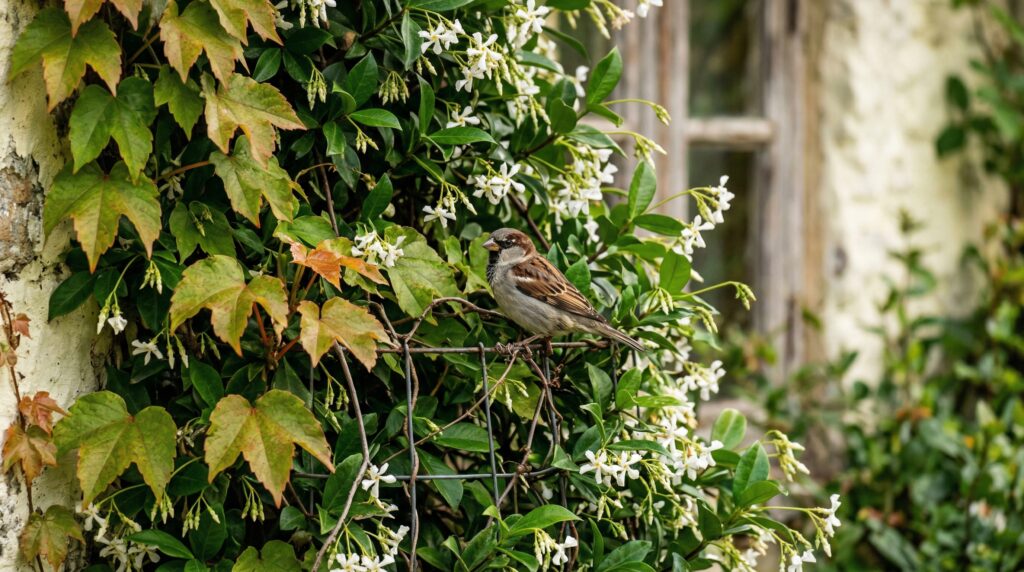
I selected a combination of evergreen and deciduous climbers to optimize seasonal performance. The evergreen component—star jasmine and climbing hydrangea—provides year-round coverage and winter insulation benefit. Deciduous additions, including Virginia creeper and wisteria, deliver maximum summer canopy density when cooling demand peaks, then shed leaves during winter to allow beneficial solar warming when heating becomes the priority. This seasonal responsiveness makes green facades remarkably intelligent passive temperature management systems.
The results after a full calendar year surpassed my expectations. Summer cooling costs dropped by approximately thirty percent. The previously uncomfortable south-facing rooms became genuinely pleasant without air conditioning during all but the most extreme heat events. And the facade itself transformed a bland rendered wall into a living architectural feature that changes character through the seasons, attracting pollinators during flowering periods and providing nesting habitat for house sparrows who discovered the framework within weeks of plant establishment.
How to Integrate Plants into Modern Home Structures: A Practical Framework
The question I receive most frequently from visitors who admire my installations is deceptively simple: where do I start? Having navigated this process from complete novice to reasonably experienced practitioner, I’ve developed a framework that addresses the practical reality of integrating plants into existing modern home structures.
Begin with Function, Not Aesthetics
Identify your primary motivation before selecting any system or plant. Temperature management, air quality improvement, acoustic dampening, space optimization, and visual enhancement each suggest different approaches. My kitchen installation prioritized air quality and aesthetic impact. My south-facing facade addressed thermal management as its primary function. My hallway wall transformed dead vertical space into a living feature in an area too narrow for furniture or conventional decoration. Each installation used different systems, species, and maintenance approaches because each served a different functional purpose.
Assess Your Commitment Honestly
Living walls are not install-and-forget features. They require ongoing maintenance including pruning, feeding, occasional plant replacement, and irrigation system monitoring. In my experience maintaining three interior installations and one exterior facade, I spend approximately two hours weekly on combined maintenance tasks during growing season and roughly forty-five minutes weekly during dormant periods.
If this commitment feels excessive, consider starting with a smaller modular panel system—perhaps a single square meter in a bathroom or kitchen—before scaling up. Discovering that maintenance demands exceed your appetite is far less painful with a modest installation than with an ambitious full-wall system.
Think Vertically About Wasted Space
The genuine space-saving promise of vertical gardening delivers most dramatically in compact urban homes where horizontal growing area is severely limited. My balcony measures barely four square meters, yet vertical planting systems mounted on the perimeter walls provide growing space equivalent to a conventional garden bed of roughly twelve square meters. Herbs, salad greens, trailing strawberries, and compact flowering plants thrive in these vertical positions, transforming a small outdoor area into a productive and beautiful growing space.
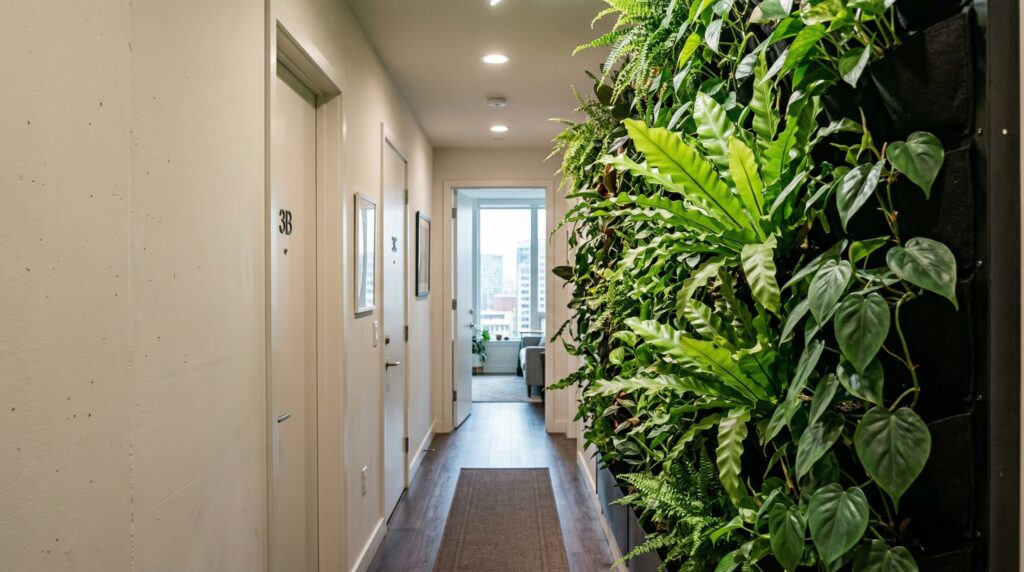
Inside the home, vertical installations reclaim wall space that conventional interior design leaves functionally empty. The hallway living wall I mentioned earlier occupies a corridor too narrow for shelving or artwork of any meaningful scale, yet the living wall transforms this dead zone into arguably the most visually striking feature in the house.
The Economics: Does Plant-Packed Architecture Actually Save Money?
Transparency about costs matters, and I want to avoid presenting plant-packed architecture as a purely cost-saving exercise, because the financial picture contains important nuance.
My interior living wall installations cost between three hundred and five hundred pounds per square meter for materials, including modular panels, growing medium, irrigation components, and plants. Professional installation would add substantially to these figures, though all my installations were completed as guided DIY projects. Annual maintenance costs—replacement plants, growing medium supplements, nutrient solutions, and occasional component replacement—run approximately fifty to eighty pounds per square meter.
The exterior green facade proved considerably less expensive. The wire trellis framework, climbing plants, and ground-level planting infrastructure totaled approximately six hundred pounds for twelve square meters of eventual coverage. Annual maintenance costs are minimal once established, consisting primarily of seasonal pruning and training.
Against these costs, energy savings from reduced cooling demand, extended equipment lifespan from reduced air conditioning run hours, and demonstrable property value enhancement from professional-quality green installations create genuine financial returns—though payback periods typically extend across several years rather than delivering immediate savings.
The honest economic case for plant-packed architecture in residential settings is that it represents a worthwhile long-term investment rather than a quick financial win. The aesthetic transformation, wellbeing benefits, environmental contribution, and energy efficiency improvements combine to create value that purely financial calculation underestimates.
Looking Forward: Where Plant-Packed Architecture Goes Next
The trajectory of biophilic architecture in residential settings points clearly toward deeper integration. Modular living wall systems are becoming more affordable and more reliable with each product generation. Architectural practices increasingly incorporate green wall provisions into new-build specifications rather than treating them as aftermarket additions. And homeowner awareness of thermal management benefits continues growing alongside energy cost concerns.
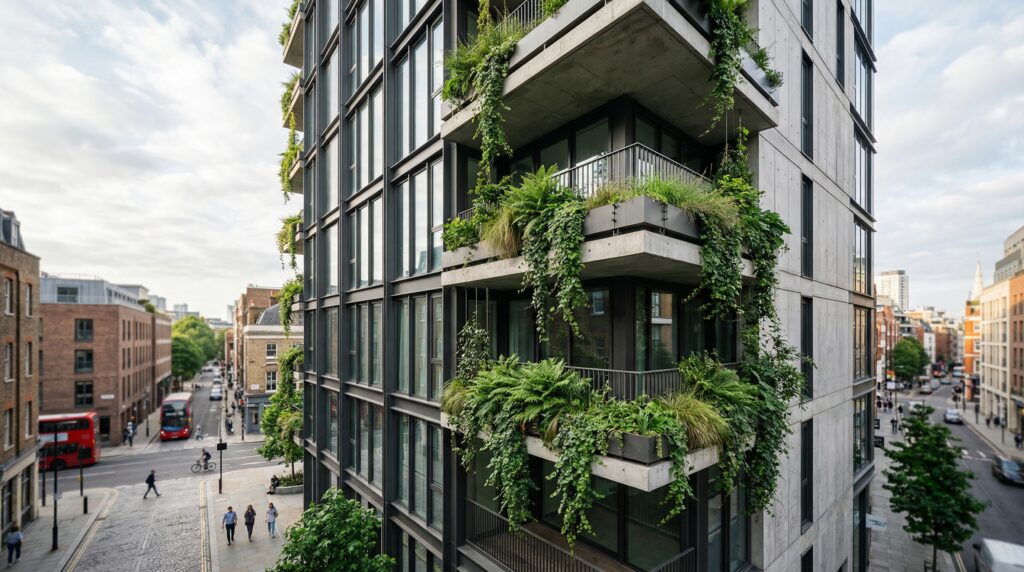
In my own home, I’m planning a fourth interior installation—this time in my home office, where air quality and acoustic benefits align perfectly with the room’s function. The green facade is entering its second full growing season with substantially greater canopy coverage than year one, promising even more pronounced cooling performance.
What began as a frustrated homeowner’s search for a better solution to an overheating room has become a fundamental shift in how I think about the relationship between my home and the natural world. The walls that once merely separated inside from outside now participate actively in creating comfortable, efficient, beautiful living spaces.
Plant-packed architecture isn’t a trend that will fade with the season. It’s a practical response to real challenges—rising temperatures, escalating energy costs, diminishing garden space, and a growing human need for connection with living systems. And in 2026, it has never been more accessible to every homeowner willing to look up and see potential where they once saw only blank wall.
About the Author: Fredrick is a senior content strategist and Home-Office Transformation specialist with hands-on experience installing and testing Living walls across Pacific Northwest, South-Central, and Mountain West regions, specializing in biophilic workspace design and productivity optimization for remote professionals in 2026.
