
I used to be a “serial plant killer.”
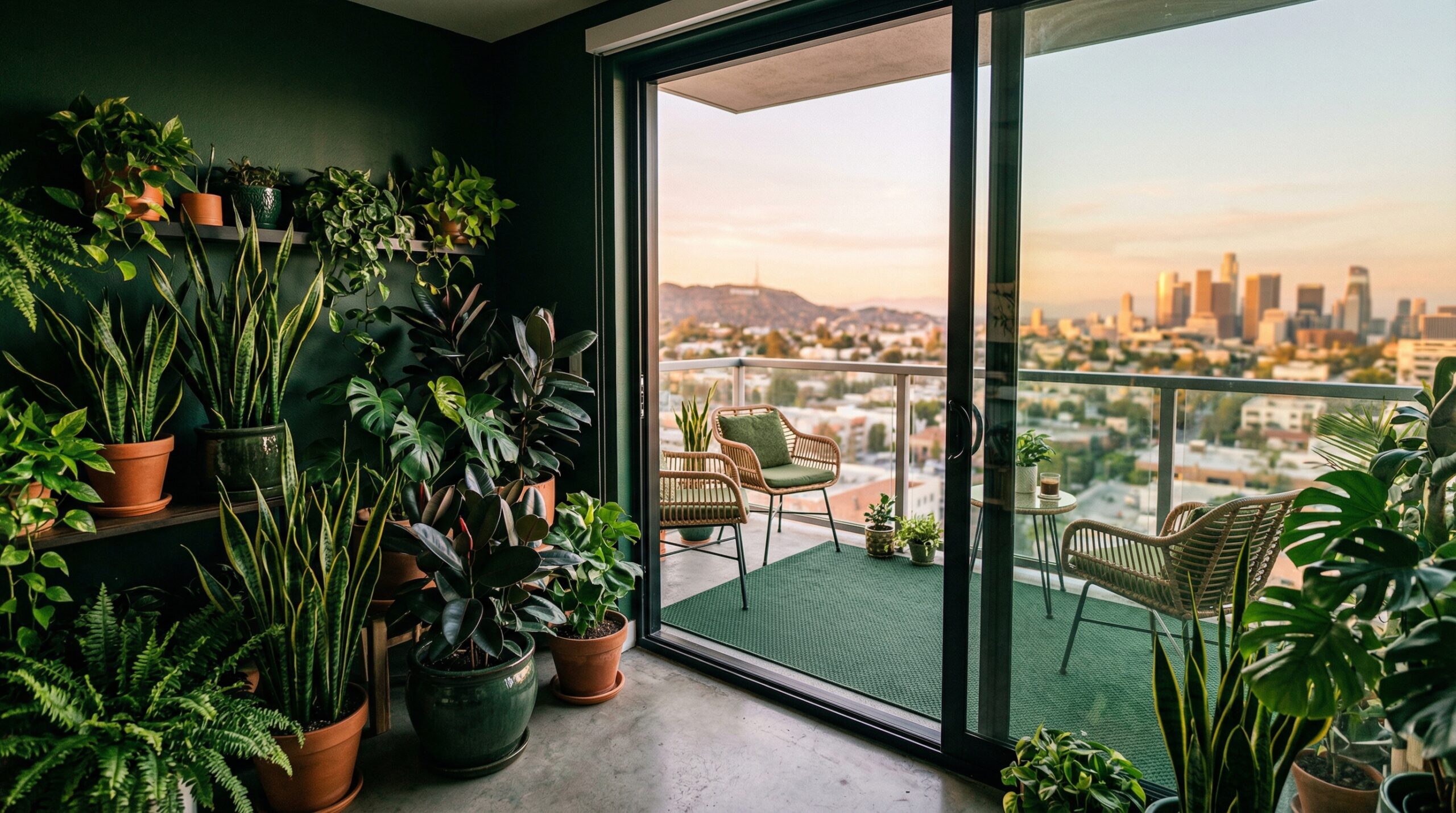
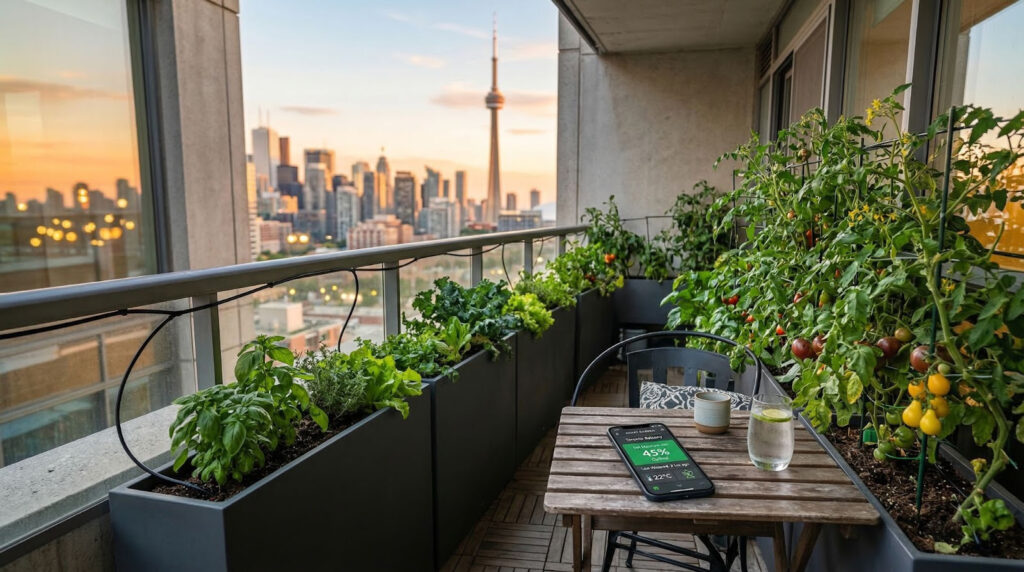
In 2023, I lived in a beautiful condo in downtown Toronto with a stunning South-facing balcony. I bought everything: heirloom tomatoes, exotic peppers, and expensive French lavender. By July, I had a graveyard of dried sticks. My issue wasn’t a lack of love; it was a lack of data.
Living on the 18th floor, I didn’t realize that a 30-minute window of intense afternoon sun, combined with lakefront winds, could raise my soil temperature to 45°C and evaporate every drop of water in my small pots while I was at my 9-to-5. I was guessing, and in urban gardening, guessing is expensive.
That’s when I pivoted. I decided to stop treating my garden like a hobby and start treating it like a Smart System. I integrated sensors, automated my watering, and used data to dictate my planting schedule. Today, my balcony is a lush, self-sustaining ecosystem that thrives even when I’m away for a week.
In this Smart Gardening step-by-step guide to setting up reservoir-based drip irrigation, recommendations for smart plugs/lights, and plant-specific tech strategies for small spaces, you will learn exactly how to transition from a frustrated plant killer to a successful urban gardener. By leveraging smart planters, automated drip irrigation, and app-controlled lighting, you can build a resilient, low-maintenance green space—whether you are dealing with a shaded Mississauga/Toronto condo or a cramped New York City apartment.
Key Takeaways
- Start with Data, not Devices: Buy a sensor before you buy an automated irrigation system.
- No Tap Required: Reservoir-based drip systems allow high-rise dwellers to automate irrigation without outdoor plumbing.
- Control the Light: Smart plugs paired with LED grow lights overcome the limited natural sunlight of urban condo layouts.
- Group by Need: Always configure your automated watering zones by grouping plants with similar hydration needs together.
- Invest to Save: Garden automation saves money over time by eliminating the cost of replacing dead plants and reducing grocery bills.
- Solve for the “Weakest Link”: If your balcony is windy, solve for hydration. If it’s dark, solve for supplemental lighting.
- Wi-Fi is your Lifeline: Ensure your signal reaches the balcony before you invest in IoT gear.
- Consistency is Key: Automated systems solve the #1 cause of plant death in apartments: inconsistent watering.
1. What is “Smart Urban Gardening” (Beyond the Hype)
To most people, “Smart Gardening” sounds like expensive gadgets for lazy people. In the 2026 urban landscape, it’s actually about Precision Resource Management.
In a city, we have three major constraints: Time, Space, and Micro-climates. * Smart Gardening is the use of IoT (Internet of Things) devices—sensors, timers, and automated hubs—to monitor these constraints in real-time.
- My Lesson Learnt: You don’t need a robot to plant your seeds. You need a system that tells you why your plant is dying before it actually happens.
2. The “First Three” Devices Every Urbanite Needs
When I started, I bought a $300 “all-in-one” indoor smart garden. It was fine for lettuce, but it didn’t help my balcony. If you want to build a real “Smart Urban Garden,” start with these three foundational layers:
Layer 1: The Soil Moisture Sensor (The “Vitals” Monitor)
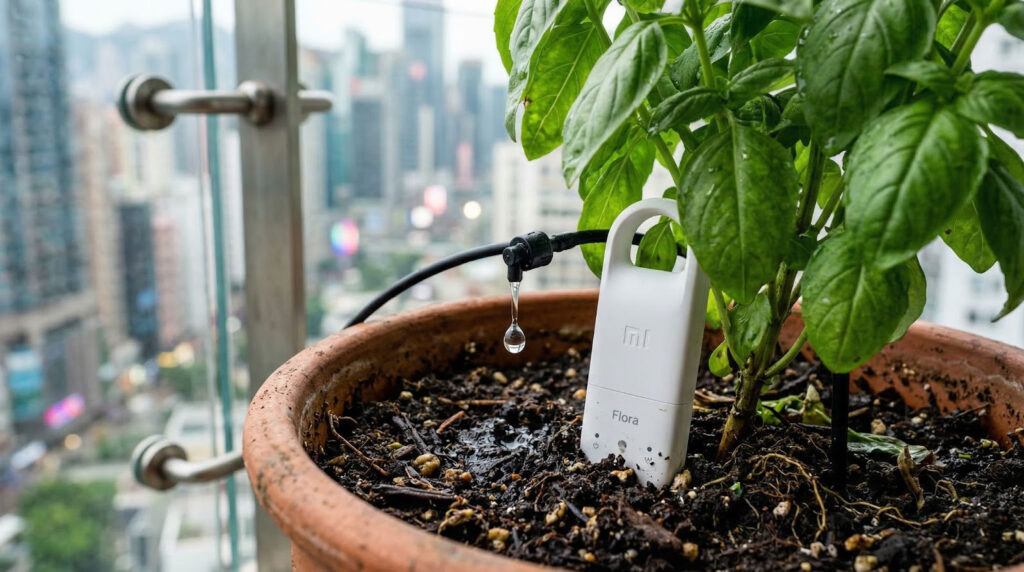
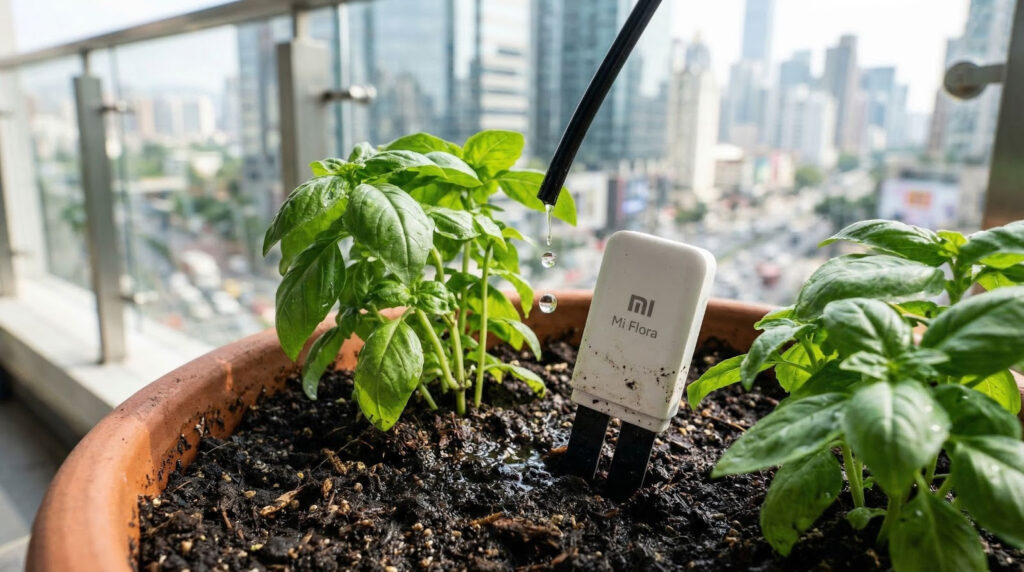
This was my game-changer. I use the Xiaomi Mi Flora (or the 2026 equivalent Bluetooth sensors). You stick it in the soil, and it syncs to your phone.
- What it taught me: I discovered that my “thirstiest” plants were actually drowning because I was over-watering to compensate for the wind. The sensor showed me that the top inch of soil was dry, but the roots were sitting in a swamp.
- The Smart Move: Buy one for your “problem child” plant first. Use the data to learn the watering rhythm of your specific balcony.
Layer 2: The Smart Irrigation Timer (The “Life Support”)
If you have more than five pots, manual watering is a trap. I installed a Bluetooth/Wi-Fi Hose Timer (like the Orbit B-hyve).
- The Fail: My first timer wasn’t Wi-Fi enabled. I went to Vancouver for a weekend, a heatwave hit Toronto, and I couldn’t trigger an extra watering cycle from my phone.
- The 2026 Standard: Always get a Wi-Fi hub version. It allows you to “Override” the schedule based on live weather alerts.
Layer 3: The Smart Weather Station
Standard city weather apps are useless for high-rise dwellers. The temp at Pearson Airport is not the temp on your 20th-floor balcony. I use a Netatmo Weather Station mounted to my railing. It tracks the specific “Heat Island” effect of my concrete balcony, allowing me to move sensitive plants indoors before they fry.
3. The “AeroGarden” Gateway
If you are completely new to this and the idea of “wiring a balcony” feels overwhelming, I always recommend starting with an AeroGarden Harvest or Bounty Series.
Why I Support This as a “Gateway” Product: Most urban gardening failures happen in the first 14 days (germination). The AeroGarden is a “Done-for-You” hydroponic system. It manages the light cycles and tells you exactly when to add nutrients.
- My Strategy: I use my AeroGarden indoors during the winter to grow “Starter Plugs.” Once the Toronto frost clears in May, I transplant those strong, smart-grown seedlings into my outdoor balcony pots. It bridges the gap between indoor tech and outdoor reality. You can find the latest 2026 models [via my curated link here], which now feature enhanced LED spectrums for higher nutrient density.
4. Overcoming the “Faraday Cage”
In North American cities, our apartments are often “Faraday Cages”—thick concrete walls that kill Wi-Fi signals.
My Lesson Learnt: My first smart timer kept “dropping off” the network. I realized the Wi-Fi signal couldn’t penetrate my double-paned balcony glass.
- The Fix: I moved my Smart Hub (the bridge) to the outlet closest to the balcony door.
- Use Outdoor-Rated Smart Plugs for your balcony lights and pumps. Ensure they are IP65 waterproof. I once used an indoor plug “just for a night,” a storm rolled in, and I shorted out my entire living room circuit.
5. The Benefits: Why Go Smart?
Beyond just “keeping plants alive,” the smart approach offers three distinct urban advantages:
- Water Conservation: My smart system uses 35% less water than my manual hose-watering did. By targeting the roots and watering only when the sensor hits 15% moisture, I’m not wasting a drop.
- Pest Early-Warning: When a plant is stressed, its moisture uptake changes. My app sends me an “Abnormal Water Usage” alert. Often, I’ll go outside and find the beginning of an aphid infestation that I caught because the plant’s “metabolism” spiked.
- Mental Freedom: The “Vacation Guilt” is gone. I can be in another country and know my garden is thriving.
6. Step-by-Step: Setting Up Your Automated Balcony
Ready to transition from a frustrated plant killer to a successful urban gardener? Follow this implementation guide:
Step 1: Map Your Zone and Micro-climate
Observe your space for 3–5 days. Check your local USDA Hardiness Zone, but remember that high-rises often run a half-zone colder due to wind, or a half-zone warmer if enclosed by glass.
Step 2: Choose Your Containers Wisely
Opt for self-watering containers for high-maintenance plants like tomatoes or cucumbers. These pots feature a reservoir at the bottom that uses capillary action to pull moisture into the soil, acting as a failsafe if your primary system fails.
Step 3: Install a Reservoir Drip System
Most high-rise balconies lack a water spigot. Use a closed-loop system:
Place a large, lidded water container (like a 5-gallon bin) in a shaded corner to prevent algae growth.
Drop in a Wi-Fi-enabled smart water pump.
Run the main tubing line behind your pots and use T-connectors to run individual drip stakes into each container.
Step 4: Add the Brains (Sensors)
Place your moisture sensor in your most sensitive “problem child” plant. Set the app to ping your phone when moisture drops below 20%, triggering your irrigation pump manually or via an automated schedule.
Smart Wealthhabits Tip: The “Resale Value” of a Smart Garden
We don’t just grow food; we build Digital Assets.
- The Investment: A full smart setup (Hub + 3 Sensors + Timer) costs roughly $250.00.
- The Value Add: If you are a renter or looking to sell your condo, a “Smart-Equipped Balcony” is a massive selling feature. In 2026, “Move-in Ready Greenery” is a premium search term.
- The Savings: By automating, you eliminate the “Replacement Cost.” I used to spend $200/year replacing dead plants. My smart system paid for itself in exactly 14 months. That is a 100% ROI that keeps giving.
FAQ: Smart Urban Gardening
1. Is “Smart Gardening” expensive to maintain? The initial cost is the highest part. Monthly “maintenance” is almost zero. Most sensors run on CR2032 batteries that last 12–18 months. The biggest ongoing cost is your Wi-Fi bill, which you’re already paying.
2. Can these devices survive a North American winter? No. This is a lesson I learned the hard way. You must bring your smart timers and sensors indoors once the temperature hits 5°C. Water trapped in the valves of a smart timer will freeze and crack the internal plastic, ruining the device.
3. Do I need a “Smart Home Hub” like Alexa or Google Home? You don’t need one, but it helps. I have mine set up so I can say, “Alexa, water the balcony for 5 minutes,” if I see a dust storm coming. Most devices come with their own dedicated apps, so a central hub is a luxury, not a necessity.
4. What happens if the Wi-Fi goes down while I’m away? Most high-quality smart timers (like the B-hyve) store the schedule locally on the device. If the Wi-Fi drops, it will continue to water on its last known schedule. You just won’t be able to make manual changes until the connection returns.
5. Are smart gardens “hackable”? Technically, anything on IoT can be. However, the risk is low. A hacker might turn your water on for too long, but they can’t access your home network through a Bluetooth soil sensor. Always use strong, unique passwords for your garden apps.
6. Can I use smart devices for indoor plants too? Absolutely. In fact, smart sensors are even more effective indoors where “over-watering” is the #1 cause of death for houseplants.
7. Does the “Smart” part replace the “Gardening” part? Never. The tech handles the logistics, but you still handle the botany. You still need to prune, check for pests, and enjoy the harvest. Think of the tech as your “Assistant Gardener.”
Final Thought: The Future is Functional
Smart Urban Gardening isn’t about making a “space-age” balcony; it’s about bringing the wisdom of the farm into the constraints of the city. By using data to bridge the gap between your busy life and your plants’ needs, you’re creating more than just a garden—you’re creating a sustainable, resilient home.
About the Author
Susan is a Toronto-based technology consultant and was interviewed by SmartUrbanGarden.com. After years of struggling to keep her plants alive on her 18th-floor downtown balcony due to extreme “Heat Island” effects and lakefront winds, she traded her “black thumb” for a data-driven approach.
By applying her expertise in IoT (Internet of Things) and Precision Resource Management to small-space gardening, Susan successfully automated her high-rise ecosystem to achieve a 100% ROI in just 14 months. A resident of the GTA for over a decade, she specializes in overcoming urban-specific challenges like “Faraday Cage” Wi-Fi interference and reservoir-based irrigation for tap-less balconies. When she isn’t optimizing her drip-irrigation code, she is helping fellow urbanites build resilient, digital-green assets in the heart of the city.
