

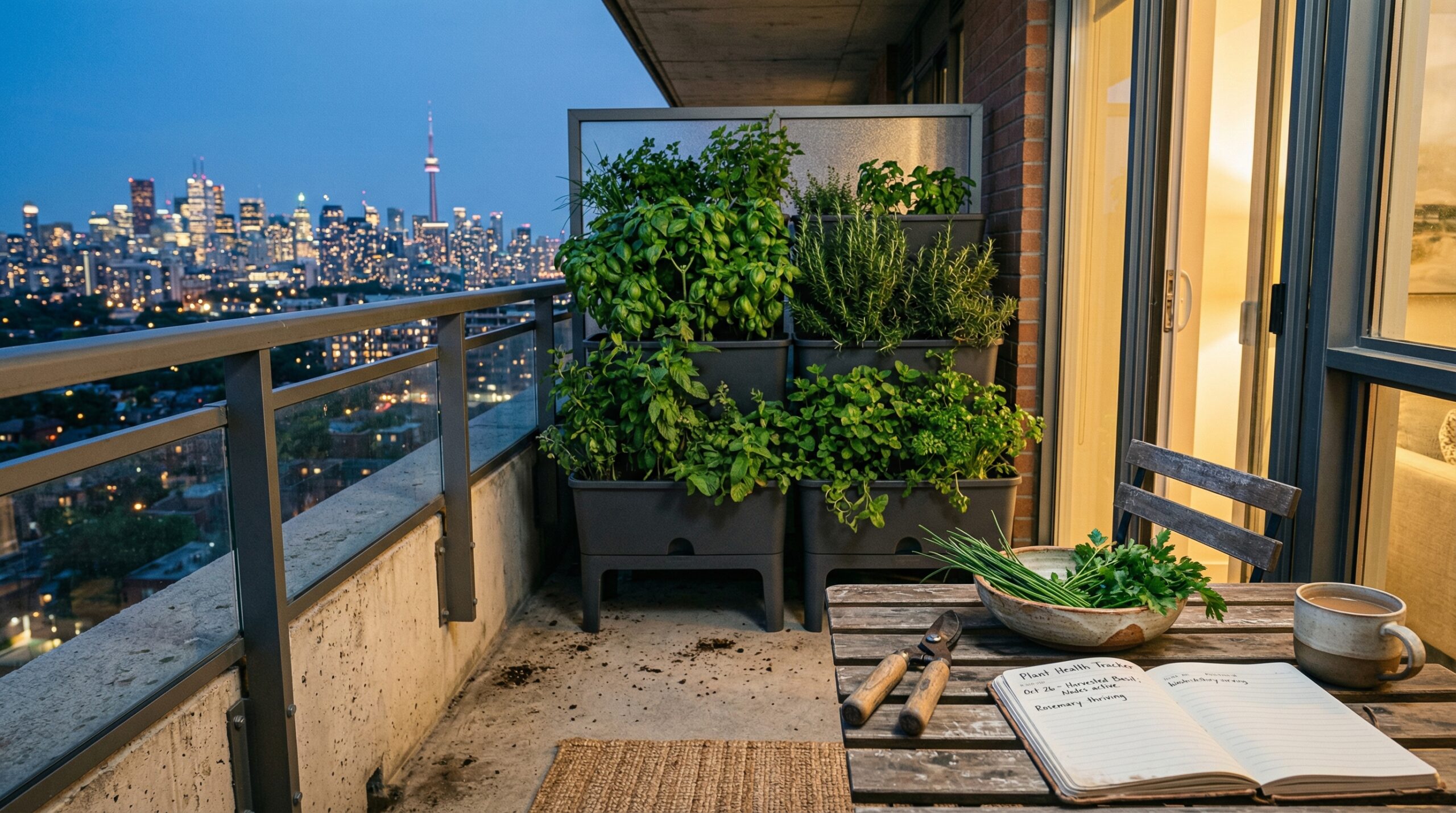
I used to be the person who bought those harvested, plastic-wrapped green leaf clamshells from the grocery store every Tuesday. I’d pay $5.99 for four sprigs of wilted basil, use two, and watch the rest turn into a brown slurry in the back of my fridge.
When I moved to my apartment in the heart of the city, I decided to end the cycle. I bought six different herb pots, lined them up on my railing, and waited for my “chef’s kitchen” dream to come true.
It was a disaster. Within two weeks, my cilantro had “bolted” (turned into a tall, bitter stick), my rosemary was a dried-out skeleton, and my mint had somehow managed to jump pots and started “strangling” my thyme. I realized that balcony herb gardening isn’t just “gardening in miniature”—it’s an exercise in environmental management. After three years of tweaking soil ratios and learning the “personality” of every herb under the Toronto sun, I’ve finally mastered the high-rise harvest. Here is the best Herbs for balcony gardens (Urban Apartment Guide).
1. The “Micro-Climate” Audit: Know Your Exposure
The biggest mistake I made was assuming all herbs were the same. In the city, your “exposure” is your destiny.
- The South-Facing Oven: If your balcony faces South, you have a “Mediterranean” climate. My rosemary, oregano, and sage thrived here, but my cilantro and parsley literally “fried” by noon.
- The North-Facing Shade: If you’re in the shadows of other skyscrapers, you aren’t doomed. My mint, chives, and lemon balm actually preferred the cooler, indirect light.
- The Wind Factor: On the 12th floor, “delicate” herbs like Dill act like sails. I learned to keep my tall, wispy herbs in the “inner circle” of the balcony, sheltered by sturdier pots of lavender.
2. Selecting Your “Urban Warriors” (The Best Herbs for Balconies)
Through trial and error, I’ve categorized herbs into three groups based on how they handle the “Skyscraper Life.”
The “Unkillables” (Beginner Friendly)
- Mint: It’s basically a weed. Lesson Learnt: Never plant mint in a shared pot. It has “runners” that will invade every other plant’s space. Give it its own dedicated container.
- Chives: They are the ultimate urban survivors. They handle frost, wind, and the occasional “I forgot to water you” weekend. Plus, the purple flowers are a great “thriller” for curb appeal.
The “Sun Seekers” (Mediterranean)
- Rosemary: It loves the heat and the wind. I’ve found that the “Arp” variety is particularly hardy for North American winters.
- Thyme: Specifically, “Creeping Thyme.” It acts as a living mulch, covering the soil and preventing evaporation in other pots.
The “Drama Queens” (High Maintenance)
- Basil: It hates the wind and turns black if the temperature drops below 10°C (50°F). I now keep my basil in a “Self-Watering” pot (see the Affiliate section below) to prevent it from wilting the second the sun hits.
- Cilantro: It hates the heat. In a North American summer, it will “bolt” in days. I’ve learned to grow this in the early spring or late fall only.
3. The Engineering of the Herb Pot: Aeration is King
When I started, I used cheap plastic pots with one tiny hole in the bottom. My roots rotted by June.
My Proven Setup: * The Container: I moved to Terra Cotta for my Mediterranean herbs (it breathes) and Fabric Grow Bags for my thirsty herbs (like Mint).
- The Soil: I use my “Urban Gold” Potting Mix (1-part Coir, 1-part Pumice, 1-part Worm Castings). Herbs don’t need heavy fertilizer; they need oxygen at the root level to produce the essential oils that give them their flavor.
4. The “Self-Watering” Advantage
If you are an urban professional, your biggest enemy is the “Summer Heat Wave.” A small herb pot can dry out in 4 hours on a windy balcony.
The Solution: I’ve switched all my “thirsty” herbs (Basil, Parsley, Cilantro) to the AeroGarden Indoor/Outdoor Series or high-quality Self-Watering Railing Planters (like the Lechuza Balconera).
Why I Recommend These: Traditional pots require daily attention. These systems use a “wicking” mechanism and a sub-irrigation reservoir. This means the plant drinks exactly what it needs, and you only have to refill the reservoir once a week. It’s the single best investment I made to stop the “dead herb” cycle. You can find these high-performance planters at [Amazon/Gardener’s Supply], and they pay for themselves in one season by saving you $50+ in replacement plant costs.
5. Pruning for Profit: The “Top-Down” Method
I used to “pick” leaves as I needed them. This is wrong. It tells the plant to stop growing.
The Lesson: You must Prune to Produce. For herbs like Basil and Mint, I always cut the stem just above a “node” (where two new leaves are forming). This forces the plant to “branch out,” turning one single stalk into two. By the end of the summer, my one basil plant looks like a dense bush rather than a tall, leggy stick.
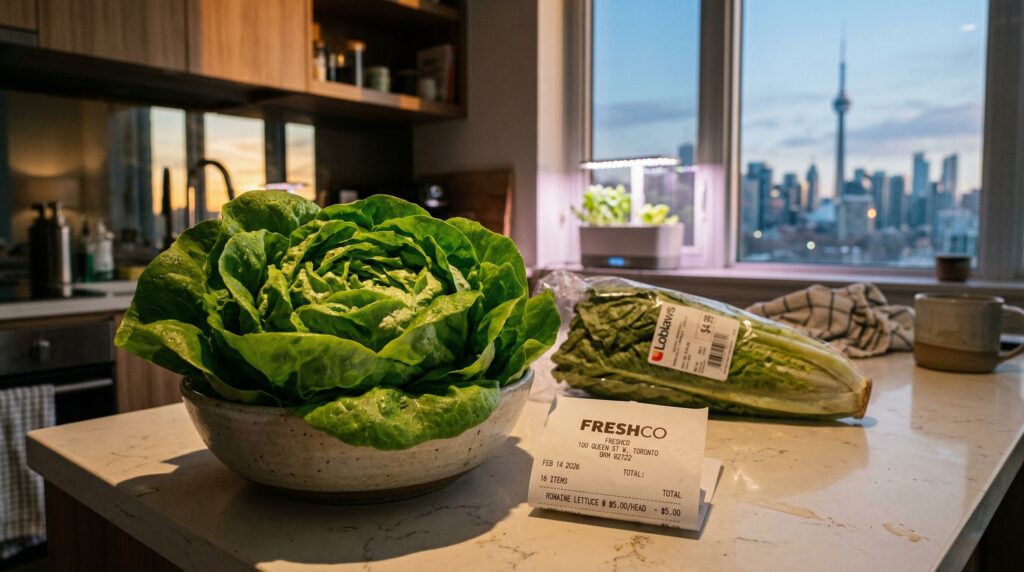
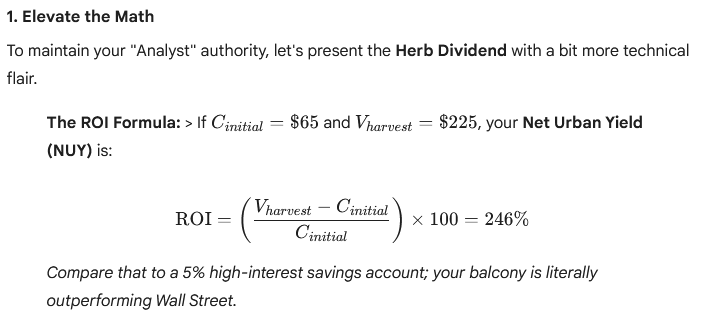
Smartwealth Tip: The “Herb Dividend” Calculation
Let’s look at the ROI (Return on Investment) of a Balcony Herb Garden.
- The Cost: A starter “Culinary Herb Kit” (6 plants) + 1 bag of organic soil + 1 planter = ~$65.00.
- The Yield: Over a 20-week growing season, those 6 plants will yield approximately 40–50 “servings” of fresh herbs.
- The Savings: At an average Toronto grocery price of $5.00 per pack, that’s $200.00–$250.00 in saved grocery costs.
- The Wealth Habit: That’s a 280% return on your initial $65 investment in just 5 months. No stock market index can match the “Dividend” of a well-managed balcony herb garden.
FAQ: Thriving Balcony Herbs
1. Can I grow herbs indoors on a windowsill instead? Yes, but most culinary herbs (especially Mediterranean ones) need at least 6 hours of direct sun. Most North American windows filter out a significant amount of UV light. If you grow indoors, I highly recommend a small LED grow light to supplement the natural sun, or your herbs will become “leggy” and flavorless.
2. Why is my Mint turning yellow? This is usually a sign of Nutrient Depletion or Root Bound issues. Mint grows so fast that it eats through the nutrients in a small pot in about 2 months. Top-dress your mint with an inch of fresh worm castings, or move it to a larger pot.
3. Is it safe to eat herbs grown near a busy city street? Yes, but you must wash them thoroughly. Urban dust can contain heavy metals and soot. I always give my balcony herbs a “vinegar bath” (1-part vinegar to 4 parts water) before eating to ensure they are clean and safe.
4. How do I stop my herbs from flowering? Once an herb flowers, the energy goes into seed production, and the leaves become bitter. This is called “bolting.” The moment you see a flower bud forming, pinch it off immediately. This tells the plant to keep focusing on leaf production.
5. Can herbs survive the winter on a balcony? In North America, Woody herbs like Rosemary, Sage, and Thyme can survive if the pots are insulated. However, I usually bring my Rosemary inside for the winter or wrap the pots in burlap and bubble wrap to protect the roots from the “freeze-thaw” cycle.
6. What is the best herb for a beginner with a “black thumb”? Chives. You can practically forget they exist, and they will still produce. They are cold-hardy, drought-tolerant, and bug-resistant.
7. Why does my store-bought Basil die the moment I bring it home? Grocery store basil is often “over-crowded”—there are usually 10–15 tiny plants in one 4-inch pot. They are competing for air and nutrients. The first thing I do is separate them into 3 or 4 different pots. This gives them the “breathing room” they need to survive the balcony environment.
Key Takeaways:
- Match the herb to the light: Don’t fight your balcony’s exposure.
- Use the “Nodes”: Prune above the leaf joints to double your yield.
- Invest in Infrastructure: A self-watering pot is the “insurance policy” for your urban garden.
- Documentation: Log your harvest dates in your Plant Health Tracker to see which varieties performed best in your specific city zone.
Final Thought: Your Kitchen, Upgraded
There is a specific kind of “Urban Zen” that comes from walking five steps onto your balcony and snipping fresh mojito mint or pizza basil. It connects you to the seasons in a city made of glass and steel. Start small, use the right soil, and watch your balcony become the most productive room in your house.
