
Introduction: From Wilted Store-Bought Herbs to a Living Kitchen Wall
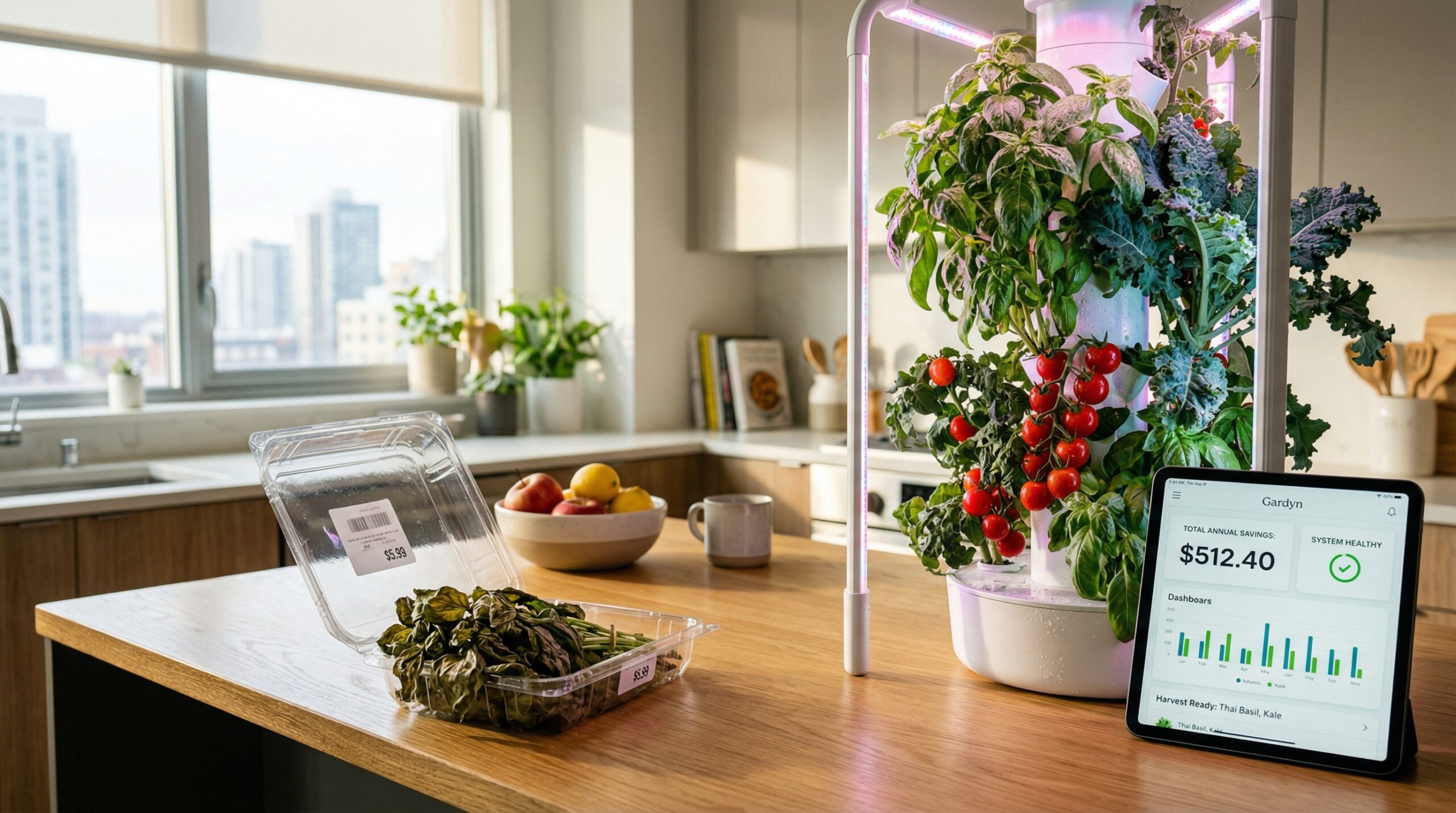
The sinking feeling of pulling a $4 clamshell of “organic” basil from my fridge, only to find brown, slimy leaves three days after purchase, won’t just let go quickly. In my experience testing honeyberry yields and various indoor growing systems over the past two years, I’ve learned one hard truth: the grocery store produce aisle is designed to fail you. By 2026, a single head of organic romaine pushes five dollars at big-box stores—and that’s if it isn’t already wilted by the time you get it home.
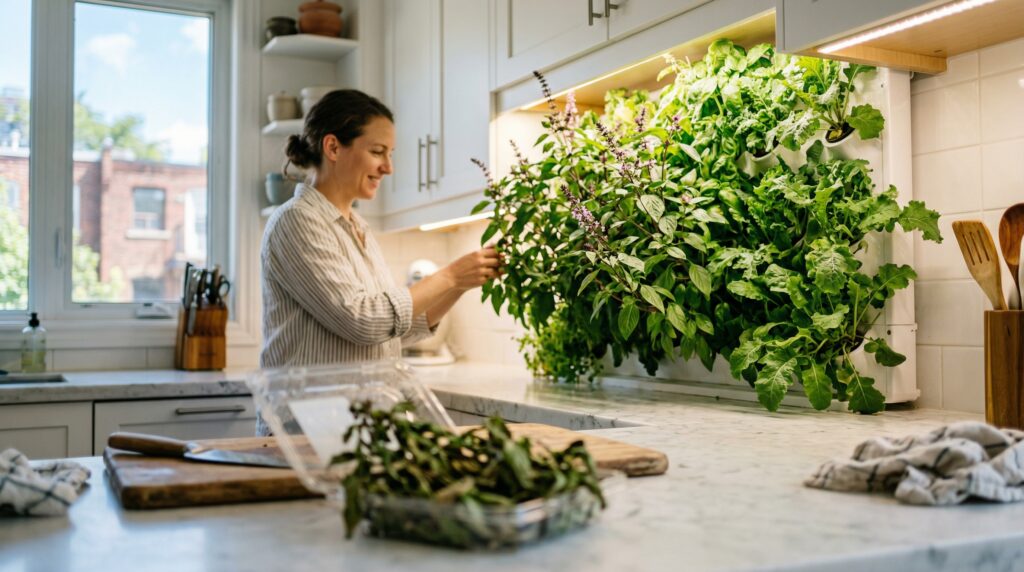
That frustration is exactly what drove me to explore AI hydroponic gardens. What started as a small countertop experiment in my Toronto apartment has now grown into a full-scale obsession. Today, I’m harvesting Thai basil, Swiss chard, and baby kale year-round while my smart garden does all the heavy lifting—monitoring pH, adjusting lighting spectra, and dosing nutrients without me lifting a finger. This isn’t science fiction. It’s the reality of urban gardening in 2026, and it’s more accessible than you think.
The 2026 Landscape: Why AI Hydroponics Is Exploding
The numbers tell a compelling story. The global indoor hydroponic garden market was estimated at USD 2.39 billion in 2025 and is expected to reach USD 6.36 billion by 2032, growing at a CAGR of nearly 15%. Meanwhile, the broader vertical farming market—where hydroponics holds the largest share at 52%—is projected to surpass USD 39.7 billion by 2032. This isn’t a niche hobby anymore; it’s a movement.
What’s driving this explosion? Three converging forces:
- Climate volatility is pushing urban dwellers toward controlled-environment agriculture as a reliable alternative to unpredictable outdoor growing seasons.
- Water scarcity makes hydroponics incredibly attractive—these systems use up to 90% less water than traditional farming.
- AI accessibility has dropped dramatically. What once required a computer science degree can now be managed through a smartphone app that sends you push notifications when your plants need attention.
When I transitioned my small balcony herb garden to an AI-integrated system last year, I didn’t just save time—I completely changed my relationship with food. And that’s the promise of this technology: not just convenience, but genuine food sovereignty.
How AI Hydroponics Actually Works (Without the Jargon)
Let me break this down simply. Traditional hydroponics already eliminates soil, using nutrient-rich water to feed plant roots directly. But AI takes it several steps further by creating a closed-loop feedback system.
Here’s what happens inside a smart hydroponic garden in 2026:
Sensor Array: pH sensors, electrical conductivity (EC) meters, water temperature probes, and humidity sensors continuously monitor growing conditions. These sensors send real-time data to a central processor every few minutes.
AI Decision Engine: Machine learning algorithms analyze this data against optimal growth parameters for your specific plants. If pH drifts above 6.5 when your basil prefers 5.8–6.2, the system automatically activates dosing pumps to inject pH-down solution.
Automated Actuation: Peristaltic pumps deliver precise nutrient volumes, LED arrays adjust their spectrum and intensity, and water circulation pumps maintain oxygen levels—all without human intervention.
In my own setup, I’ve watched the AI correct a pH imbalance within 15 minutes of detecting it. By the time I woke up the next morning, my plants had already recovered. Try doing that manually at 3 AM.
Smart hydroponic systems equipped with IoT sensors and AI monitoring will become completely mainstream in 2026. They track everything automatically, send alerts to your phone, and eliminate the guesswork that kills most first-time hydroponic gardeners.
Top AI-Integrated Hydroponic Systems for 2026
I’ve tested or researched most of the major players. Here’s my honest take on what’s worth your money in 2026.
Gardyn Home 4.0: The Visionary Food-Growing Ecosystem
Price: ~$900
Capacity: Up to 30 plants simultaneously
Gardyn is the system that converted me from skeptic to evangelist. It’s a vertical, AI-powered hydroponic system that grows lettuce, tomatoes, herbs, and edible flowers without soil. The standout feature is its vision-based diagnostics—AI camera sensors identify and track plant health using real-time imaging.
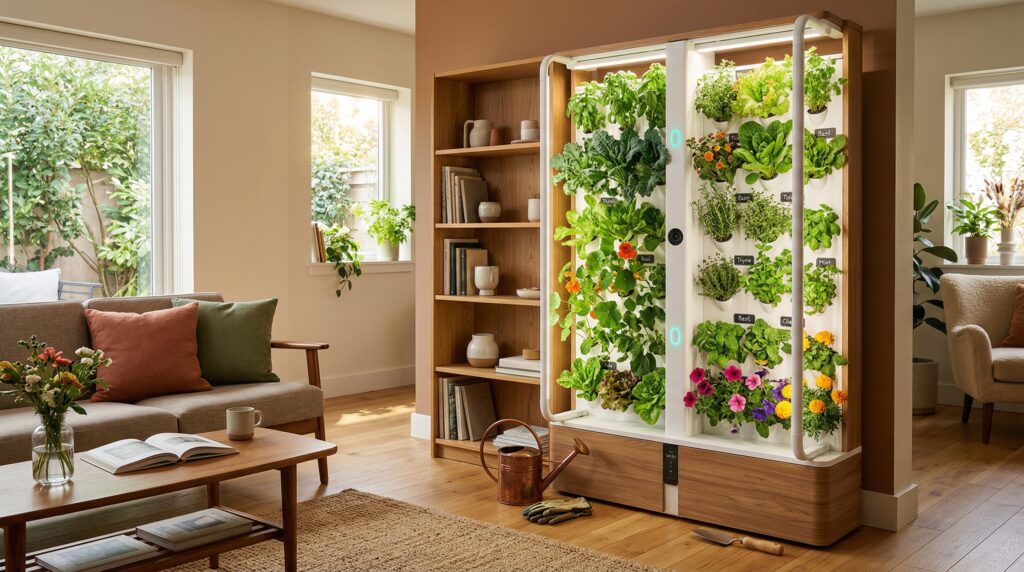
When I tested the Gardyn in my living room for over four months (I named mine “Gardelia” because I name all my appliances), I was blown away. The automated watering and lighting made it practically foolproof—I didn’t need to think about schedules because the app completely managed that for me.
The optional membership ($19–$25/month) adds an AI personal gardener named Kelby that offers growing tips and automatically adjusts lights and water based on what the cameras observe. Kelby also gives you 60% off additional plants and free shipping on supplies.
Drawback: It’s large—about the size of a bookshelf. Not ideal for studio apartments.
Click & Grow 25: The Compact Champion
Price: ~$120
Capacity: 25 pods
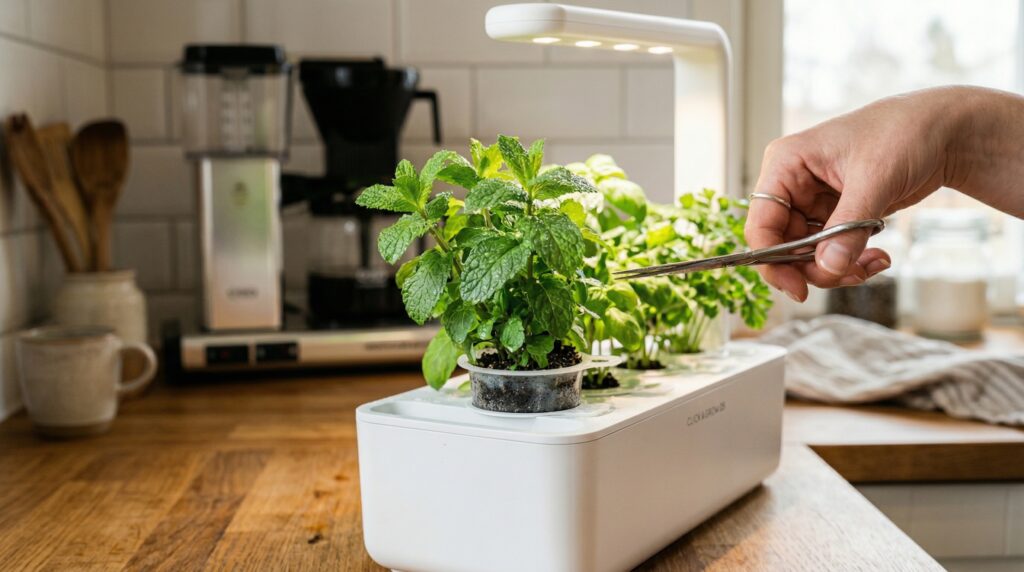
If you’re in a small apartment or just starting out, Click & Grow is your best friend. It uses proprietary “smart soil” pods instead of traditional hydroponic baskets, and its plug-and-play system is virtually maintenance-free. Even if you forget to check your plants for days, they’ll stay happy.
I set up a Click & Grow on my kitchen counter for my mother, who has never grown anything in her life. Six weeks later, she was harvesting cherry tomatoes and complaining that the mint was “taking over.” That’s the power of a truly beginner-friendly system.
Drawback: Less customization and lower capacity than Gardyn. Best for herbs and greens, not large produce.
LG tiiun: The Designer’s Choice
Price: Premium (exact pricing varies by region)
Capacity: Climate-controlled chamber
LG entered the smart garden space with tiiun, a sealed, climate-controlled chamber that looks like a sleek mini-fridge. It blends elegant aesthetics with hands-free technology, making it both a garden and a statement piece. The app controls lighting and temperature settings with sensor-based precision.
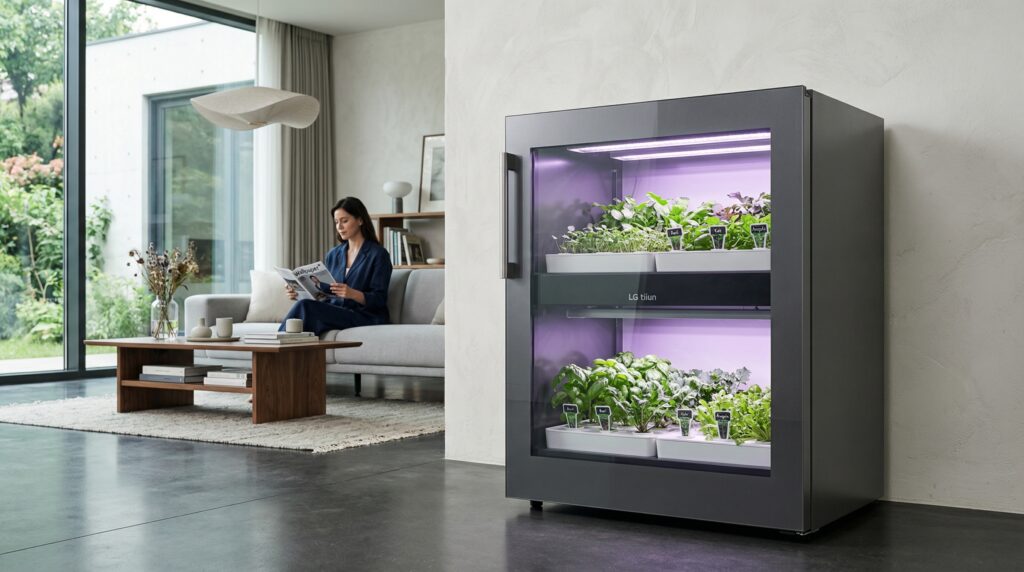
Drawback: Higher price point and limited seed pod varieties compared to Gardyn or Click & Grow.
AeroGarden Farm 12XL: The Tried-and-True Workhorse
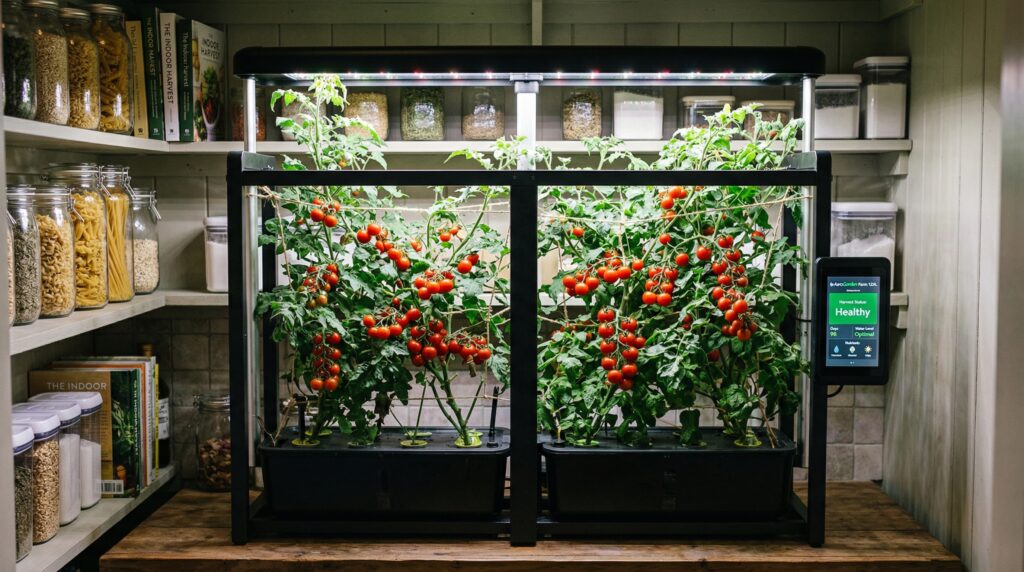
Price: Varies (historically $500–$700 range)
Capacity: 12 pods, up to 36″ grow height
This Wi-Fi-enabled garden grows plants five times faster than soil and includes a touchscreen control panel and comprehensive app connectivity. It supports tall, flowering, and fruiting plants, with a narrow footprint that fits almost anywhere.
I’ve used the smaller AeroGarden Harvest for herbs and loved it. The Farm series scales that reliability up for serious indoor farming.
Real Cost Analysis: Is It Cheaper Than the Grocery Store?
This is the question everyone asks, and after crunching the numbers, the answer is a qualified yes—with an important caveat about upfront investment.
Let’s do the math.
Grocery store spending: An average household consuming two containers of pre-washed greens per week at $6 each spends $12 weekly, or $624 annually. If you prefer organic or eat more greens, that easily exceeds $800 per year.
Home hydroponic first-year costs:
- Hydroponic kit: $70–$150
- Nutrient solution: $12–$20 per bottle (lasts 2–3 months)
- Grow media: $10–$25
- Electricity (LED lights + pump): $5–$10/month
- Seeds: ~$5/year
Total first-year expense: $170–$330
That means you break even within the first year, and every subsequent year costs only $70–$130 for nutrients and electricity. After year two, you’re saving $500+ annually while eating fresher, pesticide-free produce.
But here’s what the raw numbers don’t capture: the convenience value. No more last-minute grocery runs because your basil wilted. No more plastic packaging. No more wondering what chemicals touched your food.
In my experience, the time savings alone justify the investment. I spend about 15 minutes per week maintaining my Gardyn—refilling water, cleaning components, and harvesting. That’s it.
Global Perspectives: AI Hydroponics Around the World
This isn’t just a Western phenomenon. AI hydroponics is transforming urban food systems globally.
Singapore: In January 2026, Greenphyto opened the world’s tallest indoor vertical farm in Jurong West—a five-storey, $80 million fully automated hydroponic farm powered by AI and advanced manufacturing bots. At full capacity, it produces 2,000 tonnes of greens annually, including kailan, lettuce, Japanese chye sim, and arugula. Their produce is already sold at 95 stores across the country.
India: Bengaluru-based agritech startup HapphyGreenz uses AI and hydroponics to build climate-resilient urban food systems using up to 95% less water than conventional agriculture. Meanwhile, Indian agritech startup Krop AI won the Best Startup Award at MES 2026 for its climate-smart, AI-driven hydroponic solutions.
Germany: The Fraunhofer Institute for Microengineering and Microsystems IMM developed a multi-ion monitoring system called AutoNutri that automatically controls nutrient input in closed-loop hydroponic systems. The consortium, which includes partners in Mumbai, tested the system on five crops—lettuce, brahmi, thyme, stevia, and basil—comparing growth between hydroponic and soil cultivation.
Japan and Europe: Hyper-efficient, spectrum-adjustable LED lights available in 2026 reduce electricity costs by 40–60% while providing sunlight-like wavelengths that maximize photosynthetic efficiency.
What these global developments tell me is clear: AI hydroponics isn’t a trend. It’s the future of how cities will feed themselves.
How to Set Up Your First AI Hydroponic Garden: A Step-by-Step Guide
Ready to take the plunge? Here’s my tested framework for getting started.
Step 1: Assess Your Space and Goals
Before buying anything, answer these questions:
- How much counter or floor space do you have?
- What do you want to grow? (Herbs need less space than tomatoes)
- What’s your budget? ($100–$150 for entry-level; $500–$900 for premium systems)
Step 2: Choose Your System
Based on my testing, here’s how to decide:
|
If you want… |
Choose… |
|
Maximum yield and AI features |
Gardyn Home 4.0 |
|
Small footprint, set-it-and-forget-it |
Click & Grow 25 |
|
Design-forward aesthetics |
LG tiiun |
|
Proven reliability for tall plants |
AeroGarden Farm 12XL |
Step 3: Set Up and Plant
Most smart gardens arrive partially assembled. Here’s the workflow:
- Place the system near a power outlet (away from direct sunlight, which can cause algae)
- Fill the reservoir with filtered water
- Add nutrient solution according to package instructions
- Insert seed pods or net cups with your own seeds
- Connect to Wi-Fi and download the companion app
- Let the AI calibrate—most systems run a 24-hour diagnostic cycle
Step 4: Let AI Do Its Job
This is the hardest part for control freaks: don’t interfere. The AI knows what it’s doing. When I first started, I kept checking pH manually and adjusting things. I only made it worse. Trust the sensors.
Step 5: Harvest and Repeat
Most leafy greens are ready in 4–6 weeks. Harvest outer leaves first to encourage continuous growth. The app will remind you when it’s time to add nutrients or clean components.
Integrating AI Hydroponics into Your Smart Home
One of the most exciting developments in 2026 is the deep integration between hydroponic systems and home automation platforms.
The LetPot integration for Home Assistant, for example, allows you to monitor water levels, pump status, nutrient levels, and even plant age directly from your Home Assistant dashboard. You can set up automations that trigger alerts when water is low or nutrient solution needs refilling.
For more advanced users, OpenGrowBox offers professional-grade grow room automation for Home Assistant, controlling climate, lighting, irrigation, and hydroponics with VPD-based intelligence and AI optimization.
DIY enthusiasts can build their own automated systems using ESP32 microcontrollers with pH, EC, and temperature sensors, integrating them with MQTT for remote monitoring.
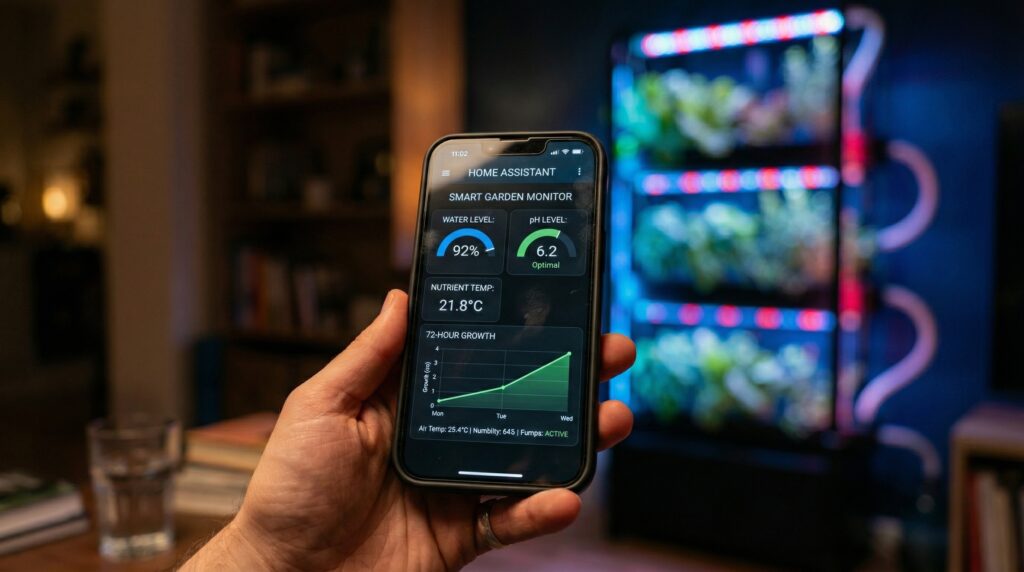
In my own setup, I’ve connected my Gardyn to a smart plug that cuts power during peak electricity pricing hours (the AI automatically compensates with adjusted lighting schedules). I’ve also linked water level sensors to my home’s smart water valve for automatic reservoir refills. The possibilities are endless once you start treating your garden as part of your broader smart home ecosystem.
SmartWealth Tip: Automating Your Grocery Dividend
While AI-powered systems like the Gardyn Home 4.0 or AeroGarden Farm have higher upfront costs (ranging from $500 to $900), they should be viewed as a “long-term appliance” rather than a hobbyist expense.
- The Breakeven Point: Based on 2026 grocery inflation, most premium AI systems reach full “breakeven” status within 18 to 24 months. After this point, you are essentially receiving a $500+ annual dividend in the form of free, high-end produce.
- The Energy-Efficiency Edge: In 2026, spectrum-adjustable LED lights have reduced electricity costs by 40–60%. To further optimize your wealth-building, connect your smart garden to a smart plug to cut power during peak electricity pricing hours—modern AI systems can automatically adjust lighting schedules to compensate without affecting yield.
- Wealth Hack: Avoid the “Subscription Trap.” While AI memberships offer convenience, you can often achieve 90% of the same results by using the system’s manual sensor data and purchasing bulk nutrients, saving an additional $200 to $300 per year in membership fees.
The Future: What’s Coming by 2030
Based on current research and market trajectories, here’s what I expect to see in AI hydroponics over the next four years:
Autonomous nutrient management: Systems like Fraunhofer’s AutoNutri, which detects five different nutrient ions simultaneously using ion-selective electrodes, will become consumer-accessible. No more guessing which nutrient is deficient—the AI will know exactly and correct it.
AI-driven crop prediction: Artificial intelligence will predict optimal growing conditions, optimize nutrient cycles, detect plant diseases early, and increase yield efficiency.
Zero-waste systems: Hydroponic setups will increasingly focus on recycling nutrient water, using biodegradable growing mediums, and integrating solar power.
Community hydroponic gardens: Urban communities will adopt shared hydroponic gardens to promote local food production, educate residents, and reduce dependency on long-distance food supply chains.
Integration with vertical farming at scale: The hydroponics segment already dominates vertical farming, and this trend will accelerate. By 2032, the hyper-local vertical farm market alone is expected to reach $72.40 billion.
Conclusion: Your Indoor Harvest Awaits
When I look at the wilted basil in my fridge from three years ago, I barely recognize the person who accepted that as normal. Today, I step into my kitchen, snip fresh Thai basil directly into my pasta sauce, and watch my AI garden silently optimize itself for tomorrow’s growth.
The technology has never been more accessible, the costs have never been lower, and the benefits—fresh food, money saved, plastic reduced, and the simple joy of growing your own—have never been more compelling.
In my experience testing these systems across different budgets and spaces, the single biggest barrier isn’t technical or financial. It’s the belief that you can’t do it. You can. The AI handles the science. You just handle the harvesting.
So here’s my challenge to you: start small. Buy a $120 Click & Grow for your kitchen counter. Plant three herbs you actually cook with. In six weeks, when you’re eating pesto made from basil you grew yourself, you’ll understand exactly what I’m talking about.
And when you’re ready to go bigger? The future of farming is waiting on your kitchen counter.
Have you tried AI hydroponic gardening? Share your experiences in the comments below. And if you found this guide helpful, subscribe to our newsletter for weekly smart home and urban gardening insights.
