

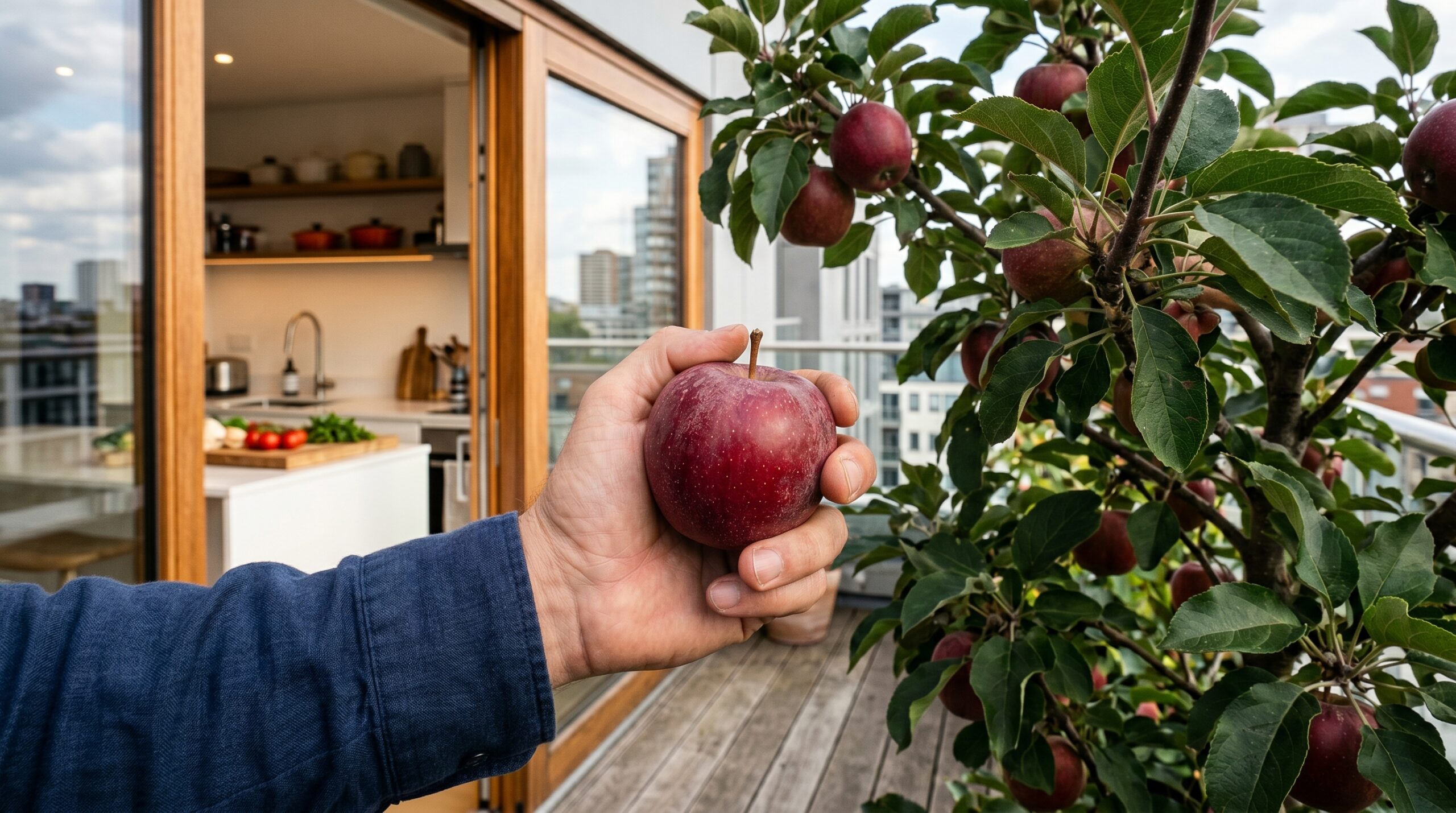
Let’s be honest: the idea of stepping onto your balcony or patio and picking a sun-warmed peach straight from the tree feels almost too good to be true when you’re gardening in a small space. Maybe you’ve tried growing tomatoes in pots with mixed results, or you’ve stared longingly at the sprawling apple trees in your neighbor’s yard, convinced that fresh fruit requires acres of land.
Here’s the reality: you don’t need a backyard—or even a patch of soil—to grow your own fruit. The secret lies in dwarf fruit trees for containers, specifically bred or grafted to thrive in pots while producing full-sized, delicious fruit. You don’t need a half-acre backyard to harvest crisp apples, sun-ripened peaches, or buttery figs. The real barrier to homegrown fruit isn’t square footage—it’s space utilization. Balcony gardeners, apartment dwellers, and homeowners with shaded backyards routinely ask the same question: Can fruit trees actually survive and produce in containers? The answer is a confident yes, but only when you match the right genetics, soil structure, and microclimate management.
This patio orchard guide breaks down exactly which dwarf and columnar varieties thrive in limited spaces, how to build a container system that mimics natural root environments, and what realistic care looks like when you’re working with wind exposure, partial shade, or indoor winter setups.
The Science of the “Dwarf”: Why They Work in Pots
To the uninitiated, a “dwarf tree” sounds like a stunted version of a regular tree. In reality, these are sophisticated horticultural products. Most dwarf fruit trees are created through grafting. A high-quality fruit-bearing branch (the scion) is fused onto a specialized root system (the rootstock) that naturally limits the tree’s ultimate size.
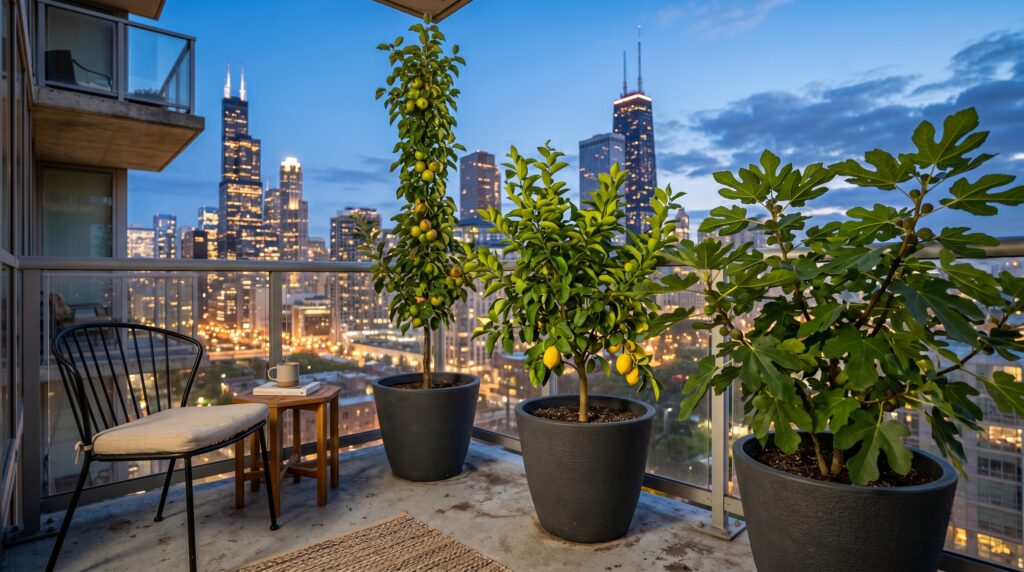
For container gardening, we specifically look for “True Dwarf” or “Ultra-Dwarf” rootstocks. These trees typically reach a maximum height of 4 to 6 feet, making them perfectly proportioned for large ceramic or resin pots.
Why Container Fruit Trees Actually Work in Small Spaces
Modern horticulture has shifted away from sprawling standard trees toward precision breeding. Dwarf fruit trees for containers aren’t just regular trees kept small—they’re grafted onto specific dwarfing or semi-dwarfing rootstocks that naturally restrict canopy height to 6–10 feet while preserving full fruit size and flavor. Columnar varieties take this further by growing vertically with lateral fruiting spurs, making them ideal for tight patios, narrow decks, or even bright apartment balconies.
The Royal Horticultural Society notes that properly managed container orchards can yield 40–60% of ground-planted production because root zones stay warmer, nutrients remain highly concentrated, and harvest timing is easier to manage. The trade-off? Containers demand consistent attention to moisture, drainage, and feeding.
How to Choose the Right Varieties for Your Climate and Space:
Before buying a tree, verify three factors: chill hours, pollination needs, and mature container footprint.
Chill Hour Requirements Fruit trees need a specific number of hours below 45°F (7°C) during dormancy to set fruit. Low-chill cultivars (100–300 hours) work in mild coastal zones, while high-chill types (600–1,000+ hours) thrive in traditional four-season climates. Mismatching this is the most common reason container growers see beautiful blossoms but zero fruit.
Self-Fertile vs. Cross-Pollinating Space-limited growers should prioritize self-fertile cultivars. Many dwarf peach and fig varieties set fruit without a second tree. If you choose columnar apple trees for pots, pair two compatible cultivars like ‘Golden Treat’ and ‘Scarlet Sentinel’ to guarantee cross-pollination, or place them within 15 feet of a neighbor’s apple tree.
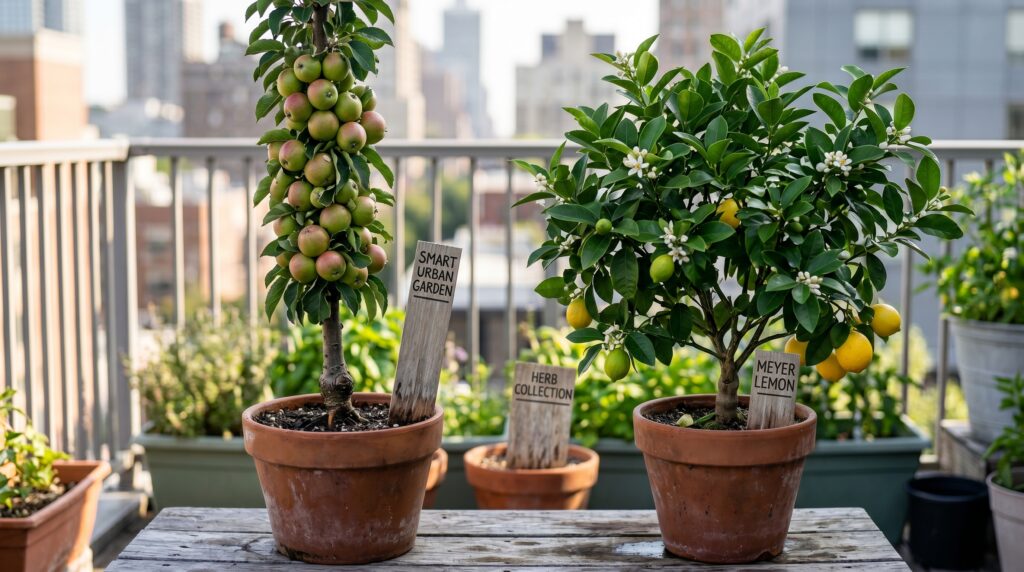
Light and Wind Considerations Elevated balconies create faster wind exposure that dries out pots and stresses blossoms. Partial afternoon shade can be managed with reflective wall panels or mobile plant caddies that track morning sun. Indoor apartment care requires full-spectrum grow lights positioned 12–18 inches above the canopy for 12–14 hours daily during winter dormancy.
Container Fruit Trees: Step-by-Step Setup and Care
Step 1: Select the Correct Pot and Substrate
Fruit trees need room to breathe. Start with a 15–20-gallon container for first-year dwarf trees, upgrading to 25–30 gallons as the canopy matures. Ensure at least four to six drainage holes at the base. Terracotta and fabric pots excel at moisture regulation, while glazed ceramic retains water longer but risks root rot if drainage is poor.
Never use garden soil in pots. It compacts, suffocates roots, and introduces pathogens. Instead, blend a well-draining potting mix:
- 40% high-quality peat-free potting medium
- 30% coarse pine bark or coconut coir
- 20% perlite or pumice for aeration
- 10% compost for slow-release nutrients Target a pH of 6.0–6.8. Most fruit trees tolerate slight acidity, but container citrus prefers 6.0–6.5.
Step 2: Planting and Initial Watering
Position the root flare slightly above soil level to prevent collar rot. Backfill gently, avoiding heavy compaction. Water deeply until liquid drains freely from the bottom. Apply a 1-inch layer of shredded wood mulch, keeping it two inches away from the trunk to discourage fungal growth.
Step 3: Feeding Schedule
Container roots exhaust nutrients quickly. Follow a balanced NPK schedule tailored to the growth cycle:
- Early Spring (bud break): 10-10-10 or 8-8-8 slow-release granular
- Late Spring (fruit set): Switch to higher potassium/phosphorus (e.g., 5-10-15)
- Mid-Summer: Light foliar feed with micronutrients (calcium, magnesium, zinc)
- Late Summer/Fall: Stop nitrogen to encourage hardening before dormancy
University of California Agriculture and Natural Resources (UC ANR) recommends splitting annual fertilizer into three light applications rather than one heavy dose to prevent salt buildup in confined root zones.
Step 4: Pruning and Training
Dwarf trees still require structure. Remove crossing branches, inward-growing shoots, and water sprouts annually. Columnar varieties benefit from light tip pruning to encourage lateral fruiting spurs. For small spaces, train branches along trellises or espalier frames to maximize light penetration while minimizing footprint.
Common Mistakes That Kill Potted Fruit Trees
- Oversized Containers Early On: Large pots hold excess moisture, suffocating young roots. Size up gradually as the canopy expands.
- Ignoring Chill Hours: A ‘Red Delicious’ on a frost-free balcony will bloom poorly and drop fruit. Match cultivars to your USDA Hardiness Zone and local winter patterns.
- Over-watering or Under-watering: Containers dry faster but drain unevenly. Use the “finger test” (top 2 inches dry = water) or invest in a soil moisture meter.
- Neglecting Pollination: Assuming all fruit trees are self-fertile. Always verify cultivar requirements before purchasing.
- Leaving Pots on Cold Concrete: Winter roots freeze faster on unheated surfaces. Elevate pots on wooden slats or foam insulation pads during cold snaps.
Expert Tips:
- Wind Management on Balconies: Install temporary bamboo windbreaks or place heavy, broad-leaf companion plants upwind to buffer gusts during fruit set.
- Mobile Sun Tracking: A wheeled plant caddy lets you shift trees 6–8 feet as seasonal light angles change. This single adjustment often increases yield by 15–20%.
- Winter Protection for Marginal Zones: Wrap pots in burlap or horticultural fleece, then layer straw around the base. Move indoor citrus near south-facing windows when temperatures dip below 40°F.
- Pest Control Without Heavy Chemicals: Container trees are easier to monitor. Treat aphids with insecticidal soap sprays at dusk, and introduce predatory mites for spider mite outbreaks. Avoid broad-spectrum sprays during bloom to protect pollinators.
Smart Wealth Habits: The Financial Case for a Patio Orchard
Growing your own fruit isn’t just a hobby—it’s a compounding asset strategy. Grocery inflation consistently outpaces wage growth, with specialty and organic produce seeing double-digit increases over the past decade. A well-managed patio orchard functions as a low-maintenance food production system that pays for itself within 18–24 months.
Apply proven wealth principles to your container garden:
- Invest Early, Compound Yields: Year one focuses on root establishment. Years two through five deliver exponential harvest increases as the tree matures.
- Reduce Recurring Costs: Replace $15–$30 weekly fruit purchases with homegrown yields. Reinvest saved capital into better soil, drip irrigation, or additional cultivars.
- Asset Maintenance Mindset: Pruning, feeding, and seasonal rotation aren’t chores—they’re portfolio management. Regular upkeep prevents yield crashes and extends productive lifespan to 15–20 years in containers.
- Mindful Resource Allocation: Water, fertilizer, and sunlight are finite inputs. Tracking usage prevents waste, mirroring budget-conscious financial habits that build long-term resilience.
Quick Comparison: Best Dwarf Fruit Trees for Containers
| Tree Type | Min. Pot Size | Sunlight | Chill Hours | Yield Timeline | Self-Fertile? | Primary Benefit |
| Columnar Apple (‘Urban Apple’) | 15–25 Gal | 6–8 Hrs | 300–600 | Year 2–3 | No (Needs 2 types) | Perfect for narrow balconies |
| Dwarf Peach (‘Bonanza’) | 15–30 Gal | 8+ Hrs | 250–500 | Year 2 | Yes | Stunning spring flowers |
| Dwarf Fig (‘Petite Negri’) | 10–20 Gal | 6–8 Hrs | 100–200 | Year 1–2 | Yes | Very drought tolerant |
| Meyer Lemon (Citrus) | 10–25 Gal | 6–8+ Hrs | None (Tropical) | Year 2–3 | Yes | Can be moved indoors |
| Columnar Pear (‘Dancing Pear’) | 20–30 Gal | 6–8 Hrs | 400–700 | Year 3 | Advanced (Pruning) | Sophisticated vertical yield |
| Dwarf Cherry | 20 Gal | 6+ Hrs | High (Typical) | Year 3+ | Mostly Yes | Extreme cold hardiness |
Frequently Asked Questions
What size pot do dwarf fruit trees need? Start with 15–20 gallons for first-year trees and upgrade to 25–30 gallons as the canopy matures. Ensure at least four drainage holes to prevent root rot.
Do columnar apple trees for pots need a second tree? Most columnar apples benefit from cross-pollination for reliable fruit set. Pair two compatible cultivars or place your pot within 15 feet of another apple tree.
Can I grow container-grown citrus indoors during winter? Yes. Place citrus near a south-facing window providing 6–8 hours of bright light, or supplement with full-spectrum grow lights for 12–14 hours daily. Maintain humidity above 40% and avoid cold drafts.
How often should I water potted fruit trees? Water when the top 2 inches of soil feel dry. Deep-water until runoff exits drainage holes, then wait before watering again. Frequency varies from 2–4 times weekly depending on heat and wind exposure.
Why is my potted peach tree flowering but not producing fruit? Likely causes include mismatched chill hours, lack of pollinator activity, late-spring frost damage to blossoms, or nitrogen-heavy fertilizer pushing vegetative growth over fruit set.
Can dwarf peach trees for small spaces survive balcony wind? Yes, with windbreaks and stable, heavy containers. Use wheeled caddies to relocate trees away from direct gusts during bloom and fruit set, and stake the main trunk during the first year.
Key Takeaways
- Dwarf and columnar rootstocks naturally restrict tree height while preserving fruit quality.
- Match chill hours, sunlight, and pollination needs to your local microclimate before purchasing.
- Use a peat-free, well-aerated substrate with strict drainage to prevent root suffocation.
- Feed in split applications with shifting NPK ratios aligned to bud break, fruit set, and dormancy.
- Elevate pots, track sun angles, and buffer balcony wind to maximize yield in confined spaces.
- Treat your patio orchard as a long-term asset that reduces grocery costs and compounds harvests over time.
Conclusion: Start Your 2026 Harvest Today
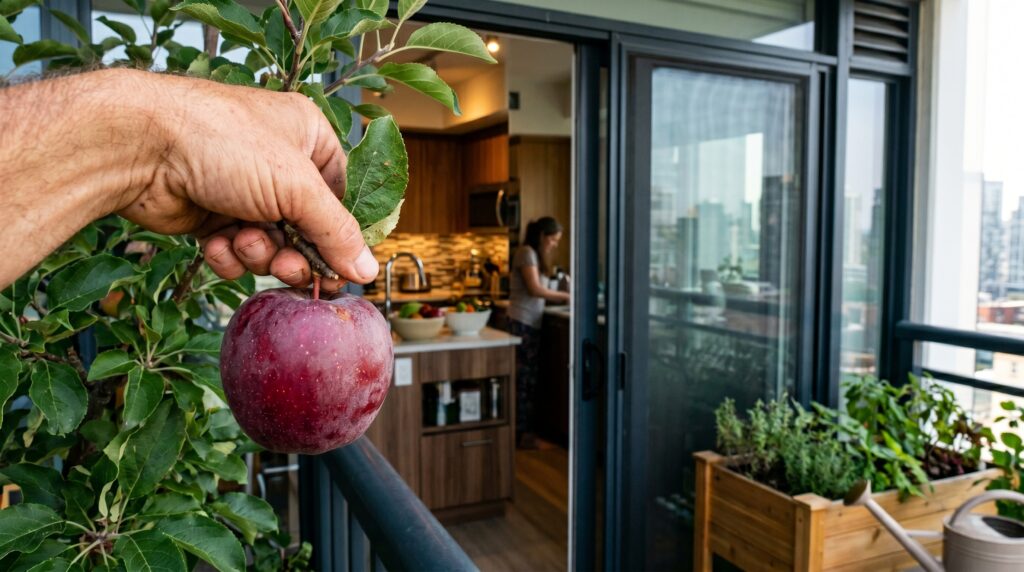
The shift toward urban gardening isn’t just a trend; it’s a return to self-sufficiency. By selecting the right dwarf fruit trees for containers, you are transforming a static outdoor space into a living, breathing pantry. Start with one ‘Meyer Lemon’ or a ‘Northpole’ apple this spring. The first time you pick a sun-ripened fruit just three feet from your kitchen door, you’ll realize that you don’t need an acre to be an orchardist—you just need a pot and a plan.
