


Many gardeners in apartments and urban spaces crave something deeper— a moody garden aesthetic that feels sophisticated rather than saccharine or sees their Balcony or Patio feels a little too bright and cheerful, or your small backyard lacks drama, Goth Gardening delivers exactly that: rich, dark foliage paired with textured industrial chic planters to create containers that look striking day or night.
Your balcony doesn’t need sunshine and pastels to feel alive. In fact, some of the most striking outdoor spaces embrace shadow, texture, and deliberate restraint. Goth gardening isn’t about mourning plants—it’s about celebrating depth, drama, and the sophisticated beauty of dark foliage paired with raw industrial materials.
If you’ve struggled like me to make a small patio feel intentional, or if bright, busy plantings clash with your personal aesthetic, a look into this moody garden aesthetic offers a powerful alternative. Let’s journey together, as this guide reveals exactly which black plants for containers actually thrive in pots, how to style industrial chic planters without compromising plant health, and how to adapt dramatic designs to real-world challenges like limited sunlight, balcony wind, or apartment living.
What Is Goth Gardening?
Goth Gardening celebrates deep purples, near-black leaves, velvety textures, and a touch of wild imperfection. It draws beauty from shadow and contrast rather than bright blooms alone. Think smoky greens, burgundy foliage, and inky accents paired with hardscaping elements like metal, concrete, or weathered stone.
The moody garden aesthetic works especially well in containers because it allows precise control over soil, placement, and combinations. Unlike large borders, pots let you experiment without commitment—perfect for beginners or renters testing the style.
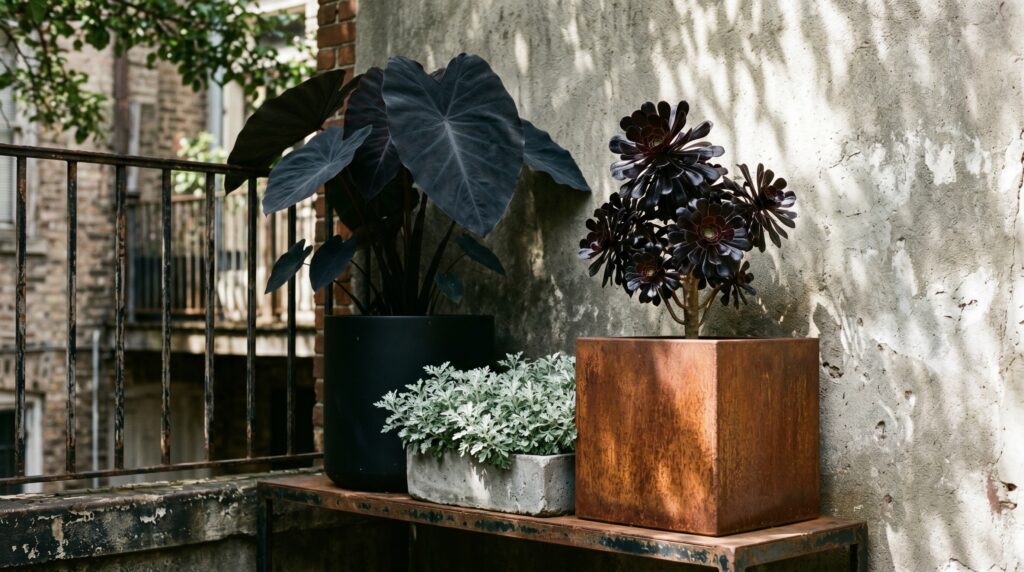
Experts at places like the Royal Horticultural Society highlight plants with dark foliage for their ability to add year-round drama and contrast. These selections often perform reliably in varied conditions when given proper container care.
Why Dark Foliage Works in Container Design
Dark leaves aren’t just visually striking—they serve functional purposes. Plants with high anthocyanin content (the pigment behind deep purples and near-black tones) often tolerate partial shade better than variegated or bright-green varieties. The Royal Horticultural Society notes that anthocyanins can act as a “sunscreen” for plant tissues, offering modest protection against UV stress in exposed urban settings.
However, that same pigment absorbs more heat. In full afternoon sun, I observed that, black-leaved specimens in small pots can experience root-zone temperatures 10–15°F higher than lighter containers. This isn’t a deal breaker—it’s a design parameter. Success comes from matching plant physiology to container material, placement, and local microclimate.
Selecting Dark Foliage Plants That Actually Thrive in Pots
Not all “black” plants are created equal. Some are deep purple in ideal conditions but revert to green in low light. Others demand perfect drainage or specific humidity levels. Prioritize varieties with proven container performance.
Top Dark Foliage Plants for Pots by Light Condition
Full Sun (6+ hours direct light):
- Ophiopogon planiscapus ‘Nigrescens’ (Black Mondo Grass): Grass-like, drought-tolerant, stays under 12 inches. Ideal for edging industrial planters.
- Heuchera ‘Obsidian’: Compact, ruffled leaves with metallic sheen. Requires excellent drainage to prevent crown rot.
- Aeonium ‘Zwartkop’: Succulent rosettes that deepen to near-black in bright light. Needs gritty soil and winter protection below 30°F.
Partial Shade (3–6 hours or dappled light):
- Cimicifuga (Bugbane): Architectural white spikes over dark, dissected foliage. Prefers moist, humus-rich substrate.
- Persicaria ‘Black Field’: Fast-growing, burgundy-black leaves with hot-pink flower spikes. Contains spread with root barriers in shared containers.
- Coleus ‘Black Dragon’: Velvety, deeply lobed leaves. Pinch flowers to maintain foliage density.
Low-Light Tolerant (Indoor/Balcony Corners):
- Aspidistra elatior ‘Capitonnée’ (Cast Iron Plant): Nearly indestructible, textured dark-green leaves that read as black in low light.
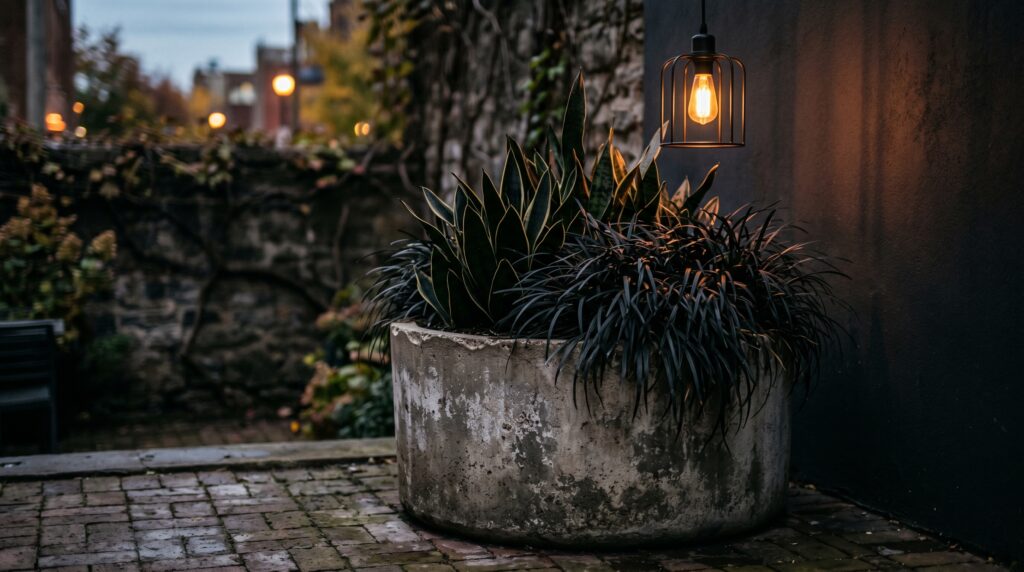
- Sansevieria ‘Black Gold’: Upright, architectural form with subtle dark margins. Tolerates neglect and dry air.
Always verify hardiness zones. University of California Agriculture and Natural Resources (UC ANR) emphasizes that container plants experience more extreme temperature swings than ground plantings. A zone 7-hardy perennial may need winter protection when grown in a black metal pot on a windy balcony.
Industrial Chic Planters: Materials, Modifications, and Microclimates
The right container elevates goth gardening from theme to cohesive design. Industrial materials offer texture and permanence—but require adaptation for plant health.
Corten Steel (Weathering Steel):
- Pros: Develops a stable rust patina that complements dark foliage; extremely durable.
- Cons: Unsealed interiors can leach iron into soil, altering pH. Always line with heavy-duty plastic (with drainage holes punched) or use a removable nursery pot inside.
- Best for: Statement specimens like Aeonium or architectural grasses.
Powder-Coated Black Metal:
- Pros: Lightweight, modern finish; resists chipping better than paint.
- Cons: Absorbs significant heat. In hot climates, place in afternoon shade or pair with light-colored mulch to reflect heat away from the root zone.
- Best for: Balcony rail planters or modular stacking systems.
Concrete and Fiberstone:
- Pros: Excellent thermal mass buffers temperature swings; matte finish enhances moody aesthetics.
- Cons: Heavy; requires sturdy balcony weight capacity. Seal interiors to prevent efflorescence (white mineral deposits).
- Best for: Ground-level patios or permanent installations.
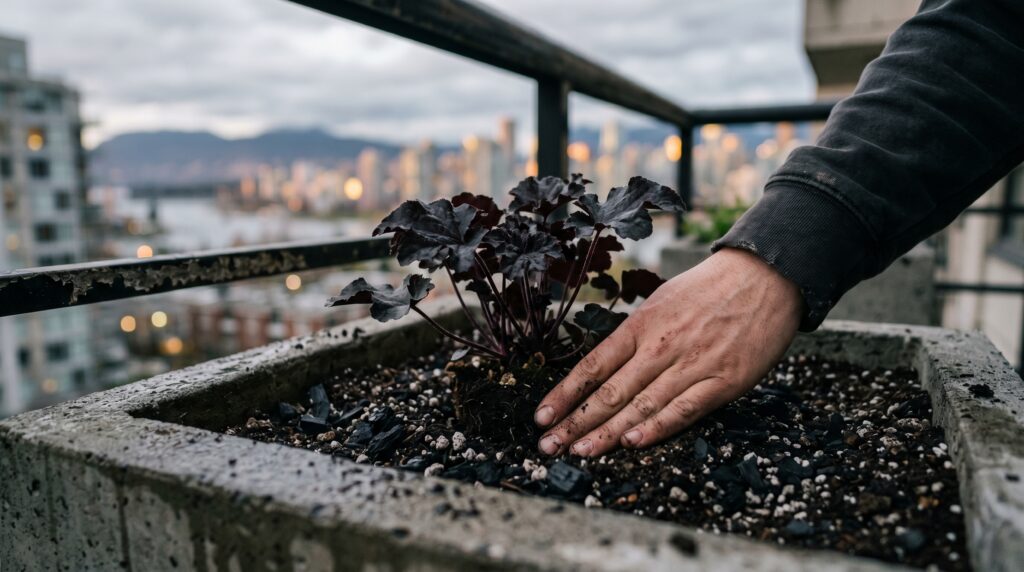
Pro Modification Tip: Drill additional drainage holes beyond manufacturer specs. Industrial planters often prioritize form over function. Add a 1-inch layer of coarse horticultural charcoal at the base before potting mix to improve aeration and odor control.
Step-by-Step: Styling a Moody Container Composition
Follow this framework to avoid common styling pitfalls and create a balanced, healthy display.
Step 1: Choose a Focal Plant Select one dramatic specimen as your anchor: a large Heuchera, a sculptural Sansevieria, or a cascading Ophiopogon. Place it slightly off-center for dynamic tension.
Step 2: Add Textural Contrast Pair broad, matte leaves with fine, glossy, or spiky companions. Example: Black Mondo Grass (fine texture) + Heuchera ‘Obsidian’ (ruffled matte) + Sedum ‘Black Pearl’ (glossy beads). Limit to 3–5 varieties per container to maintain clarity.
Step 3: Incorporate Hardscape Elements Add industrial accessories sparingly: a rusted metal obelisk for vertical interest, a charcoal-toned stone mulch topdress, or a minimalist black irrigation line disguised as design. Avoid clutter—moody aesthetics thrive on restraint.
Step 4: Address Microclimate Realities
- Limited Sunlight: Prioritize plants with high light-reflectance value (LRV) in dark tones, like Aspidistra. Use reflective wall panels to bounce available light.
- Balcony Wind Exposure: Anchor tall specimens with discreet stakes. Group containers to create a wind-buffering cluster.
- Indoor Apartment Care: Ensure dark-leaved plants receive at least 4 hours of bright, indirect light. Supplement with full-spectrum LEDs on a 12-hour timer during winter months.
Common Mistakes That Undermine Goth Gardening
- Ignoring Heat Absorption: Black containers in full sun can cook roots. Always use light-colored potting mix or topdress with pale gravel to reflect heat.
- Overusing “Black” Plants: Too many dark specimens create visual flatness. Introduce subtle contrast: silver-edged Artemisia, pale Euphorbia, or white-flowering Bacopa to make dark foliage pop.
- Skipping Drainage Modifications: Industrial planters often have minimal drainage. Always add extra holes and use a gritty, fast-draining substrate to prevent root rot.
- Neglecting Seasonal Change: Many dark foliage plants fade or die back in winter. Plan for year-round interest by including evergreen structural elements like Sansevieria or ornamental grasses.
Expert Tips:
- Trial-and-Error Heat Management: On my south-facing balcony, Aeonium ‘Zwartkop’ in a black metal pot scorched in July. I solved it by elevating the pot on wooden feet (improving airflow) and topdressing with white pumice. Leaf color deepened, and heat stress disappeared.
- Styling for Small Spaces: In tight areas, use verticality. Mount a black metal shelf system against a wall and layer containers at varying heights. This creates depth without consuming floor space.
- Pest Monitoring on Dark Foliage: Aphids and spider mites camouflage easily on black leaves. Inspect undersides weekly with a bright flashlight. Treat early with insecticidal soap to avoid visible damage on dramatic foliage.
- Local Climate Verification: Cross-reference plant choices with USDA Hardiness Zones and National Gardening Association container guides. A plant thriving in Pacific Northwest mist may struggle in Southwest desert heat without adjusted care.
Smart Wealth Habits: Investing in Timeless Aesthetic Assets
Goth gardening aligns with intentional consumption—a core wealth principle. Instead of chasing seasonal trends, invest in durable industrial planters and perennial dark-foliage specimens that mature gracefully over years.
Apply asset-management thinking:
- Quality Over Quantity: One well-chosen corten steel planter outlasts three cheap plastic pots. The upfront cost amortizes over a decade+ of use.
- Low-Maintenance ROI: Drought-tolerant black succulents and hardy perennials reduce recurring water, fertilizer, and replacement costs.
- Aesthetic Appreciation: Unlike fast-fashion decor, a thoughtfully composed moody container gains character with age—patina deepens, plants mature, and your design confidence compounds.
Quick Comparison: Top Plants for Goth Gardening
|
Plant |
Sunlight |
Difficulty |
Best Container Size |
Key Care Note |
|
Black Mondo Grass |
4–6 hrs |
Easy |
8–10 gal wide |
Divide every 2–3 years to maintain density |
|
Heuchera ‘Obsidian’ |
4–6 hrs |
Moderate |
10–12 gal |
Avoid wet winter soil; mulch lightly |
|
Aeonium ‘Zwartkop’ |
6+ hrs |
Moderate |
12–14 gal deep |
Protect from frost; reduce water in summer dormancy |
|
Sansevieria ‘Black Gold’ |
2–6 hrs |
Easy |
10–15 gal |
Allow soil to dry completely between waterings |
|
Cimicifuga ‘Black Negligee’ |
3–4 hrs |
Advanced |
14–16 gal |
Requires consistent moisture; stake tall flower spikes |
Note: Difficulty assumes standard container drainage and seasonal climate adjustments. Always verify regional suitability before purchasing.
Frequently Asked Questions
Do black plants need more sunlight than green varieties? Not necessarily. Many dark-foliage plants tolerate partial shade well. However, anthocyanin-rich leaves may deepen in color with brighter light. Match plant selection to your actual light conditions rather than forcing sun-loving varieties into shade.
How do I prevent industrial planters from overheating roots? Use light-colored potting mix, topdress with pale gravel or pumice, elevate pots for airflow, and position containers to receive morning sun with afternoon shade in hot climates.
Can I create a goth garden indoors with limited light? Yes. Focus on low-light tolerant specimens like Aspidistra, Sansevieria, or dark Coleus varieties. Supplement with full-spectrum grow lights positioned 12–18 inches above the canopy for 10–12 hours daily.
What soil mix works best for dark foliage container plants? Use a well-draining blend: 50% quality potting medium, 30% perlite or pumice, 20% compost. Avoid heavy, water-retentive mixes that encourage root rot—especially critical for dramatic specimens where leaf loss is highly visible.
How do I style multiple industrial planters without clutter? Follow the “rule of odds”: group containers in sets of 3 or 5. Vary heights and textures but maintain a cohesive material palette (e.g., all black metal or all weathered steel). Leave negative space to let each piece breathe.
Are dark foliage plants more susceptible to pests? Not inherently, but pests can be harder to spot on black leaves. Inspect undersides weekly with a bright light. Maintain good airflow and avoid overhead watering to reduce fungal issues.
Conclusion: Your Dark Journey Starts Today
Goth Gardening is not a fleeting trend. It is a thoughtful, sustainable response to the desire for dramatic, low-maintenance, and deeply personal outdoor spaces. By pairing dark foliage plants for pots with industrial chic planters, you transform a generic balcony or small backyard into a moody sanctuary.
Start small. Choose one container. Buy one Heuchera ‘Obsidian’. Add black slate top dressing. Observe how the light changes across its leaves at dusk. You will never look at pink petunias the same way again.
Your next step: This weekend, visit a local nursery (not a big-box store) and ask for “plants with near-black foliage.” Show them this article. Build your first goth container. Then, watch the compliments arrive.
Key Takeaways
- Goth Gardening prioritizes dark foliage, architectural form, and industrial textures over flowers.
- The best dark foliage plants for pots include Colocasia ‘Black Magic’ (sun) and Heuchera ‘Obsidian’ (shade).
- Industrial chic planters made of corten steel, concrete, or weathered zinc elevate the aesthetic.
- Avoid overwatering and insufficient light—these are the top two killers of black plants for containers.
- Dark containers offer better ROI than flowering annuals due to perennial longevity and low maintenance.
- Use charcoal soil conditioner and iron supplements to intensify black pigmentation.
- Even small apartments can participate via indoor black succulents and Oxalis.
