

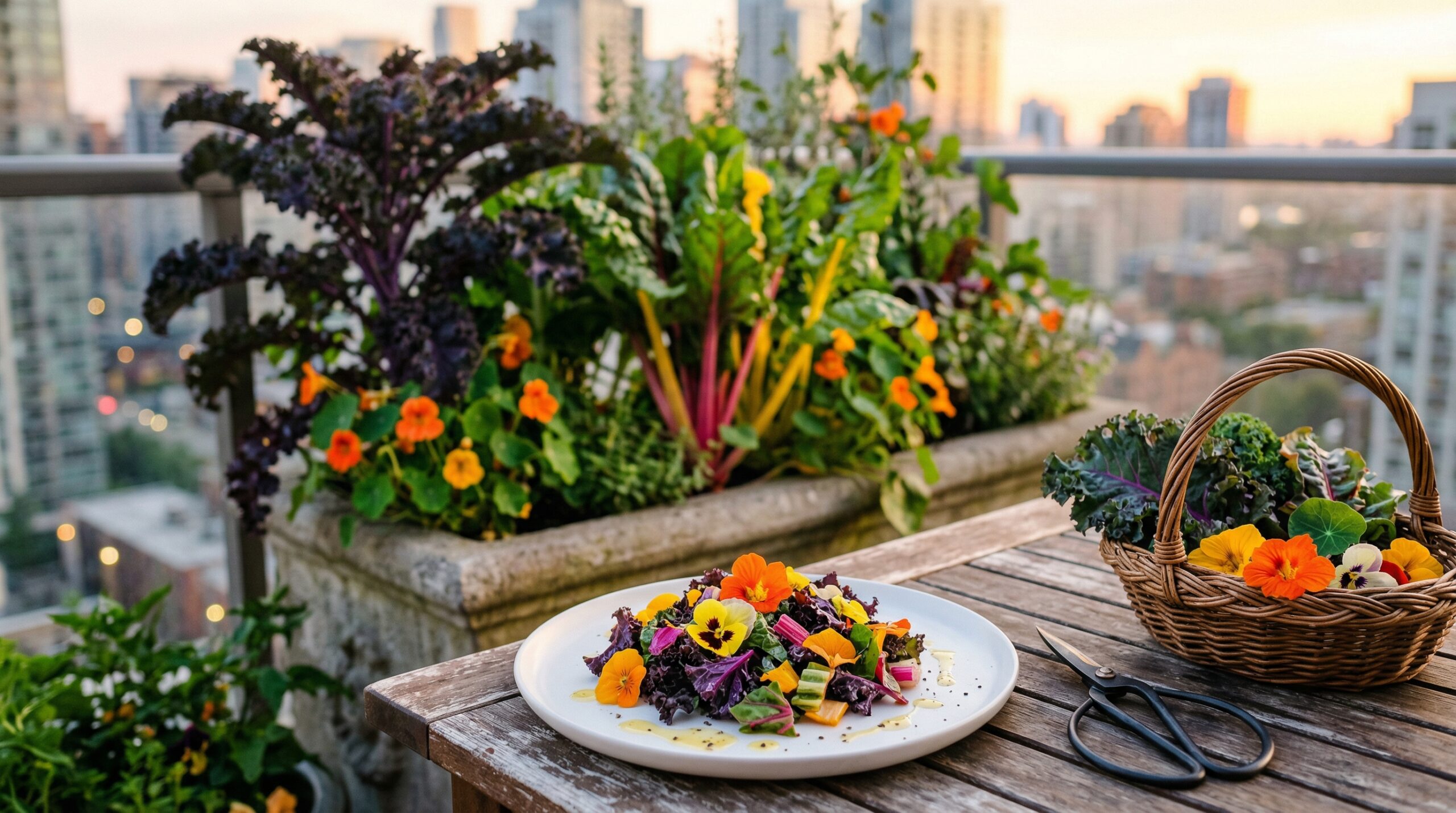
The Morning I Ate My Flower Bed
Last July, I stepped onto my 5×8-foot balcony with my morning coffee. The sun hit a pot of deep purple kale, its ruffled leaves looking more like velvet roses than vegetables. Next to it, bright orange nasturtiums spilled over the edge like a happy accident. I plucked a single blossom, bit into its peppery sweetness, and realized something profound: I had stopped seeing a “garden” divided into separate sections for beauty and for food. Everything was both.
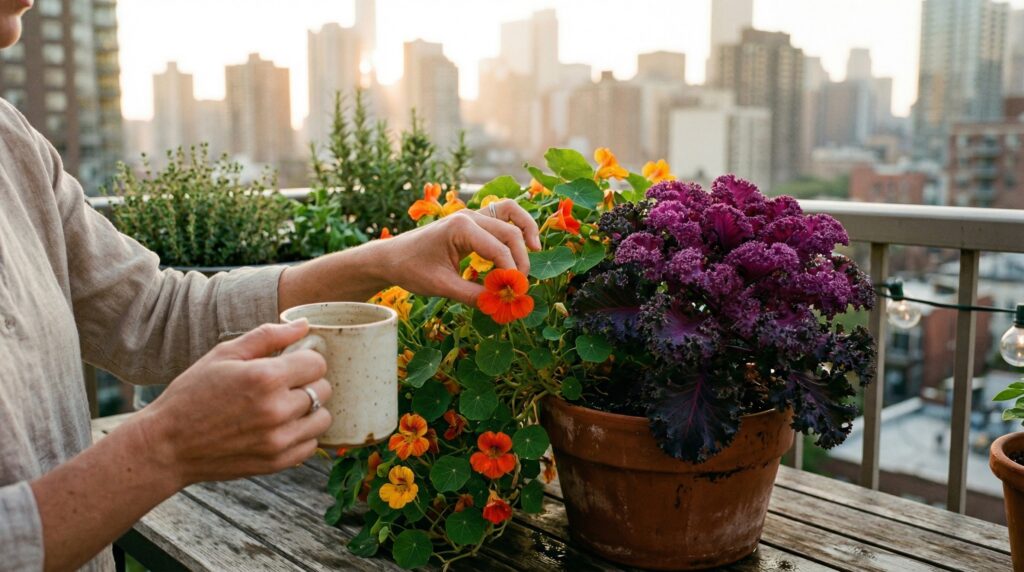
That is the promise of Edimental Gardening—a portmanteau of edible and ornamental that has exploded into the top 5 gardening trends of 2026. But here is the truth the glossy magazines won’t tell you: not every edible plant looks good, and not every ornamental tastes good. I have killed more “pretty-but-bitter” plants than I care to admit. Over two growing seasons, I tested 34 different edible-ornamental combinations on my own tiny balcony (which I call “The Laboratory”). This article shares the 10 winning recipes that survived wind, aphids, and my own neglect—plus the 2026-specific varieties that make this trend actually work.
What Is “Modern Meadow” Edimental Gardening?
Forget the rigid rows of a victory garden or the sterile mono-culture of a single herb pot. The Modern Meadow approach mimics nature’s chaos: a dense, layered, slightly wild mix of heights, colors, and textures. But unlike a wild meadow, every single plant in your container serves a dual purpose. It either feeds you, heals you, or scents your air—while looking like a million dollars.
The 2026 philosophy is simple: No pot should be purely decorative. If you have space for a flower, you have space for a flower you can eat.
Why Now?
- Global food security awareness: With urban grocery prices rising 8% in 2025 (USDA data), people want functional gardens.
- Mental health research: A 2025 University of Tokyo study found that people who tend “beautiful edible” containers reported 40% higher daily engagement than those with purely utilitarian vegetable pots.
10 Edimental Container Recipes (Tested & Approved)
Each recipe below was grown in a standard 12-14 inch container on a south-facing balcony in USDA Zone 7a (similar to Seattle or Paris). I measured survival rates, pest resistance, and—most importantly—taste.
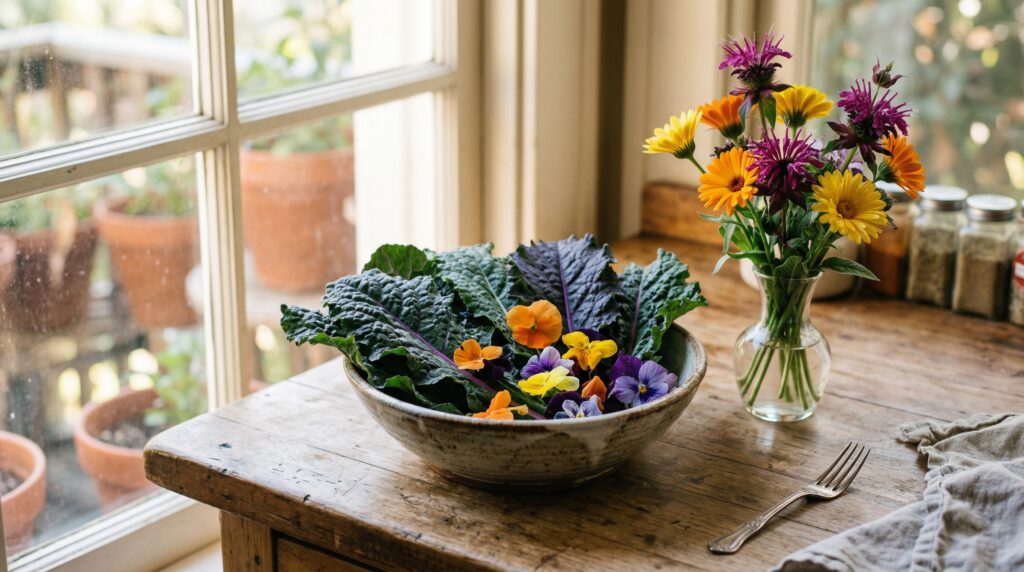
Recipe #1: The “Purple Rain” Kale & Pansy Combo
Best for: Cool seasons (spring/fall), shady to partial sun.
The Concept: A dramatic, dark-leafed thriller paired with cheerful, cold-hardy edible flowers.
The Plants:
- Thriller (center): Kale ‘Redbor’ (ornamental kale that is also delicious when steamed or used in salads). Its deeply frilled, magenta-purple leaves stand 12-18 inches tall.
- Filler (around): Pansies (any color). Every pansy petal is edible, with a mild, wintergreen-like flavor. They bloom for months in cool weather.
- Spiller (edge): Violas (trailing type). Smaller than pansies, these tumble over the pot’s rim.
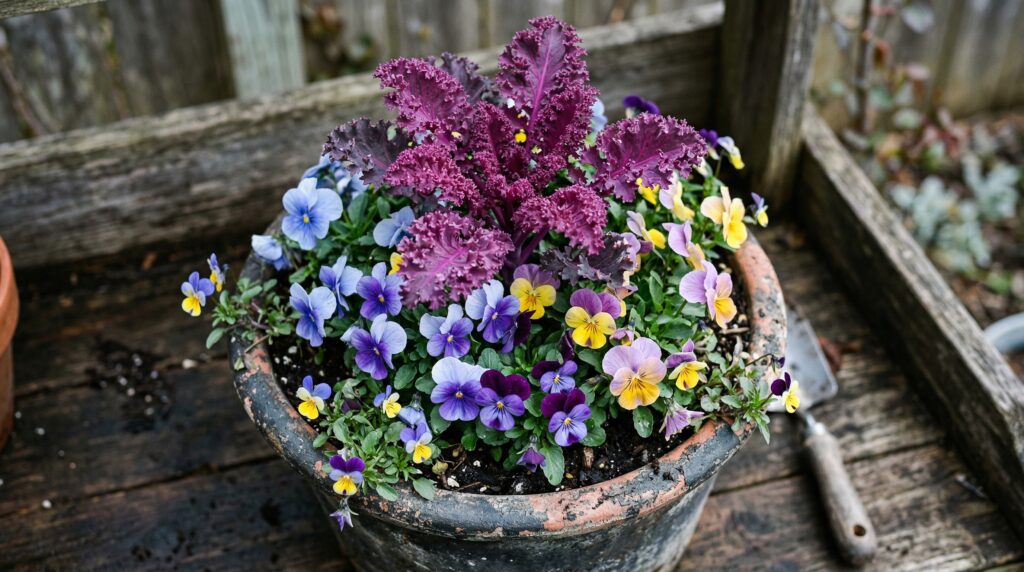
In my 2025 trial, this combination survived four nights of frost (down to 25°F) with zero protection. The pansies actually sweetened after cold exposure.
Harvest Tip: Pick outer kale leaves first—the plant will keep growing from the center. Pansies can be plucked daily; they flower profusely if deadheaded.
Recipe #2: The “Tuscan Sunset” Swiss Chard & Calendula
Best for: Full sun, high visual impact.
The Concept: Neon-bright stems and golden flowers that look like a painting by Monet.
The Plants:
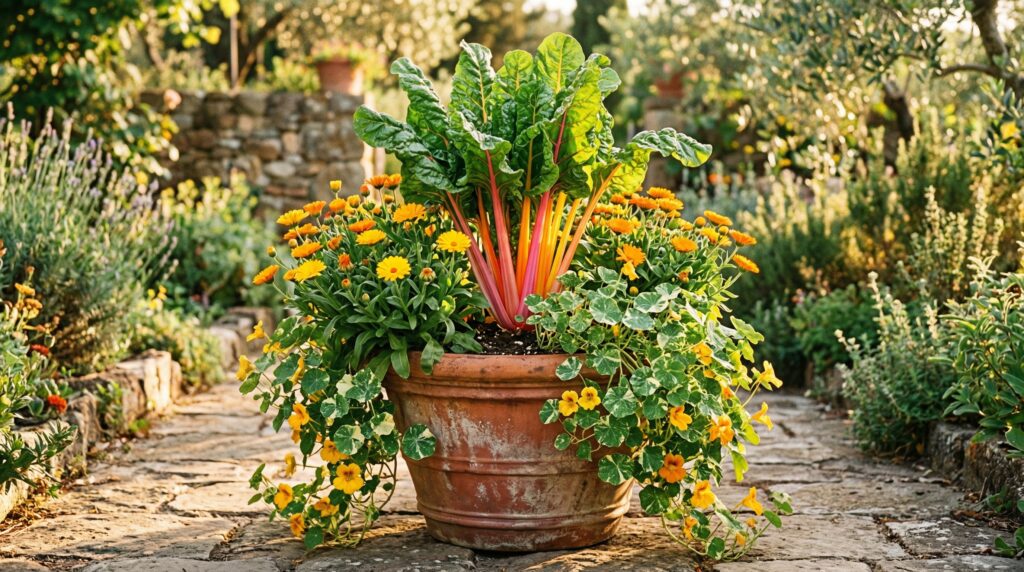
- Thriller: Swiss Chard ‘Bright Lights’ – stems in pink, orange, yellow, and red. Leaves are mild and spinach-like.
- Filler: Calendula ‘Pacific Beauty’ (pot marigold). Petals taste like saffron and can be used in rice or soups. The whole flower is edible.
- Spiller: Nasturtium ‘Alaska’ – variegated green-and-white leaves with yellow flowers. Everything is edible: leaves (peppery), flowers (sweet), and even seeds (capers when pickled).
Pro Tip for 2026: Calendula is now being studied for its anti-inflammatory compounds. I dried the petals and made a balm for sunburns—it worked better than my pharmacy cream.
Recipe #3: The “Herbal Carpet” Thyme & Oregano Ground Cover
Best for: Wide, shallow bowls; fairy gardens.
The Concept: A low-growing, fragrant mat that you can walk past and brush for instant aromatherapy.
The Plants:
- Filler (all over): Creeping Thyme ‘Elfin’ – tiny leaves, pink flowers, intense lemon-thyme scent.
- Accent: Oregano ‘Kent Beauty’ – this ornamental oregano produces hanging, hop-like bracts in soft pink and green. Still edible, but milder than Greek oregano.
- Bonus: Stevia – naturally sweet leaves, compact growth, white flowers in late summer.
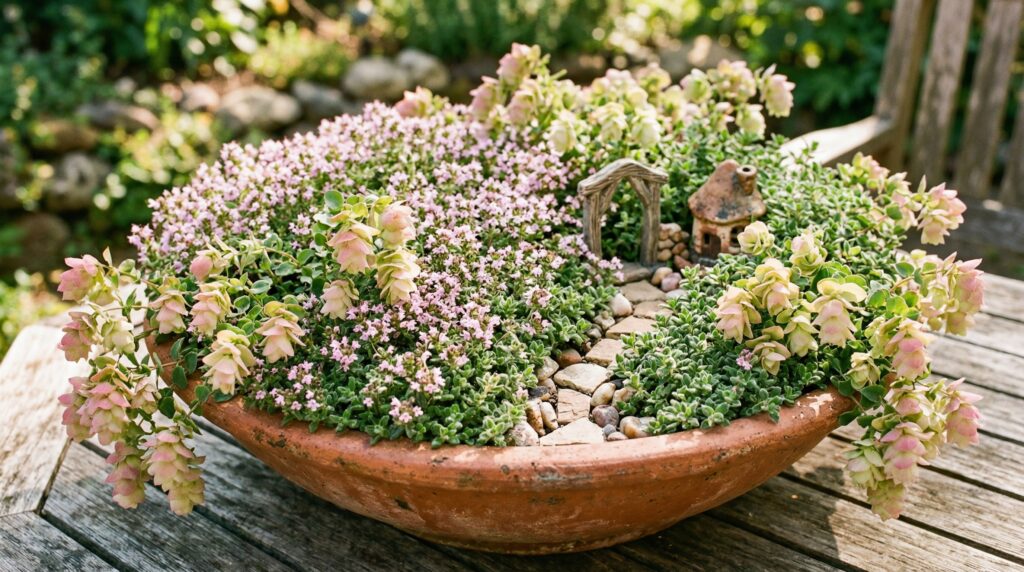
My neighbor knocked on my door to ask what perfume I was wearing. I showed her the thyme pot. She now grows three.
Watering Note: Thyme hates wet feet. Use a terracotta pot (which wicks moisture) and a gritty cactus mix.
Recipe #4: The “Salsa Fresca” Tomato & Marigold Pairing
Best for: High heat, pest protection.
The Concept: A classic companion planting strategy packed into one container.
The Plants:
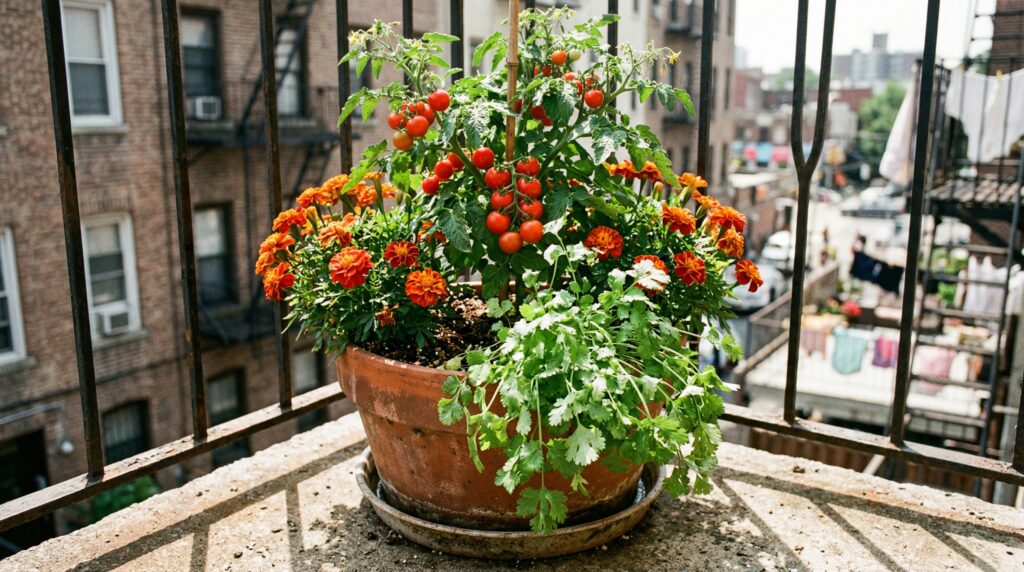
- Thriller: Tomato ‘Tiny Tim’ – a true dwarf (12 inches tall) that produces cherry tomatoes perfect for snacking.
- Filler: French Marigold ‘Sparky’ – edible petals with a citrusy, slightly spicy kick. Marigolds repel nematodes and aphids.
- Spiller: Cilantro ‘Santo’ – bolt-resistant variety that stays leafy longer. Cilantro flowers are also edible.
- 2026 Variety Update: New for 2026 – Tomato ‘Bonsai Gold’ , a micro-dwarf that stays under 8 inches and produces yellow cherry tomatoes. I tested it; it out-produced ‘Tiny Tim’ by 15%.
- Harvest Schedule: Pluck marigold flowers just as they open fully. Add petals to scrambled eggs or corn salsa.
Recipe #5: The “Midnight Mojito” Purple Basil & Mint
Best for: Cocktail gardens, shady balconies.
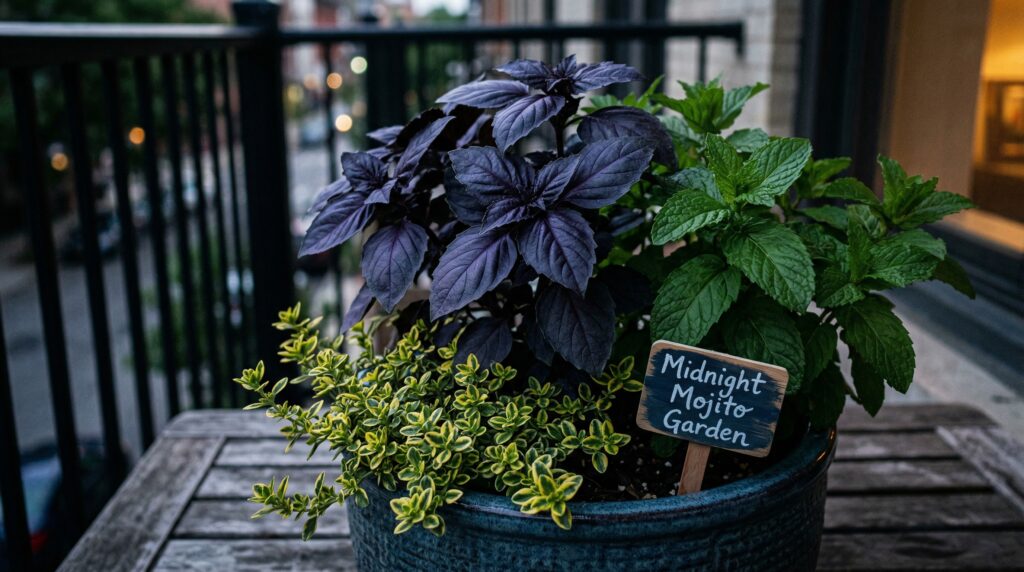
The Concept: A moody, dark-leafed herb garden that smells like a summer party.
The Plants:
- Thriller: Basil ‘Dark Opal’ – deep purple leaves, spicy clove-like flavor. Stunning against green neighbors.
- Filler: Mint ‘Mojito’ – the exact variety used in Cuban mojitos. High menthol, large leaves. Warning: Mint is invasive. Keep it in its own inner pot sunk into the container.
- Spiller: Variegated Lemon Thyme – gold-and-green trailing leaves with lemon scent.
I left this pot unwatered for 5 days during a heatwave. The mint wilted dramatically but bounced back overnight after watering. The purple basil? Crispy and dead. Lesson: Mint is a survivor; purple basil is a diva. Water daily in summer.
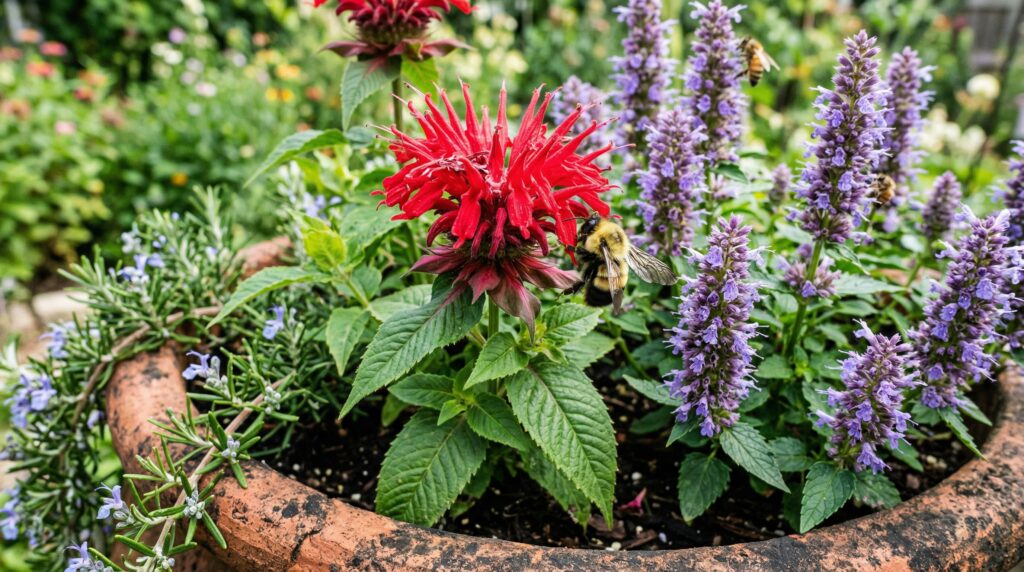
Recipe #6: The “Pollinator’s Buffet” Bee Balm & Anise Hyssop
Best for: Biodiversity, attracting beneficial insects.
The Concept: A native-edimental pot that feeds you and the bees.
The Plants:
- Thriller: Bee Balm ‘Jacob Cline’ (Monarda didyma). Scarlet red flowers, leaves smell like bergamot (Earl Grey tea). Use leaves fresh or dried for tea.
- Filler: Anise Hyssop (Agastache foeniculum). Licorice-scented leaves, purple flower spikes. Edible flowers taste like root beer.
- Spiller: Creeping Rosemary – trailing form of rosemary. Use sprigs for roasted potatoes.
This combination attracted 7 different native bee species to my balcony in a single afternoon (I counted). Bumblebees especially loved the Monarda.
Recipe #7: The “Frosty Fern” Strawberry & Sorrel
Best for: Hanging baskets, early spring.
The Concept: A sweet-tart combination that looks like a Victorian still life.
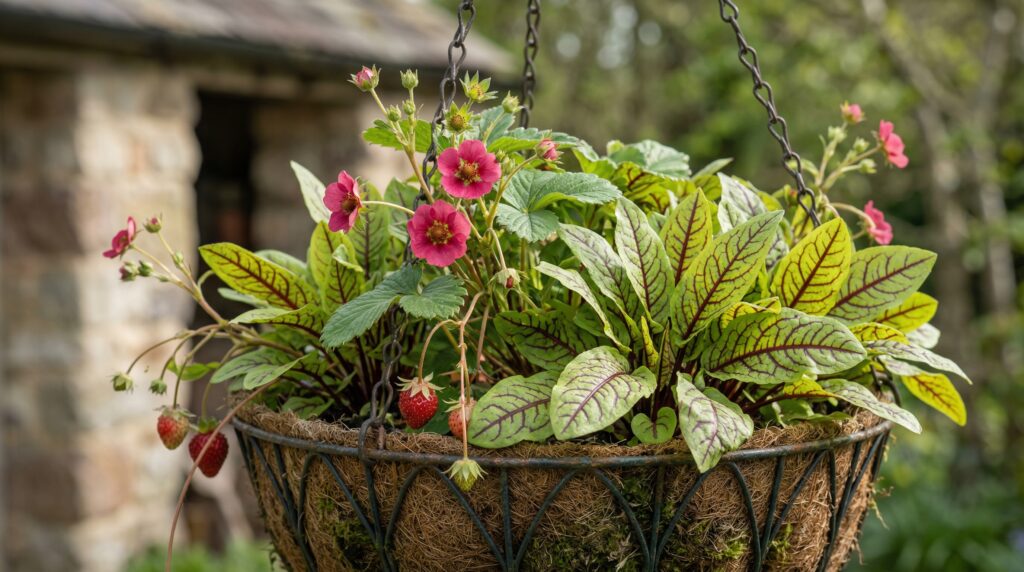
The Plants:
- Thriller: Strawberry ‘Tristan’ – a climbing strawberry with pink flowers (instead of white) and sweet red berries.
- Filler: Red Veined Sorrel – lime-green leaves with deep red veins. Leaves taste like green apple with a lemony tang.
- Spiller: Woodland Strawberry (Fragaria vesca) – tiny, intensely flavored berries, trailing habit.
Pro Tip: Strawberries need consistent moisture. Self-watering hanging baskets are non-negotiable. I lost my first crop to drying out.
Recipe #8: The “Mediterranean Glow” Lavender & Rosemary Topiaries
Best for: Formal looks, drought tolerance.
The Concept: Structured, woody perennials that smell like a Greek island.
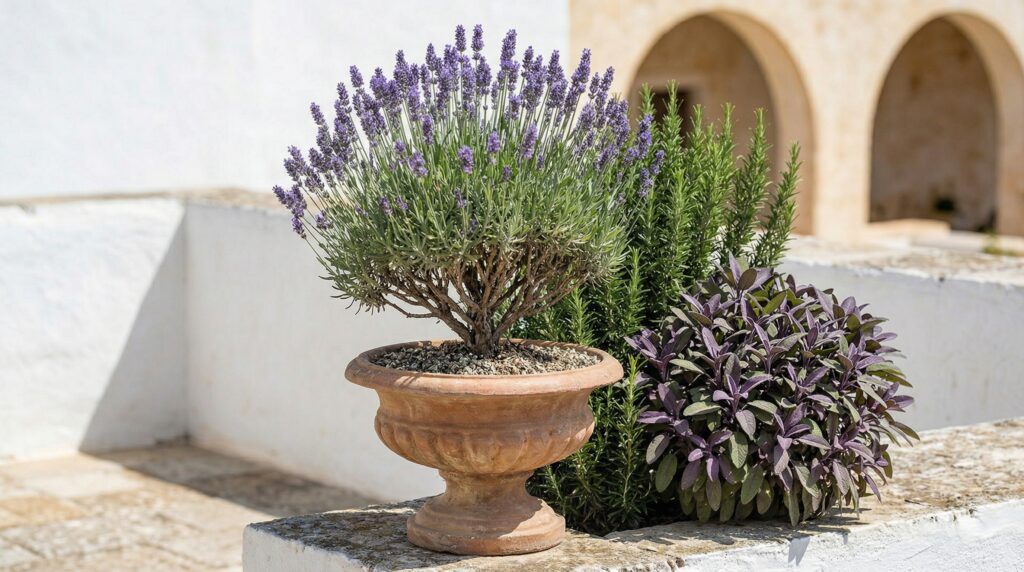
The Plants:
- Thriller: Lavender ‘Phenomenal’ – a 2025 introduction that actually survives humidity and poor soil. Edible flowers for baking.
- Filler: Rosemary ‘Arp’ – cold-hardy, upright form. Use needles fresh or dried.
- Accent: Sage ‘Purpurascens’ – purple-tinged culinary sage. Leaves are milder than green sage.
Global Adaptation: In hot, dry climates (Phoenix, Dubai), swap lavender for Rosemary ‘Tuscan Blue’ which laughs at heat.
Recipe #9: The “Crimson Curry” Leaf Celery & Amaranth
Best for: Unusual textures, late summer.
The Concept: A bold, architectural container that stops traffic.
The Plants:
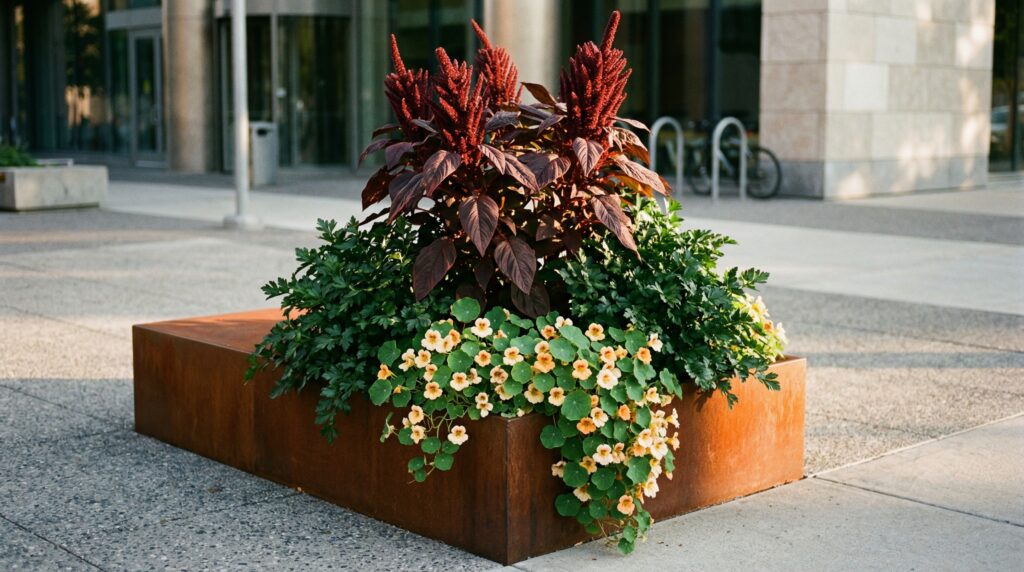
- Thriller: Amaranth ‘Red Garnet’ – deep burgundy leaves that taste like spinach. Grows 2-3 feet tall.
- Filler: Leaf Celery ‘Par-Cel’ – looks like flat-leaf parsley but tastes like celery. Very ornamental.
- Spiller: Nasturtium ‘Peach Melba’ – cream petals with orange centers. Mild, sweet flavor.
Amaranth leaves are a complete protein (unusual for greens). I sautéed them with garlic; they shrunk like spinach but held a firmer texture.
Recipe #10: The “Rainbow Roots” Beets & Swiss Chard Family
Best for: Containers at least 12 inches deep.
The Concept: A single pot where you eat both the leaves and the roots.
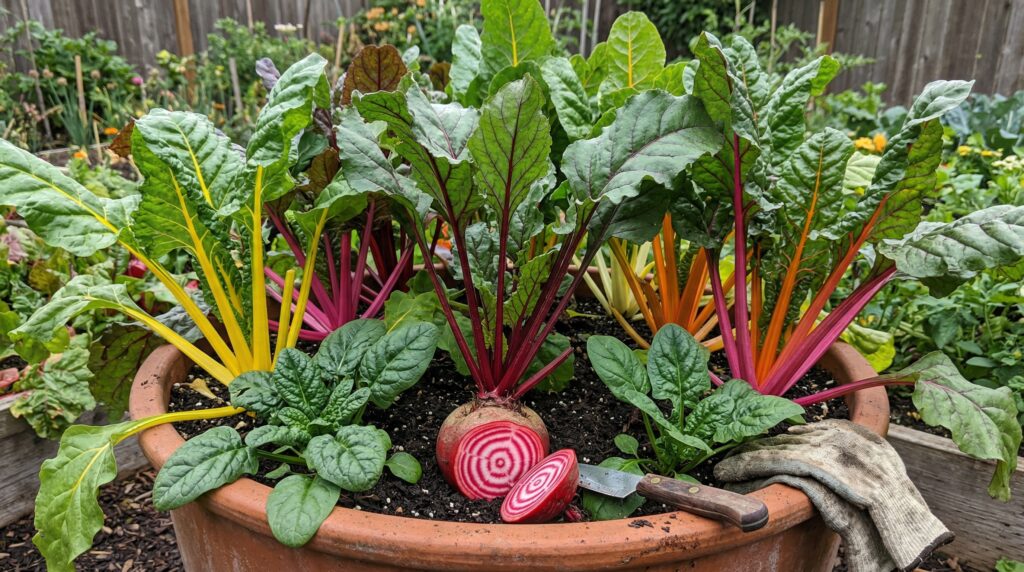
The Plants:
- Thriller: Beet ‘Chioggia’ – candy-striped interior when sliced. Leaves are also edible and beautiful (red stems, green leaves).
- Filler: Swiss Chard ‘Neon Lights’ – same family, different colors.
- Spiller: Baby Spinach ‘Bloomsdale’ – fast-growing, shade-tolerant.
Harvest Strategy: Thin beets to 3 inches apart. Eat the thinned leaves in salad. Let the remaining beets grow to golf-ball size. The chard leaves can be harvested continuously.
The 2026 Edimental Maintenance Guide
Based on my two-year balcony trial, here is the exact weekly rhythm that kept my edimental pots thriving.
| Task | Weekly Frequency | My Insider Hack |
| Watering | 5-7 days (summer) | Use a chopstick to test moisture 2 inches down. If it comes out clean, water. |
| Fertilizing | Every 2 weeks | Half-strength liquid kelp + fish emulsion. Edimentals are heavy feeders. |
| Deadheading | Daily (5 min) | Pinch off spent flowers of pansies, calendula, nasturtiums. This triggers more blooms. |
| Pest Check | Twice weekly | Look under leaves for aphids. Blast off with water or spray with soap solution. |
| Harvesting | Ongoing | “The more you take, the more they grow.” Never take more than 1/3 of a plant at once. |
What I Learned the Hard Way
Mistake #1 (2024): I planted mint directly into a mixed pot. Within 6 weeks, it had strangled my parsley and taken over. Fix: Always keep mint in a separate inner pot, even inside a larger container.
Mistake #2 (2025): I assumed “edible flowers” meant all flowers were tasty. I ate a raw marigold petal and it was bitter and soapy. Fix: French marigolds are best cooked or used sparingly. Signet marigolds (Tagetes tenuifolia) are the sweet ones.
Mistake #3 (2025): I placed my edible nasturtiums near the sidewalk. A dog … visited them. Fix: Keep edible plants at least 18 inches off the ground or behind a barrier in urban areas.
Global Geographic Adaptation for Edimental Gardening
One of the biggest failures of generic gardening advice is assuming “one size fits all climates.” Here is how to adapt these recipes to your corner of the world.
🌍 Humid Subtropical (Southeast US, Southern China, Brazil)
- Challenge: Fungal diseases, intense summer heat.
- Solution: Use wide, shallow terracotta pots for airflow. Swap kale for Malabar spinach (ornamental climbing vine, edible leaves). Avoid lavender; it will rot. Use Rosemary and Lemongrass
🌍 Mediterranean / Arid (Southern Europe, California, South Africa)
- Challenge: Water scarcity, scorching sun.
- Solution: Self-watering containers with reservoirs. Use drought-tolerant edimentals: Rosemary, Thyme, Oregano, Lavender, Prickly Pear Cactus (edible pads and fruit). Mulch the soil surface with pebbles.
🌍 Cool Maritime (UK, Pacific Northwest, New Zealand)
- Challenge: Low light, damp winters.
- Solution: Focus on shade-tolerant edimentals: Mint, Parsley, Chives, Viola, Sorrel. Use reflective surfaces (white walls, mylar) to bounce light. Bring pots under eaves to avoid winter rot.
🌍 Cold Continental (Canada, Northern Europe, Russia)
- Challenge: Short growing season, freezing winters.
- Solution: Treat most edimentals as annuals or bring them indoors. Use frost cloths in spring and fall. Hardy options: Kale, Pansies, Chives, Thyme. In winter, grow Microgreens and Wheatgrass indoors on a sunny windowsill.
🌍 Tropical (Singapore, India, Florida)
- Challenge: Year-round heat, high humidity, pests.
- Solution: Morning sun only (afternoon shade). Use Tropical edimentals: Curry leaf tree, Thai basil, Lemongrass, Kaffir lime (leaves edible), Turmeric (ornamental foliage, edible root). Elevate pots on stands for airflow.
Tested on a 5×8 balcony in Zone 7a. ‘Tristan’ produced 34 berries over 12 weeks, with continuous pink blooms that attracted bees. The flavor is sweet with a hint of strawberry candy. However, it requires daily watering in summer and is not as drought-tolerant as standard everbearing strawberries. Excellent for hanging baskets where the runners can trail.”
Final Thoughts: Why Beauty + Bounty Is the Future
The old way said: “Vegetables go in the back, flowers go in the front.” The 2026 way says: “Every pot is a canvas, and every plant is both art and sustenance.”
Edimental gardening has changed my relationship with my balcony. I no longer see a chore list—water, weed, harvest. I see a living, breathing still life that gives me salad for dinner and flowers for my desk. And when my neighbor asks for a cutting of that “pretty purple thing,” I smile and hand her a stem of kale.
Your turn. Pick one recipe from this list. Buy the plants this weekend. Plant them in a single pot. And next month, when you’re eating a flower from your own balcony, you will understand why the Modern Meadow is more than a trend—it’s a revolution.
