
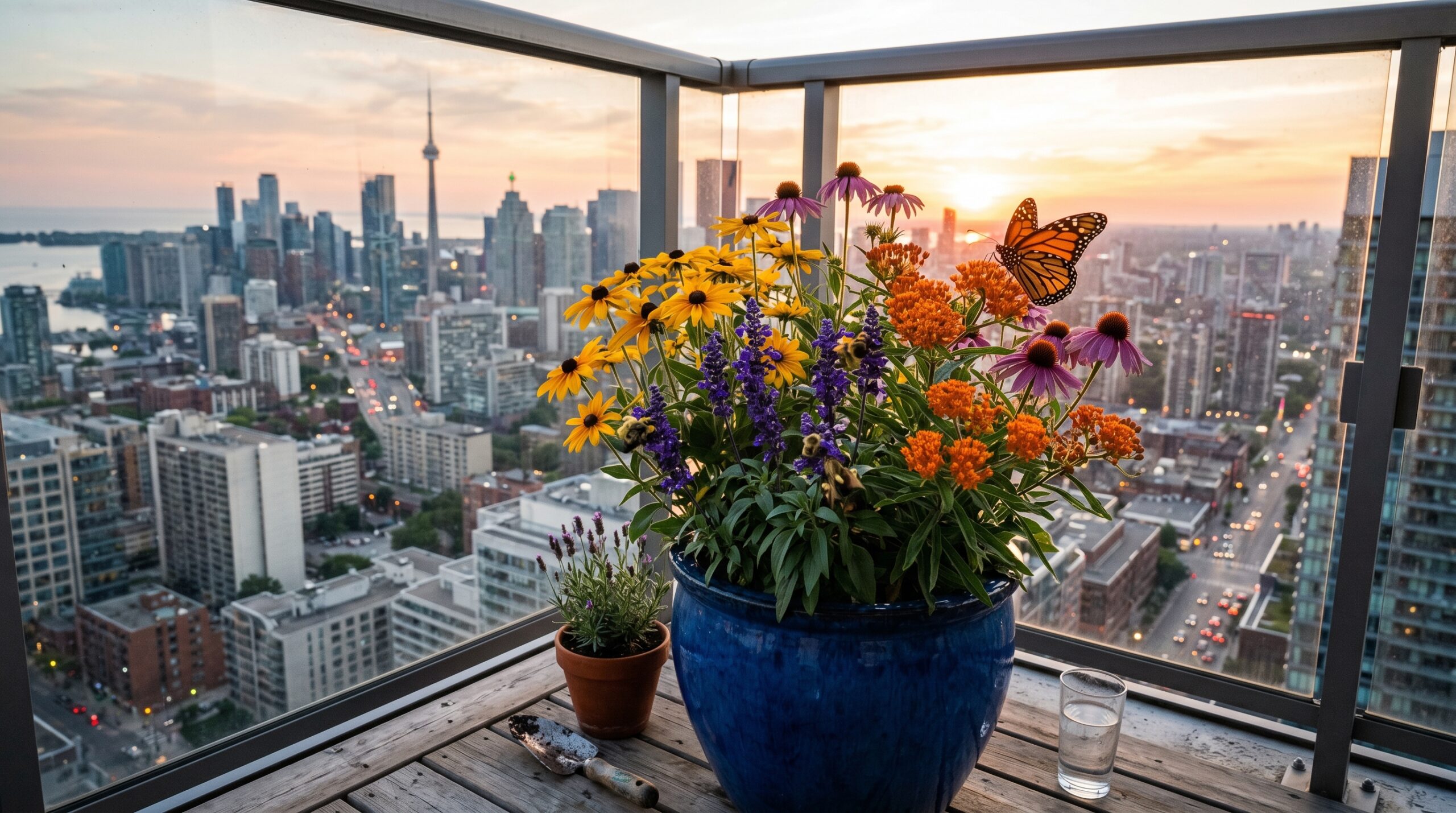
Two summers ago, I watched a bumblebee circle my fire escape railing three times before landing—exhausted—on a plastic pot of supermarket basil I’d forgotten to water. There wasn’t a flower in sight, just wilted leaves and dry soil. The bee rested for thirty seconds, then flew off toward the park six blocks away.
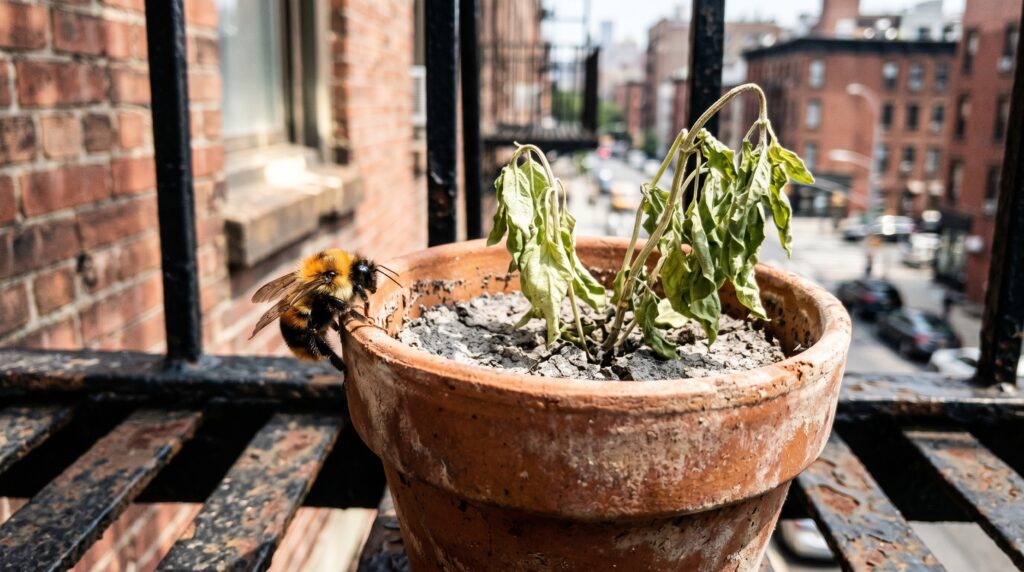
That moment stuck with me. I’d assumed my tiny concrete perch was ecologically irrelevant—a dead zone in the city’s fabric. But the bee’s desperate stop told a different story: even the smallest spaces matter when the landscape between green patches is hostile
A pollinator container garden isn’t just decorative landscaping. It’s a targeted, mobile habitat that feeds, shelters, and supports local bees, butterflies, and moths. This guide breaks down exactly how to build a high-yield foraging station in limited space. You’ll learn which plant combinations actually sustain full insect life cycles, how to manage balcony wind and partial shade, and how to maintain a pesticide-free ecosystem that thrives year after year.
Why Container Habitats Matter for Urban Pollinators
Fragmented green spaces force pollinators to travel farther for food and shelter. The Royal Horticultural Society emphasizes that even modest urban plantings can bridge critical forage gaps when they prioritize continuous bloom and pesticide-free practices. Containers excel in these environments because they’re adjustable. When summer heat stresses a plant or a neighboring building casts unexpected shade, you can relocate pots to preserve flowering windows.
Over 70% of North American bee species are solitary. They don’t need managed hives—they need accessible nectar, protein-rich pollen, and undisturbed nesting cavities like hollow stems or bare ground. Butterflies require two distinct resources: nectar for adult flight energy, and specific host plants where females lay eggs. Without host plants, butterflies simply pass through without reproducing. Containers can supply both when planted intentionally.
Choosing Plants That Actually Feed Local Insects
The most effective eco-friendly gardening 2026 begins with local ecology. Generic “wildflower blends” often contain ornamental exotics that look beautiful but offer diluted nectar or inaccessible flower shapes. Native plants for pots have co-evolved with regional insects, providing precise petal architecture, optimal sugar concentrations, and familiar chemical signals that trigger foraging behavior.
Bee-Friendly Patio Plants for Continuous Forage
Bees need carbohydrates to rebuild spring colonies and fat stores before winter dormancy. Plan your pots for staggered flowering:
- Early Spring: Wild geranium, creeping phlox, and native lungwort thrive in shallow, wide containers and fuel emerging mason bees.
- Peak Summer: Bee balm, coneflower, and native salvias deliver high nectar volumes and require 12–16 inch deep pots to support tap roots.
- Late Fall: Goldenrod and New England asters are non-negotiable. They provide the final energy push for bees preparing to overwinter.
Butterfly Container Garden Ideas That Support Life Cycles
Butterflies don’t survive on nectar alone. Pair nectar sources with regionally appropriate host plants:
- Monarchs: Native milkweeds (Asclepias species). Avoid tropical milkweed outside frost zones; it disrupts migration patterns and spreads a harmful parasite.
- Swallowtails: Parsley, dill, fennel, or golden alexanders planted in medium pots.
- Skippers & Sulphurs: Native grasses like little bluestem or switchgrass in large, deep planters.
Always choose straight species over double-flowered cultivars. Sterile “fluffy” blooms hide nectaries behind extra petals, leaving visiting insects starved.
Managing Microclimates in Confined Spaces
Containers behave differently than ground beds. Elevated pots dry faster, balcony wind strips moisture from leaves, and concrete radiates heat that scorches shallow root zones. Here’s how to adapt your layout:
Limited Sunlight: East or north-facing patios still support pollinators. Shade-tolerant natives like wild columbine, foamflower, and Canadian ginger thrive in 10–12 gallon pots and sustain early-season ground foragers.
Balcony Wind Exposure: Group heavy containers along the windward side of your space. Use a bamboo lattice or evergreen herb cluster as a living windbreak without blocking light. Place saucers under pots to catch runoff, but empty standing water after 24 hours to prevent mosquito breeding.
Indoor Plant Care in Apartments: Pollinators rarely forage indoors due to flight barriers and low UV levels. Use indoor containers strictly for seed starting, root overwintering, or educational observation. Harden off seedlings near a south-facing window for 7–10 days before moving them outdoors to prevent transplant shock.
Step-by-Step: Building Your Pollinator Container Garden
Follow this sequence to avoid common setup failures and create a resilient habitat.
Step 1: Select Containers with Proper Drainage Use a mix of depths. Shallow 6–8 inch pots work for mat-forming herbs and groundcovers. Deep 14–18 inch containers are mandatory for tap-rooted milkweeds and asters. Ensure at least 4–6 drainage holes. Avoid placing gravel layers at the bottom unless the pot lacks a raised internal grid; otherwise, you create a perched water table that suffocates roots.
Step 2: Blend a Lean, Native-Adapted Soil Mix Rich potting mixes promote weak, flopping growth and dilute nectar quality. Blend:
- 50% peat-free all-purpose potting medium
- 30% coarse horticultural sand or pumice
- 20% screened leaf mold or native topsoil Skip synthetic slow-release fertilizers. A 1-inch compost topdressing each spring provides sufficient nutrients without encouraging pest-attracting foliage.
Step 3: Arrange for Bloom Succession Don’t group plants by height alone. Position early-bloomers in maximum sun and late-season varieties in slightly filtered light to delay heat stress. Maintain at least 30% floral coverage during peak months. Gaps longer than 14 days break forage corridors, causing pollinators to relocate.
Step 4: Install Water & Nesting Supports Place shallow ceramic saucers filled with pebbles and clean water. Add paper straws (¼–⅜ inch diameter, 4–6 inches long) bundled in wooden boxes or drilled hardwood blocks. Clean and replace nesting materials every 18–24 months to prevent parasitic wasp and mite buildup.
Common Mistakes That Undermine Pollinator Efforts
1. Buying plants treated with systemic pesticides.
Many big-box nursery plants are pre-treated with neonicotinoids that persist in nectar and pollen for months—sometimes over a year. These chemicals impair bee navigation and reproduction. Always ask or look for “neonicotinoid-free” labeling. The Royal Horticultural Society maintains a list of verified organic nurseries.
2. Using garden soil in containers.
Garden soil compacts in pots, suffocating roots and impeding drainage. This is the fastest route to root rot and stunted plants. Use only container-formulated potting mix.
3. Planting too sparsely.
Pollinators forage most efficiently on clustered blooms. A single plant of each species scatters their efforts. Plant in groups of at least three of the same species per container.
4. Over-fertilizing.
Excess nitrogen produces lush foliage at the expense of flowers—exactly what pollinators don’t need. Most native pollinator plants thrive in lean soil. A light application of compost in spring is usually sufficient.
5. “Cleaning up” too thoroughly in fall.
Leaf litter and hollow stems are essential overwintering habitat for native bees, butterfly pupae, and beneficial insects. Delay cleanup until spring temperatures stabilize.
6. Forgetting the water source.
Pollinators need to drink. A shallow dish of pebbles and water is simple but transformative. Without it, bees and butterflies must expend precious energy searching for hydration elsewhere.
7. Choosing double-flowered cultivars.
Those fluffy, pom-pom flowers are sterile—bred for show, not function. Their reproductive parts are converted to extra petals, offering zero accessible nectar or pollen. Stick to single-flowered varieties.
Expert Tips from Real-World Container Habitats
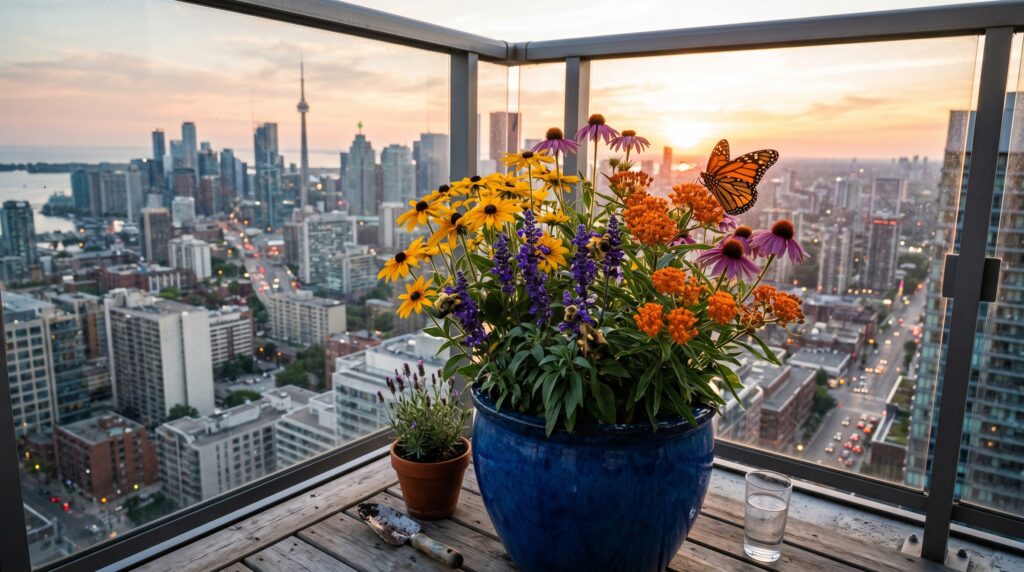
- Trial-and-Error Wind Management: In my first season on an exposed 6th-floor balcony, heavy summer gusts stripped moisture from bee balm before blooms opened. I solved it by positioning broad-leaf rosemary pots upwind and clustering smaller containers behind them. Wind speed dropped noticeably, and nectar production stabilized.
- Pest Tolerance Thresholds: Aphids aren’t enemies; they’re pollinator food. Ladybugs and hoverflies will colonize naturally if you avoid spraying. If infestations threaten plant health, use a strong water jet at dawn or apply horticultural oil at dusk when foragers aren’t active.
- Phenological Tracking: Keep a simple notebook. Record first bloom, peak flower, and seed set for each pot. This data reveals your microclimate’s exact rhythm and helps you adjust varieties for tighter succession windows.
- Local Climate Verification: Always cross-reference plant recommendations with USDA Plant Hardiness Zones and University of California Agriculture and Natural Resources (UC ANR) container gardening guides. A species thriving in coastal humidity will likely scorch in dry inland heat without adjusted watering.
Smart Wealth Habits: Investing in Ecological ROI
Purpose-driven gardening aligns directly with long-term resource efficiency. Conventional landscaping demands recurring purchases of chemical fertilizers, imported peat, and high-volume irrigation. A native pollinator container garden operates on a lean, self-sustaining cycle.
Treat your pots like a low-maintenance infrastructure asset. Year one covers containers, peat-free soil, and native seedlings. By year three, division of perennials, rainwater harvesting, and seed saving drastically reduce ongoing costs. This mirrors proven wealth principles:
- Asset Maintenance Over Quick Fixes: Regular compost topdressing and deadheading extend bloom life and prevent yield crashes, much like routine property upkeep prevents costly repairs.
- Resource Efficiency: Targeted watering and lean soil reduce waste. Tracking inputs mirrors budget tracking—small, consistent allocations prevent ecological “overspending.”
- Compounding Returns: Healthy native root systems build living soil structure over time. Each season increases drought resilience and pollinator visitation, creating a high-yield outdoor system that appreciates in both ecological and community value.
Quick Comparison: Top Pollinator Container Plants
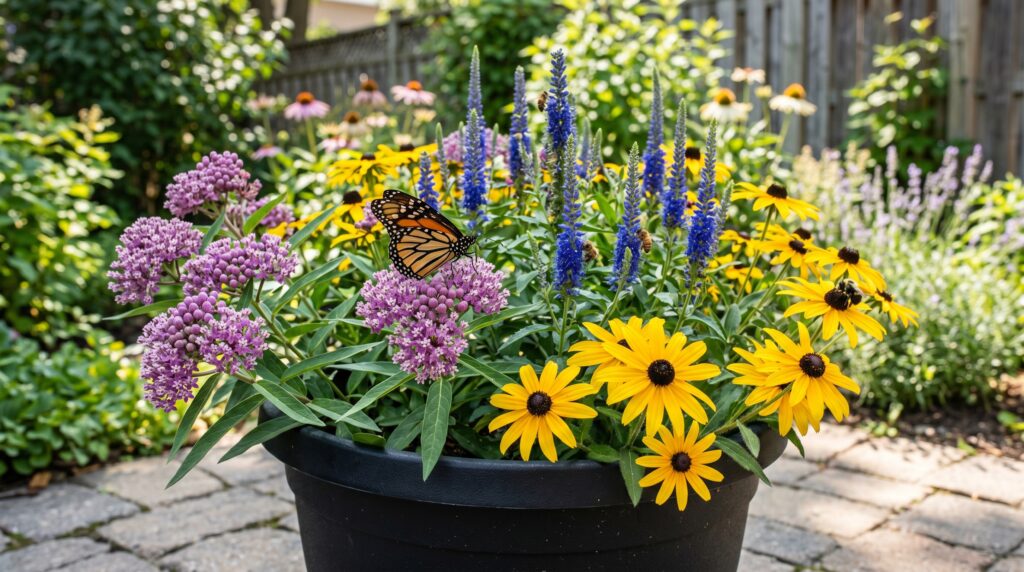
| Plant | Sunlight | Difficulty | Best Container Size | Primary Pollinator |
| Butterfly Milkweed (A. tuberosa) | 6–8 hrs | Easy | 10–14 gal deep | Monarchs, native bees |
| Bee Balm (Monarda didyma) | 4–6 hrs | Moderate | 12–16 gal | Hummingbirds, bumblebees |
| Creeping Thyme (T. praecox) | 6+ hrs | Easy | 6–8 gal wide | Mason bees, sweat bees |
| New England Aster | 6–8 hrs | Easy | 12–15 gal | Late butterflies, honeybees |
| Purple Coneflower | 6+ hrs | Easy | 12–14 gal | Solitary bees, skippers |
Note: Difficulty assumes standard drainage and seasonal watering adjustments. Always verify regional ecotypes before purchasing.
Frequently Asked Questions
What soil mix works best for a pollinator container garden? Use a lean, well-draining blend: 50% peat-free potting medium, 30% coarse sand or pumice, and 20% leaf mold. Avoid rich synthetic fertilizers, as they reduce nectar quality and weaken stem structure.
How many plants should I place in one container for pollinators? Follow the “three to five” rule: group 3–5 compatible native plants per pot to maintain visual continuity for insects while preserving airflow. Leave 20–25% of the surface uncovered for safe landing zones.
Do balcony container gardens attract mosquitoes? Standing water attracts mosquitoes, not plants. Ensure all saucers drain completely after watering. Use shallow pebble-filled dishes for pollinator hydration and refresh water every 5–7 days.
Can I maintain a pollinator garden indoors? Pollinators rarely forage indoors due to lack of UV light and flight barriers. Use indoor pots to propagate native seeds, overwinter dormant roots, or harden off seedlings before moving them outside.
How do I protect potted natives from winter wind and freeze? Cluster pots together, wrap exteriors with burlap or horticultural fleece, and elevate containers on wooden blocks to insulate from cold concrete. Add a 2-inch layer of shredded leaves on the soil surface for root insulation.
Is it safe to use commercial compost for native container plants? Yes, if labeled peat-free and organic. Verify the product contains no synthetic wetting agents or slow-release chemical fertilizers, which can damage delicate native root systems and alter nectar profiles.
Conclusion: The Balcony as Starting Line
The narrative around pollinator decline is heavy with loss—and rightly so. But buried beneath the grim statistics is a quieter, more hopeful truth: the solutions scale down beautifully.
A pollinator container garden doesn’t require a yard, a budget, or advanced horticultural training. It requires one pot, three to five thoughtfully chosen plants, a shallow water dish, and a willingness to pay attention.
The 2026 gardening season marks a tipping point—”environmentally conscious” gardening has moved from niche interest to mainstream priority. Gardeners are deliberately choosing plants that “support pollinators, preserve ecosystems, and restore biodiversity.” Your balcony, patio, or windowsill can be part of this movement.
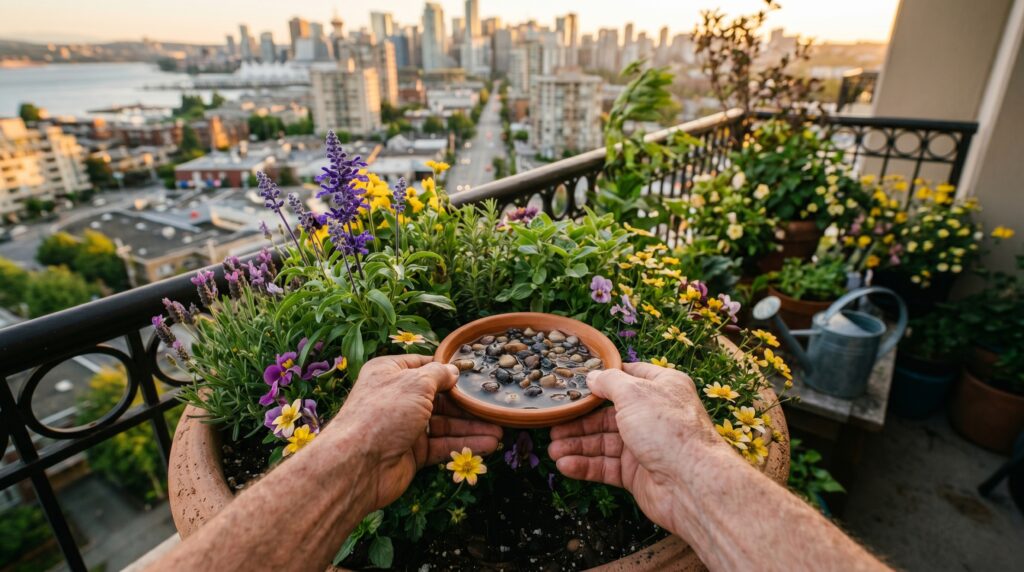
Start with one container. Choose plants native to your region. Add water. Watch what visits. Learn from what thrives and what struggles. Expand next season.
The bees don’t need you to fix everything. They need you to plant one good pot. And then maybe another.
That’s how corridors reconnect. That’s how populations rebound. That’s how hope takes root—one container at a time.
Key Takeaways
- Prioritize straight native species matched to your regional climate and insect life cycles.
- Use lean, well-draining soil and avoid synthetic fertilizers to maintain optimal nectar concentration.
- Stagger bloom times from early spring to late fall to prevent forage gaps.
- Provide shallow water stations, clean nesting materials, and delayed winter cleanup for shelter.
- Treat your setup as a low-maintenance, high-ecological-ROI asset that compounds in value through resource efficiency and seasonal resilience.
